The Arctic is barren and inhospitable. Between ice floes and howling winds, one man's courage carved a path for England where two nations clashed.
The Decision That Changed the Voyage
In the summer of 1553, an audacious expedition set sail from England with the North Star as its guide. The mission was driven by ambition and curiosity, characteristic of the Tudor period's relentless pursuit of new trade routes. England, standing at the cusp of its imperial age, imagined its ships charting the unknown waters of the Arctic to discover a northerly passage to China. The expedition, guided by the recently formed "Company of Merchant Adventurers to New Lands," was a gamble—a game of high stakes with the icy North.
Three ships, including the towering *Edward Bonaventure*, embarked under an optimistic banner, led by navigators of varied fortune. Among them was Richard Chancellor, a man who would unwittingly etch his name into the annals of exploration. Disaster struck early in their journey. Sailors were no strangers to the perilous dance with death at sea, but Chancellor's colleagues lacked fortune. The *Bona Esperanza* and *Bona Confidentia* both fell victim to the voracious grip of treacherous ice floes, their crews disappearing into the fate-sealing void of the Arctic night.
Into the Frozen Abyss
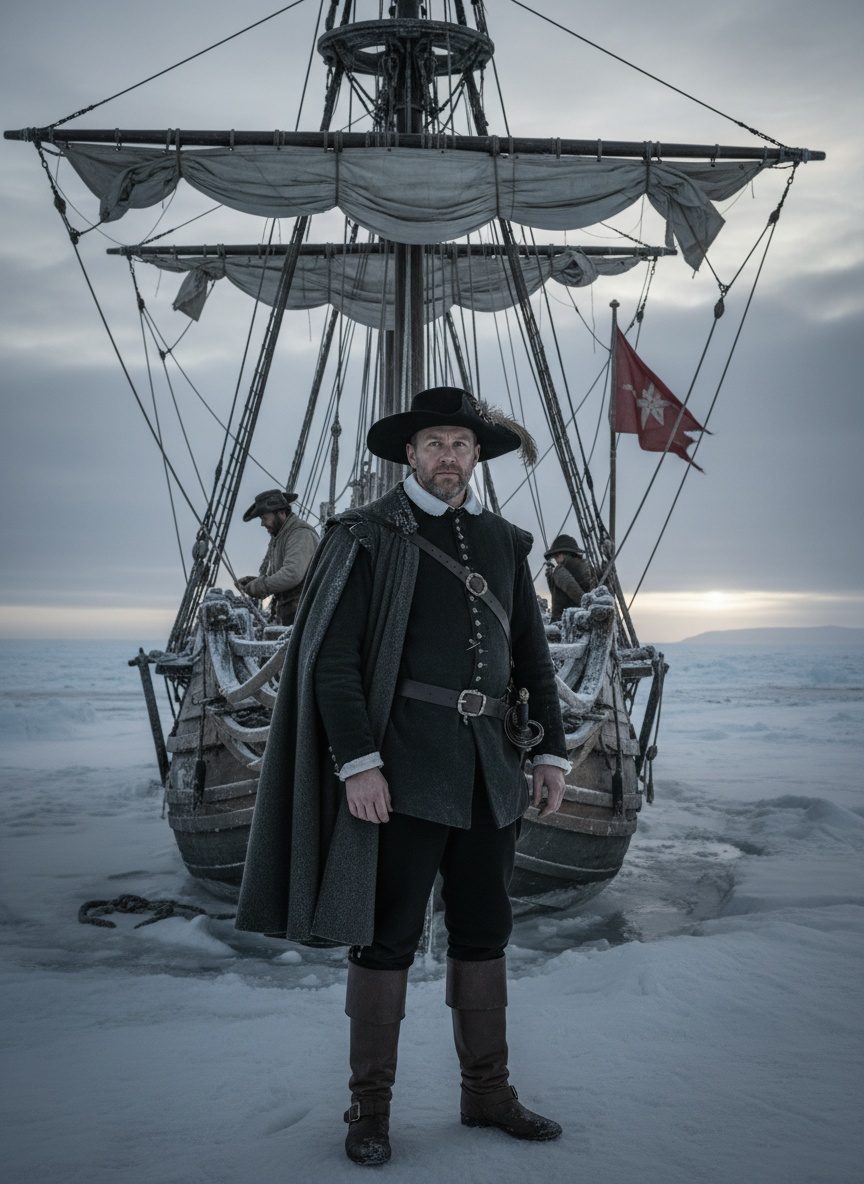
Chancellor, unyielding and determined, ventured on. The frozen abyss stretched infinitely before him as *Edward Bonaventure* forged ahead, her hull an echoing groan against the encroaching ice. What Chancellor faced was nothing any Englishman before him had survived—an impenetrable alternation of placid sea and churning chaos, where the heavens and sea melded under the cloak of threats. The chronicle of these days is scant, yet one can imagine the colossal icebergs looming like spectral sentinels over Chancellor's modest vessel, each threatening to imprison or crush her at any moment.
The Arctic North was a realm rarely marred by the footsteps of man. Chancellor sailed not merely into unknown waters, but into the mythic and fabled—places spoken of in hushed voices, their secrets guard by ice and snow. There was no map, only the captain's wits and unquenchable spirit lighting the ghostly expanse before him. It was a journey through a frozen labyrinth that tested the endurance of men and timbers.
An Unlikely Throne Room
After what must have seemed an eternal struggle against the elements, Chancellor emerged from the Arctic clutches into unfamiliar yet fertile lands. Russia, vast and enigmatic, lay spread before him like an undiscovered continent. The year was now 1553, and Richard Chancellor's journey took a momentous turn toward the court of Ivan IV, known to history as Ivan the Terrible.
The arrival of the *Edward Bonaventure* struck a significant chord in the power corridors of Moscow, echoing with opportunity. Chancellor drew strange looks, a lone emissary from an island kingdom far to the west standing among fur-clad courtiers. The Tsar's court was cloaked in foreign magnificence, filled with promises of alliances that went beyond comprehension, where Chancellor quickly realized the stakes were as high here as in the icy waters.
His reception, influenced by the curiosity of Ivan, was nonetheless congenial. Chancellor's entry into the Russian court marked the dawn of an unexpected diplomatic and commercial relationship. The Tsar, a man of shrewd intellect, foresaw a partnership that could elevate Russia's position above rivals. Here, in a far-flung court, Chancellor planted seeds for a future trade empire.
The Trade that Shifted Empires
Despite the hostile chills that had enveloped him on the voyage, Chancellor arrived with warm intentions—trade. His mission shifted from exploration to negotiation. England sought trade routes and resources that would secure its growth and prosperity. Russia offered a treasure trove: furs, grains, and the enticing prospect of a friendship that England had hardly dreamed of.
The English envoy's success wasn't a legacy of his own making but arose from the fertile groundwork of his predecessors and the ambitions of those at home. Chancellor's work in brokering trade agreements with Russia laid a foundation that altered the complexion of England's trade strategies. Through these arrangements, the joint interests unexpectedly positioned England as a player in the Northern markets—a feat unimaginable before the ice-laden voyage set it in motion.
Among Ivan's courtiers, Chancellor negotiated patiently, the shadow of England's merchants backing his every step. His success meant that the British lion would have a paw in Moscow's court, leading to the creation of the Muscovy Company, a symbol of England's burgeoning influence in Northern and Eastern realms.
Chancellor's Cold Legacy
Richard Chancellor's name, though not as frequently sung as Drake or Raleigh, resounds in the corridors of English imperial history. He personified the insatiable drive intrinsic to those daring enough to venture beyond known thresholds. His journey is a reminder of the thin line between fortune and disaster, exploration and overreach.
The Arctic voyage of 1553 shaped an unwritten chapter in the exchange of ideas, goods, and persistent human tenacity. For England, the icy route opened up more than just trade lanes with Russia; it tore open a neighbor's curtain, revealing opportunities once barred by nature's austere presence. Chancellor's triumph, etched in frost and diplomacy, stands as a testament to the power of resilience and the unexpected paths to empire that history sometimes buries beneath its frozen layers.