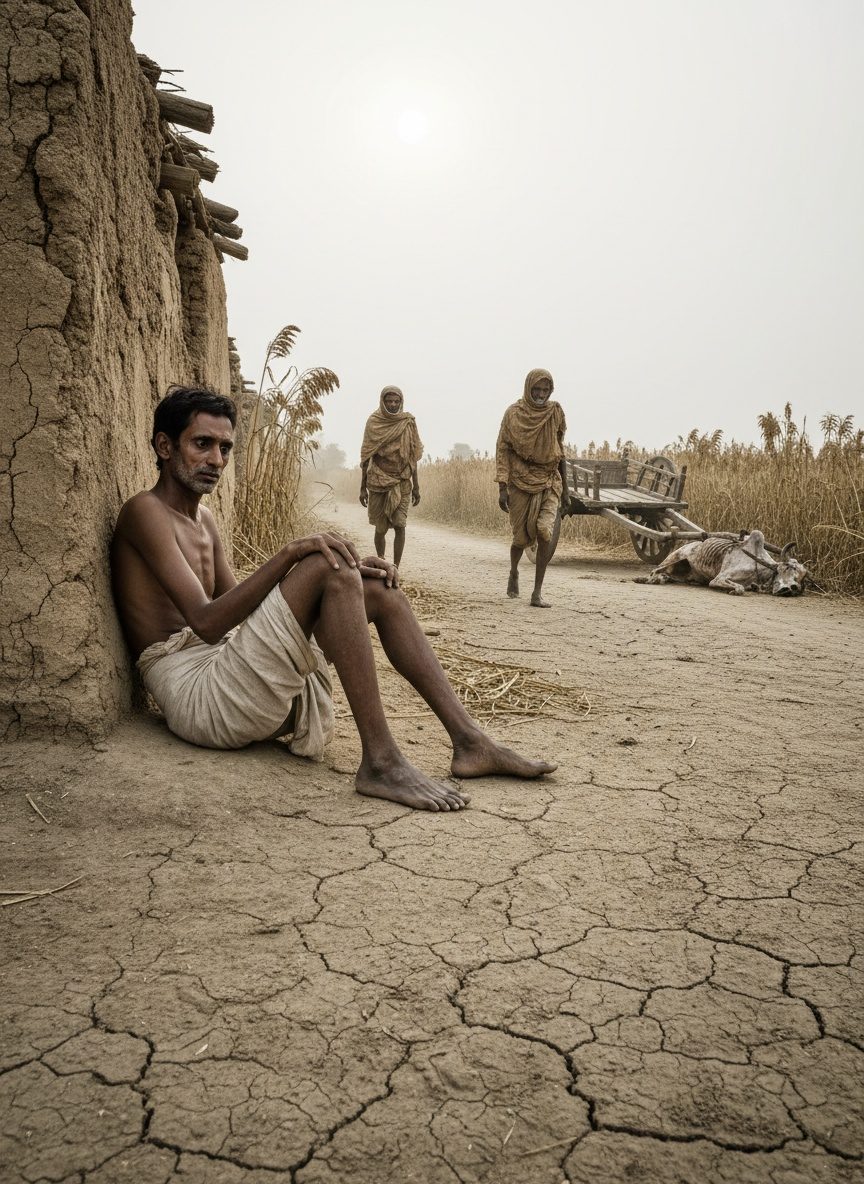
He was twenty-three years old. He had never lifted his voice to harm anyone.
The Thunder of a Whisper
In an era straining under the weight of colonial rule, Bhagat Singh's act of defiance was unlike any other. It was not the act of a man wielding weapons in a furious charge but of a young revolutionary who understood the power of silence, sound, and sacrifice. In the hallowed chambers of the Imperial Legislative Assembly, the air had been tense with purpose as Bhagat Singh and his compatriot Batukeshwar Dutt hurled non-lethal bombs onto the floor of the assembly. Their intention was not murder, but to rupture the oppressive silence that had gripped colonial India. As smoke filled the room, pamphlets fluttered like rebellious butterflies, carrying the message that spoke louder than the din of imperial decrees: it was a clarion call for the deaf British rulers to take heed of the suffocating cries of their subjects.
Bhagat Singh understood that a whisper could be more powerful than a scream if carried by the right breeze. His actions were premeditated, designed not for immediate destruction but for everlasting resonance. The subsequent trial was nothing less than a stage upon which Singh performed a meticulously choreographed play of resistance, demonstrating not just a fiery intellect but an unyielding courage. He used the courtroom to tell of India's plight, articulating the unspoken torment and hopes of millions. The British intended the trial to serve as a warning, but Bhagat Singh transformed it into a powerfully resonant moment in the struggle for independence.
The Gallows: A Walk with Freedom
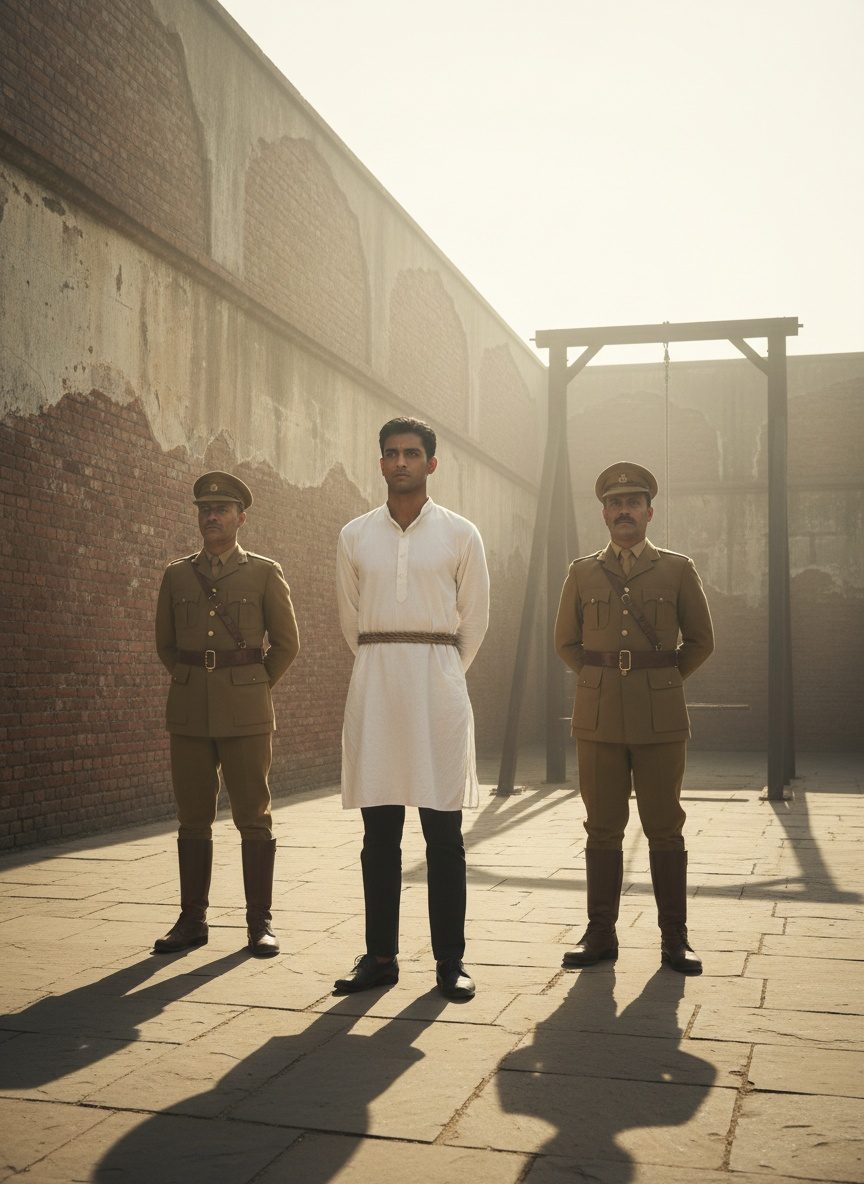
March 1931 saw the culmination of Bhagat Singh's orchestrations. His sentence was death by hanging—a brutal attempt to silence an enduring voice. But Bhagat Singh and his fellow martyrs Sukhdev Thapar and Shivaram Rajguru walked towards death with a dignity that defied the oppressors. They refused the blindfolds offered by their captors, choosing instead to face their fate with open eyes and singing lips. It was an audacious display of valor that underlined a reality the British could not suppress: the human spirit's capacity for resistance.
The legend of their final journey to the gallows became etched in the consciousness of a nation yearning for freedom. As they moved step by step in synchronized rhythm, songs of rebellion and unity filled the air of Lahore Central Jail, turning a place of death into a shrine of eternal defiance. The atmosphere was thick with admiration and despair among their fellow inmates and the guards alike, who stood witness to an act of staggering heroism. Every hymn sung was a testament to the bond among the three men, their affection for their homeland, and their unyielding belief in the righteousness of their cause.
Such scenes inspired generations, feeding the flames of India’s freedom struggle. Bhagat Singh’s walk to the gallows was far from a display of stoic heroism in the face of annihilation; it was a triumphant march of the spirit. Despite knowing the futility of pleas, offers, and negotiations, their resolve to embrace death as a liberating force rather than shackling retreat infused new energy into the fight for independence.
Revolution's Immortality: The Young Martyr's Legacy
Bhagat Singh's legacy survived the gallows; it transformed him from a revolutionary figure to a symbol of unyielding courage and a beacon of hope against tyranny. The British Raj underestimated the potency of martyrdom in cultivating a narrative of resistance that would strengthen rather than weaken the resolve of those under their rule. Though they succeeded in ending one life, they inadvertently immortalized a cause. News of the execution rippled across the subcontinent and beyond, seeding a rallying cry among Indian citizens that would echo across generations.
In the years that followed, Bhagat Singh emerged as an icon far greater than the young man who boldly faced death. His writings, speeches, and the sheer audacity of his life's work continued to inspire countless others to dare, defy, and dream of liberation. His understanding of revolutionary activism was sophisticated beyond his years, rooted in an intellectualism that desired freedom not just from foreign rule but from every form of inequity.
This legacy remains vital not just in the annals of India's journey to freedom, but in the stories of oppressed peoples worldwide. Bhagat Singh's story reminds us that true impact is not always measured by immediate victory but by the change it inspires in hearts and minds. As we reflect on the chronicles of history, his narrative urges us to remember that courage in the face of overwhelming force can grow unexpected wings, carrying voices far and wide—one song at a time.