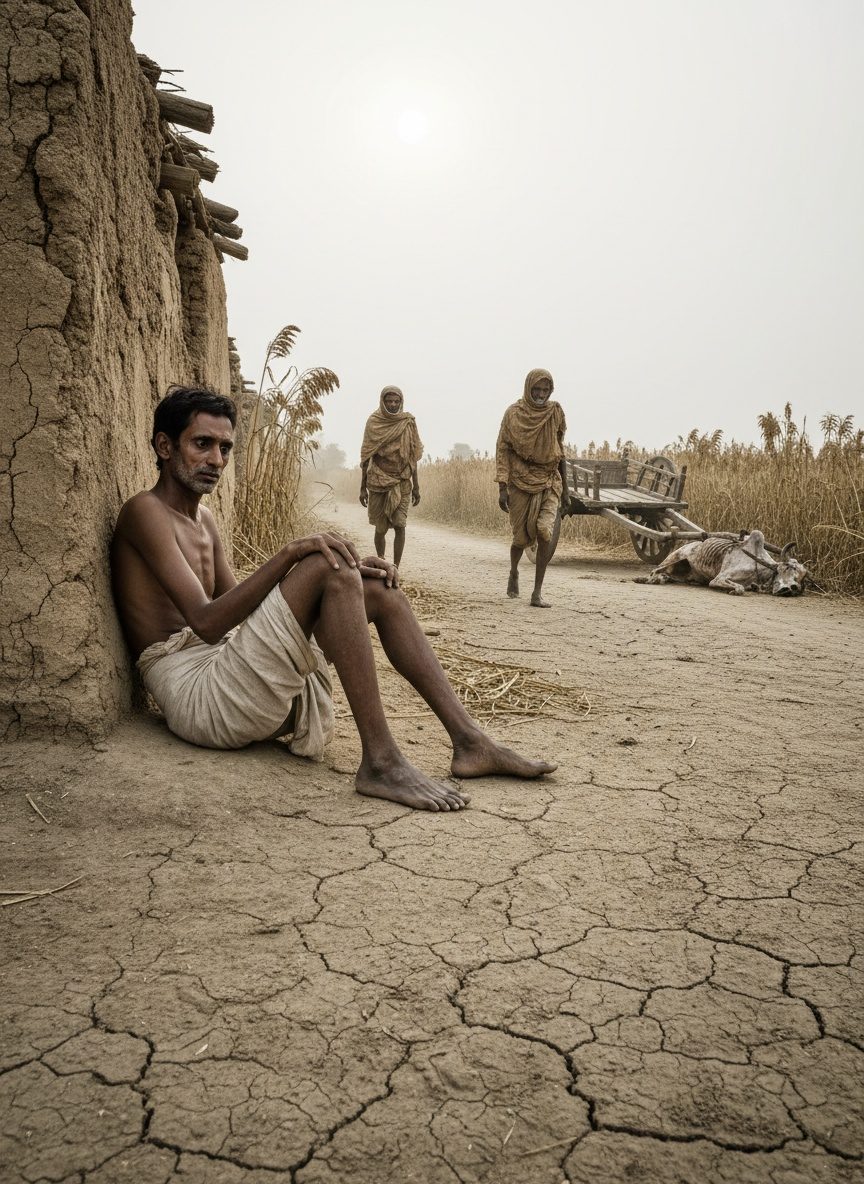
February 1632. The baked earth of the Deccan Plateau shimmered with rising heat, the air thick with the silence of desolation.
The Cruel Whim of Nature
The years between 1630 and 1632 were marked by an absence so tangible it left an indelible scar on the memory of the land: rain had simply failed to arrive. The monsoon, typically a bringer of life and renewal, abandoned its designated duty, leaving vast stretches of the Deccan, Gujarat, and Khandesh to languish under the brutal sun. Fields once vibrant and green turned brittle and brown, the crops withering into dust long before maturity.
This devastating drought triggered what would become one of the most lethal famines of the region, taking with it an estimated seven million lives. Within the ravaged communities, the incessant cry of hunger overshadowed every other sound, families reduced to scavenging for morsels among the dusty remnants of what had been fields of plenty. Accounts from the time describe a dismal tableau: cities emptied, villages vanished, fertile lands transformed into a barren wasteland of human suffering.
The Struggles Under Shah Jahan
Even amid the grandeur of the Mughal Empire under Shah Jahan, the scale of the human tragedy that unfolded remained incomprehensible. With all the reach and resources of an imperial power at his disposal, even this great emperor found his administration unable to quell the tides of desperation and death.
Infrastructure designed to support trade and prosperity faltered. The supply systems, attuned to periods of lesser droughts but not cataclysms of this scale, buckled under the extensive strain. Contemporary chronicles recall how markets became ghostly echoes of their bustling pasts, stalls barren of goods as the very foundations of commerce crumbled. Yet, the autocratic regime grappled with the logistics of bringing aid to those remote areas cut off not just by distance but by a sea of calamity.
A canvas of bureaucratic inertia and scant resources painted grim outcomes as the empire’s mechanisms rusted in paralysis. Depleted treasuries could not offset nature's ferocity, and even royal decrees could not conjure sustenance where none existed. The regional governors—Mansabdars and Jagirdars—tasked with managing grain reserves and distributing aid, found their efforts dwarfed by the enormity of the disaster.
Dehumanizing Desperation
The fabric of society unravelled. Left with no recourse, once-civil communities descended into primal survival instincts. Unfathomable desperation drove many to extremes that history often clothes in silence. Accounts mention the unspeakable act of cannibalism—a horrific indicator of the harrowing realities faced by victims of this cataclysm. Families broke apart, driven mad by gnawing hunger. Scenes of parents abandoning children, and sibling against sibling for crusts of bread, were bitter tales whispered in hushed tones for generations.
It was not just hunger that wreaked havoc. Epidemic diseases often trail closely behind lack of nutrition, and they did so here, reaping those spared from the jaws of starvation. Villages might escape famine only to fall to fever, the boundaries between suffering indiscernibly blurred.
Social structures, once built upon stringent codes of caste and class, collapsed as survival trampled any notion of hierarchy. The traditions and cultural norms that usually governed the day-to-day life became obsolete amidst pervasive mortality—what remained was a grim detachment, a stoic acceptance of death’s omnipresence.
Legacy in Oblivion
By 1632, the rains finally returned, with them a reluctant surge of hope sprouting timidly beneath the Deluge's tears. Yet, the scars inflicted by those brutal two years remained etched into the land and soul of its people, hidden under layers of time and succeeding narratives. As years passed, the memory of this famine faded from common historical consciousness, overshadowed soon by new empires, new catastrophes, and the reshaping of the subcontinent’s historical narrative with the arrival of British colonial rule.
Herein lies the story's tragedy: that such mass suffering and societal upheaval should be all but forgotten, abandoned like the fields of the Deccan were to the sun. The famine of 1630-1632 challenges the notion that the suffering linked with famines in India was uniquely a product of British colonial policies. It serves as a solemn reminder of the power of natural calamities and human oversight, a reality not bound by colonial borders. As we explore the annals of history, these twice-told tales of grief urge us to remember the voiceless past, recognizing sufferings unseen, tragedies untold, that pivot history in silent shadows.