The air of late April 1945 hung over the River Po like a remnant of winter's breath, the morning mist slowly unraveling into strands of sunlight bouncing off the tranquil waters. The river, wide and serene, wound its way through the fertile Italian plains, bearing witness to millennia of history. But today, its surface mirrored a different kind of movement — the relentless advance of the British Eighth Army, crossing this natural threshold in a final surge of World War II. The stakes were enormous. A crumbling Wehrmacht to the north was making its last stand, and the tide of Allied forces threatened to sweep all before it.
The Bridge to Victory
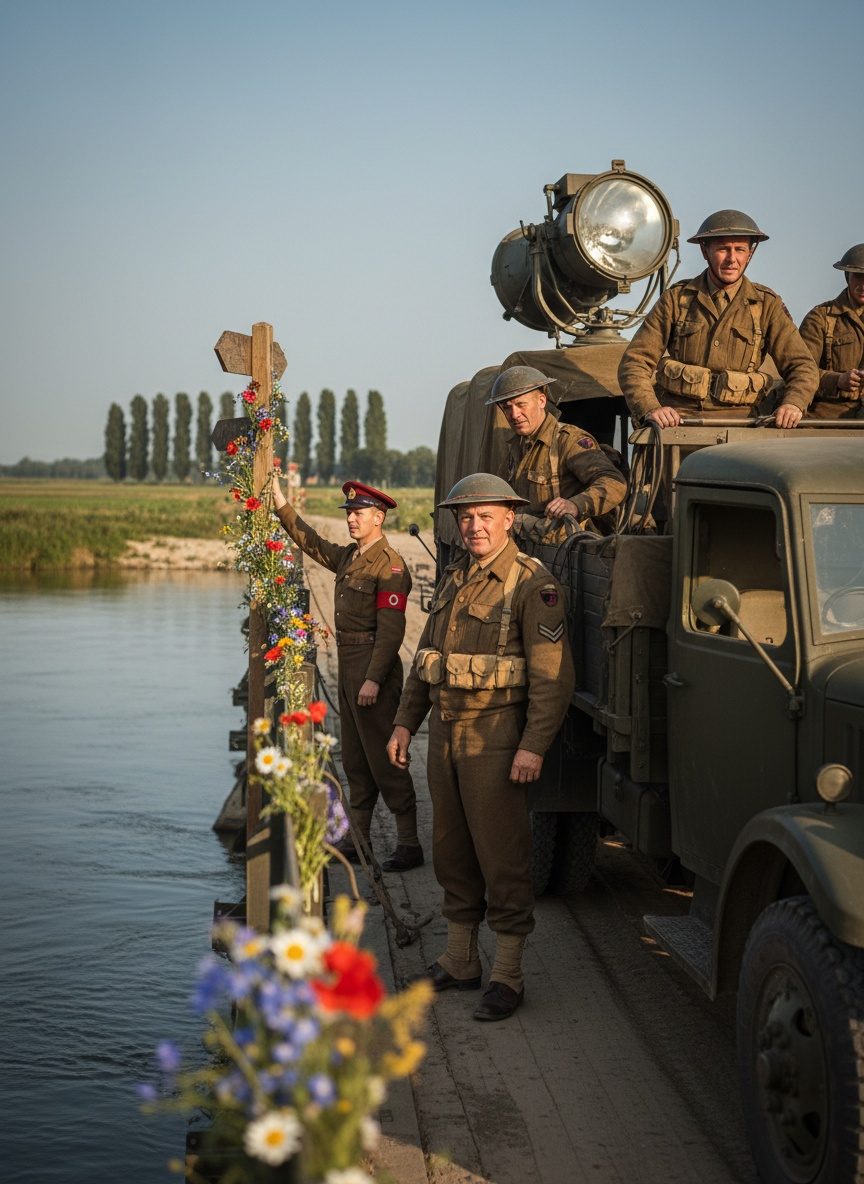
In sharp strokes of colour usually reserved for less traumatic times, a rare film captured this defining moment of the Eighth Army's advance. The lens, guided by fate and perhaps an artist's eye, framed soldiers weaving between heavy machinery and simple wooden structures hastily thrown over the water to form an improvised bridge. The creak of wood and the steady rhythm of boots against temporary slats resonated in contrast to the distant thunder of artillery that lay to the horizon. This bridge was more than an engineering necessity; it was a lifeline flung bravely toward an impending triumph, a fragile but vital artery racing with the blood of victory.
The decision to document this moment in colour was as audacious as the operation itself. While most war footage is steeped in grey, these hues brought to life not only the soldiers' khaki uniforms but also the vibrant greens of the Italian countryside and the fierce reds and yellows of spring wildflowers. The result was not a portrayal of devastation but an unexpected celebration of endurance. As these shades filled the frames, they underscored the paradox of warfare — destruction amid growth, life amid death.
Mechanics of War
This unique footage didn't dwell on the heroics often associated with cinematic portrayals of war. Instead, it turned its gaze on the everyday machinery of conflict. Tanks forged from resilience crawled through, their tracks churning the soft banks into a muddied mosaic, while jeeps raced alongside, laden with maps and munitions, carrying the whispered strategies of commanders pressed tightly against time. The clinking and clattering of tools being used to repair machinery created a staccato soundtrack, punctuated by the shouts of engineers and the occasional distant blast that reminded all of the war still waging beyond.
The Eighth Army had been honing these logistical skills over years of bitter, arduous campaigns from North Africa to the river plains of Italy. For the men in the film, this was not just another crossing; it was the cumulative effort of months of hard-fought tactics and strategies finally bearing fruit. Yet, the film also shed light on an often-overlooked aspect of warfare — the wait. Capturing moments where the human spirit held its breath, the footage freezes soldiers in reprieve, waiting for the next order as they exchanged stories and jokes over their meager rations.
Signs of Humanity
Far from the metallic greys and browns of warfare, there were strokes of human touch along the path. Makeshift signs sprinkled the landscape, humorously adorned with flowers and scrawled slogans encouraging speed and caution. "Mind the Gap" one read, echoing the breezy defiance of soldiers who refused to surrender their levity to the chaos of war. These details, lovingly documented in the rare colour footage, offered a glimpse into the hearts of men etching moments of security amidst peril, reminders of the homes they fought to return to.
It was these small acts of humanity that defined the spirit of the Eighth Army. A perseverance that wasn't just about advancing against an enemy line but also about confronting emotional vulnerability with courage. Soldiers grinned at the camera, their faces lit by bravado and the vibrant hues of budding spring, a stark contrast to the often-shadowed days of combat. Even in the backdrop of a world at war, life continued to crackle with color, vibrance, and a determination that defied the sepia tones normally reserved for such history.
The Light that Caught It All
The significance of this film extends beyond the immediate capture of events. It acts as a vessel of recollection, shimmering in its vivid portrayal of the threshold between destruction and renewal. It suggests an avenue to remember not only the forces that shape history but also the smaller stories and indelible moments that define each participant's journey. For the Eighth Army, the crossing of the River Po signified a tipping point, a collective breath taken before the final push that would break the German hold on Italy. This rare film provides a historical narrative reshaped not by pen and ink but by light and color.
Understanding this moment in full color allows for a deeper appreciation of the complexities and nuances of war. It's easy to forget that within the chaos of grand strategies and monumental battles lies a tapestry woven with individual stories, simple joys, and the enduring human capacity to find beauty amid despair. As the film reels to a close, it's clear that what was captured wasn't merely an army's passage towards victory, but a reflection of humanity's enduring spirit. In the stunning juxtaposition of vibrant colors against the starkness of war, we find a reminder: history isn't just about dates and events — it's also about capturing the light in every shadowed moment.