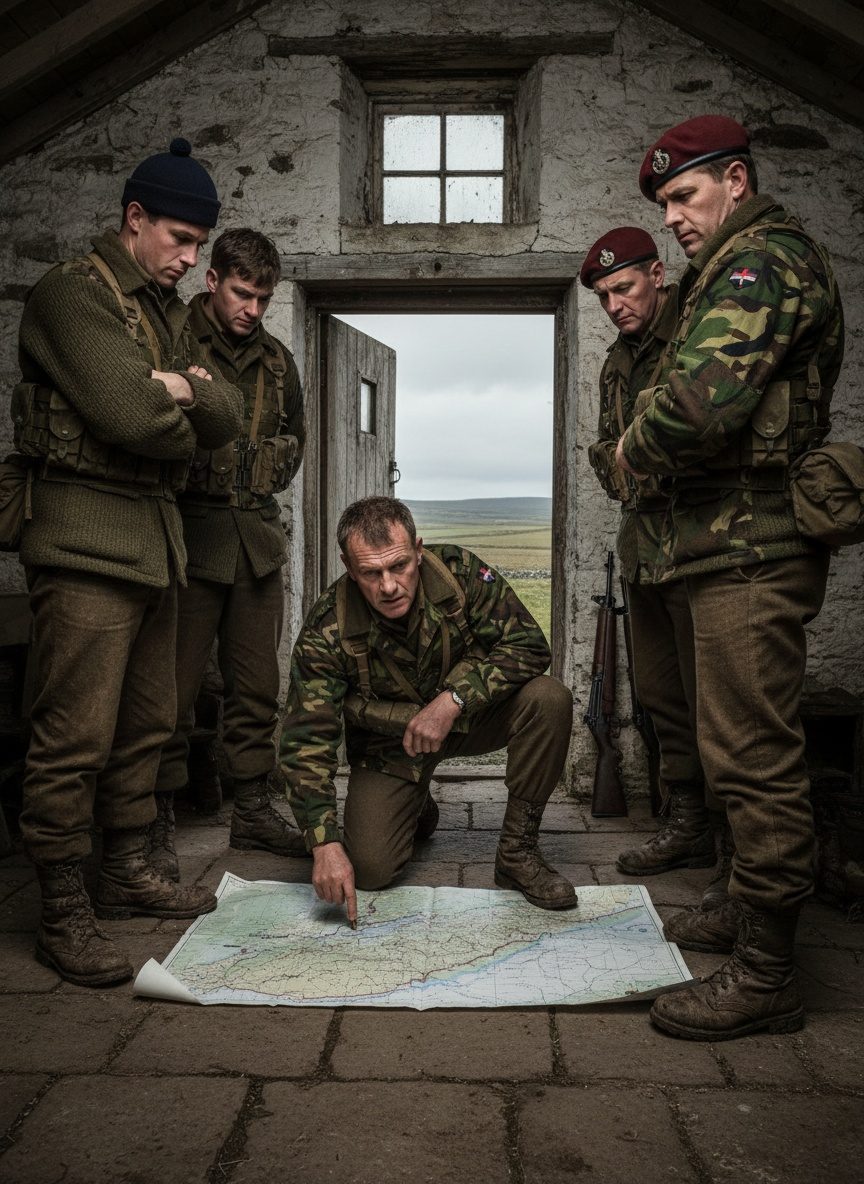
The late May evening on the Falkland Islands was shrouded in the kind of mist that clung to the skin, with a cold that bit through the thickest of uniforms. Shadows played tricks in the dim half-light as the terrain unfurled into the distance, a mixture of rugged heathland and deceptive swamps underfoot. The landscape’s haunting silence belied the tension that was thick in the air, as the soldiers of 2 Para prepared for a critical advance. And yet, unknown to them, their meticulous battle plan was being transmitted across the airwaves to anyone with a radio—including the very forces they were about to engage.
The Unseen Broadcast
As the men of 2 Para awaited their orders to advance on Goose Green, the tension was palpable. The mission ahead was fraught with peril, not least because of the terrain, but even more because of the strategic importance of the target. Taking Goose Green would be a psychological and tactical victory, a decisive step in the ongoing Falklands conflict. The soldiers stood ready, mentally preparing themselves for the battle to come.
Then came the broadcast—a moment so surreal that Lt Col H Jones, the commanding officer, reportedly found it hard to believe at first. It was the BBC World Service, a familiar voice that so often connected British troops with home, now unwittingly betraying their intentions. Through the crackling of radios, their battle plan was laid bare, potentially jeopardizing the entire mission. The calculated component of surprise, an essential element of their strategy, was effectively nullified.
This was not just a careless slip of the tongue. It was a catastrophic breach of operational security, divulging tactical details that could allow Argentine forces, who themselves were equipped with radios, to fortify their positions or even mount a counter-ambush. The anger, disbelief, and sheer frustration of Lt Col H Jones was echoed silently in the hearts of every man under his command, many of whom were realizing just how vulnerable they were.
A Bloody Encounter
The assault on Goose Green went ahead as planned, the decision born of necessity as much as of strategic imperative. The blindsiding broadcast had left the British forces with little choice but to press on, fully aware that their hand had been revealed. In the first light of dawn, the assault began, the sound of gunfire and the acrid smell of smoke quickly dispelling any morning calm.
What followed was one of the most intense and bloody encounters of the Falklands War. Soldiers had to navigate the treacherous landscape, advancing under relentless fire from entrenched Argentine positions. The battle was a grueling sequence of firefights, the clatter of automatic gunfire and the deafening roar of artillery punctuating the cries of orders and rallying calls. The tenacity and courage of 2 Para was on full display, their movements synchronized in the chaos, as they pushed towards their objective.
Despite the compromised start, the British forces displayed remarkable resilience and adaptability. Advances were hard-fought and every inch gained was paid for in blood and sweat. As the day wore on, the sheer determination of the British troops began to turn the tide. They succeeded in breaking through the Argentine defensive lines, their discipline and training reaching a crescendo in the heart of battle. Yet, the cost was steep—lives lost and injuries sustained could have been avoided had the element of surprise been protected.
The Aftermath Echoes
In the aftermath of the battle, the weight of victory did little to lift the somber mood. The broadcast blunder had transformed what might have been a more controlled engagement into a dangerously open confrontation. The bravery of those who fought was undeniable, but the price they paid underscored the lesson of operational security with a grim finality. That broadcast, unintendedly informing the Argentine defense, had not just endangered a mission but had cost lives and could have altered the campaign's course.
On that cold late May evening, the airwaves carried more than just sound. They carried the heavy burden of uncertainty and the steel resolve of soldiers thrust into the unknown. The Goose Green assault became a stark reminder of the margins within which military operations exist—a delicate balance where information can be both a weapon and a hazard.
As we reflect on this moment in history, it serves not only as a tale of bravery but as a cautionary story about the pitfalls of information in warfare. In an era where communication channels are more abundant and accessible than ever, the lessons of Goose Green resonate with a contemporary relevance as strong as any radio signal on that historic day. The past, with all its unintended broadcasts, reminds us of the intricate dance between technology, strategy, and human endeavor in the theater of war.