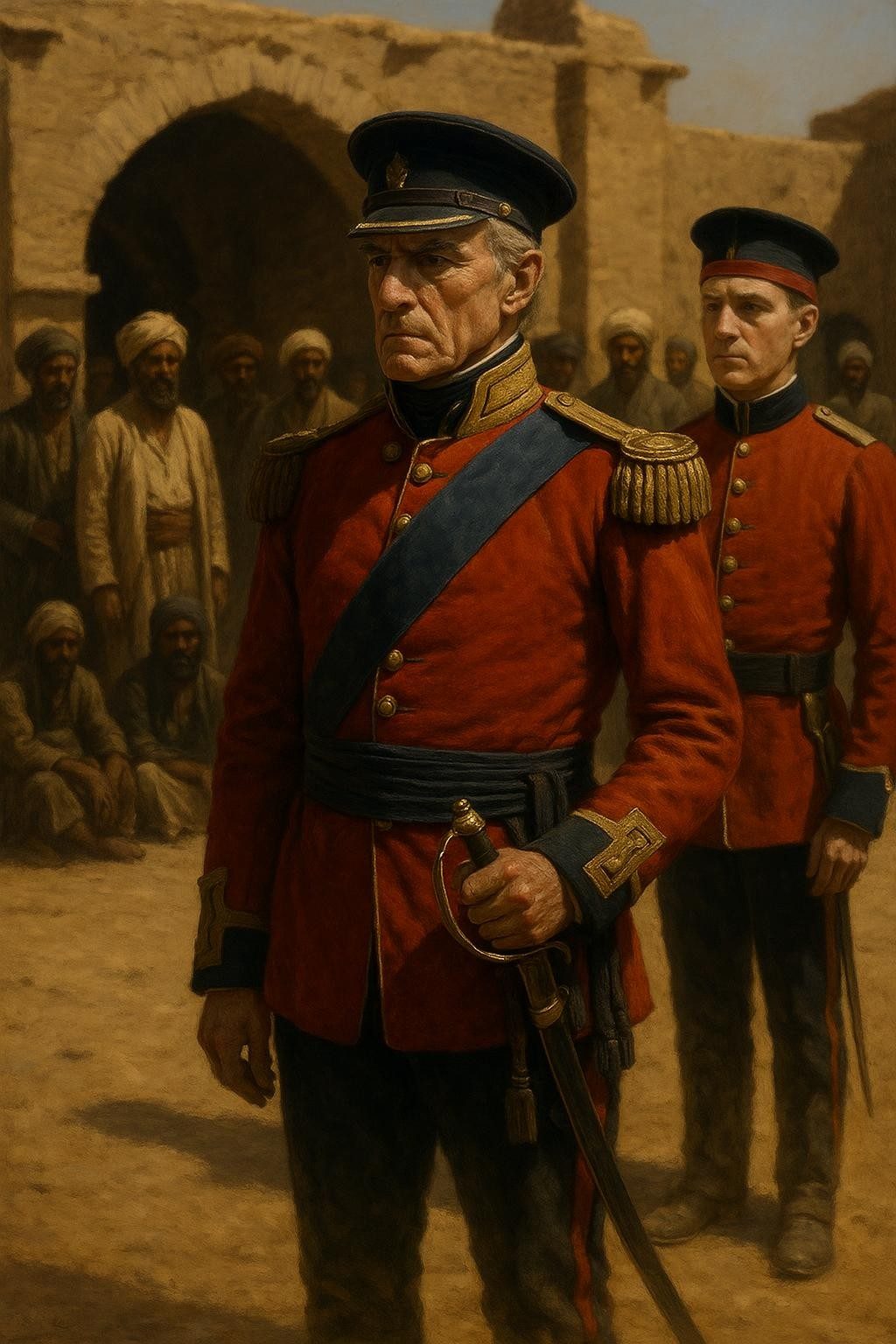
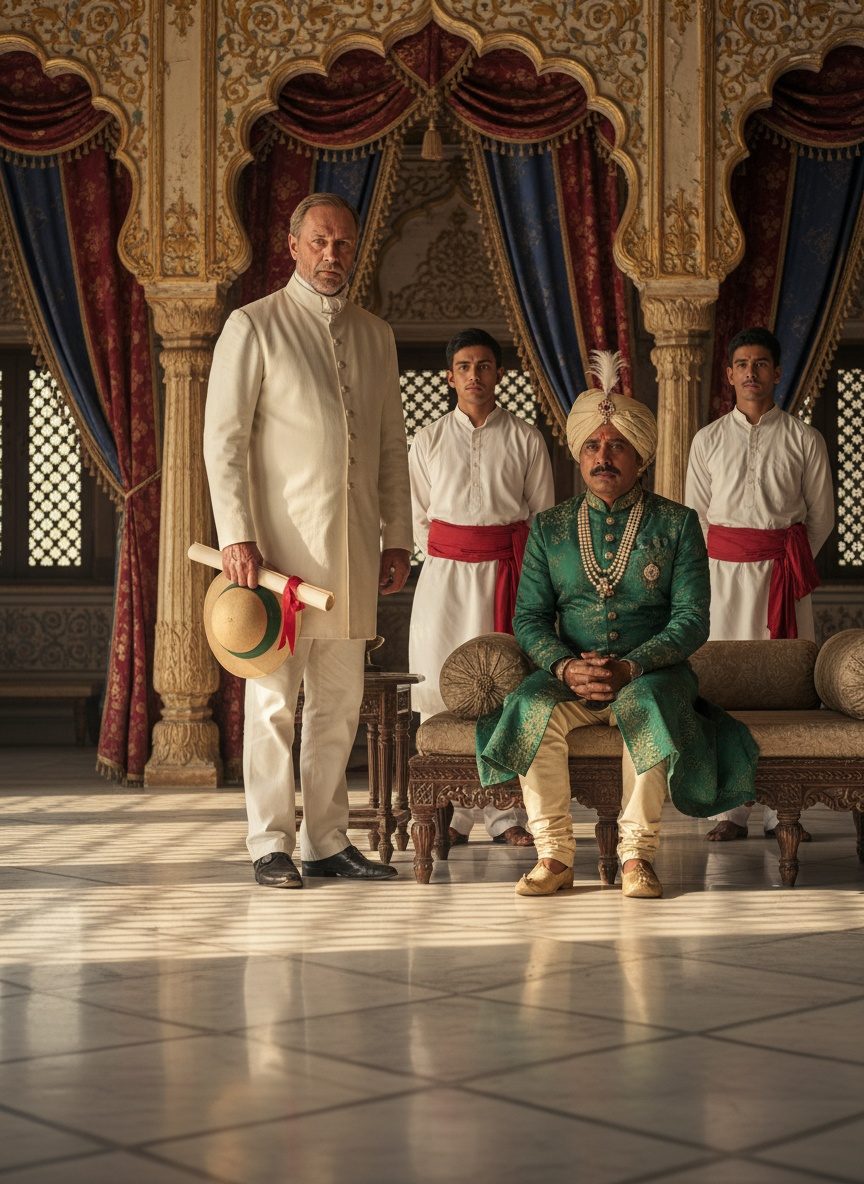
In the pale dawn light of February 1856, Awadh was a land cloaked in a hushed mist, its sprawling mango orchards standing silent as if holding their breath. The air was thick with the scent of dew-kissed earth, a tranquil prelude to the storm that was about to engulf the kingdom. The streets of Lucknow, the capital, lay still beneath the shadow of its grand palatial architecture, unaware that in mere hours, a controversial decree would rip its sovereignty away. For the British Empire, this annexation was another feather in its cap of conquest, but for the people of Awadh, it was a day of grim loss, setting the stage for an empire-shaking revolt.
A Kingdom's Heart Stolen
Nestled in the Gangetic plains, the fertile land of Awadh was known for its rich cultural heritage, often described as the heart of north India. The very soil seemed to sigh with history, having been home to dynasties and epic struggles. By 1856, under the rule of Nawab Wajid Ali Shah, Awadh had become a melting pot of music, poetry, and fine arts. The Nawab himself, a patron of the arts, ruled over a court that was less about power and more a sanctuary for creative brilliance.
However, this aura of artistic splendor masked the simmering political tensions between Awadh and the British East India Company. Arguing that Nawab Wajid Ali Shah was governing ineffectively—citing alleged mismanagement and debt—Governor-General Lord Dalhousie invoked the Doctrine of Lapse, a policy under which Indian states were annexed by the British if found to be 'misgoverned'. On a chilly February morning, with ink yet to dry on official documents, Awadh was formally annexed, dispossessing the Nawab and provoking outrage among his people.
A Thunderclap Announcement
The proclamation of annexation descended on Awadh like a thunderclap. Overnight, the kingdom was stripped of its independence, seen by the British as little more than an administrative maneuver but by the Awadhis as an act of unforgivable betrayal. The streets of Lucknow and surrounding towns teemed with whispers of dissent, elders recounting tales of a time when the Nawabs had ruled without interference. The annexation was not a mere administrative change—it was the assassination of Awadh's identity, a fact that did not escape its people.
Lord Dalhousie, ever the pragmatist, justified the annexation as a necessary measure for stability. Yet, for many Indians, it was clear that the British had overstepped, exploiting legal technicalities to mask their unrelenting hunger for power and resources. The stark reality of colonial rule hit home with unprecedented clarity, awakening a bitter sense of injustice among those who had once lived in harmony under their Nawab’s peaceful, though financially shaky, rule. The backdrop of outrage laid the groundwork for what would soon become the 1857 rebellion against colonial rule.
The Gathering Storm
The annexation of Awadh did more than just aggrieve its inhabitants; it ignited a flame that spread rapidly across the Indian subcontinent. As news of the annexation reached neighboring regions, discontent brewed among sepoys, the Indian soldiers of the British East India Company’s army. Many soldiers hailed from Awadh and felt the insult to their homeland deeply. Combined with existing grievances against British military practices and racial discrimination, the annexation served as a catalyst for widespread unrest.
Within months, tensions reached a boiling point. The sepoys, having grown disillusioned with the systematic dismantling of their cultural and religious identities by colonial policies, found common cause with civilians and royalty alike who resented British interference. What started as sporadic murmurs of rebellion in the ranks of sepoys soon gathered momentum, evolving into a united call for resistance that would echo throughout the subcontinent.
Awadh may have been annexed quietly, but the spark of rebellion it ignited roared to life with fierce intensity. From Lucknow to Kanpur, the desire to reclaim sovereignty pulsed through every town and village, entwining with long-standing grudges against British rule. It was a story of heritage wounded, sparking a chorus of defiance.
Echoes of an Empire in Turmoil
The annexation of Awadh by Lord Dalhousie heralded an era of upheaval that reverberated beyond India's borders. As India erupted in rebellion during the following year, the British authorities found themselves facing the reality of their miscalculations. The 'First War of Independence,' as it came to be known, marked a watershed in British-Indian relations, both reshaping British colonial policy and sowing the seeds of a future freedom struggle.
In retrospect, the annexation of Awadh stands as a dramatic reminder of the perils of imperial hubris. The quick decision to subsume a kingdom deemed 'unfit' masked deeper social complexities and painted over the vibrant mosaic of Indian sovereignty. Yet, it was also a moment that galvanized a sense of unity across disparate regions in India, showcasing the shared yearning for self-determination.
While the British ultimately crushed the rebellion, it marked the beginning of the end for the British East India Company's direct rule in India, leading to the establishment of the British Raj. In many ways, Awadh’s annexation was not just the spark of a revolution but an important chapter in the larger narrative of India's struggle for self-rule—an evocative reminder of how one miscalculated decision can awaken a nation’s soul, resonating through the corridors of history with an unyielding call for justice.