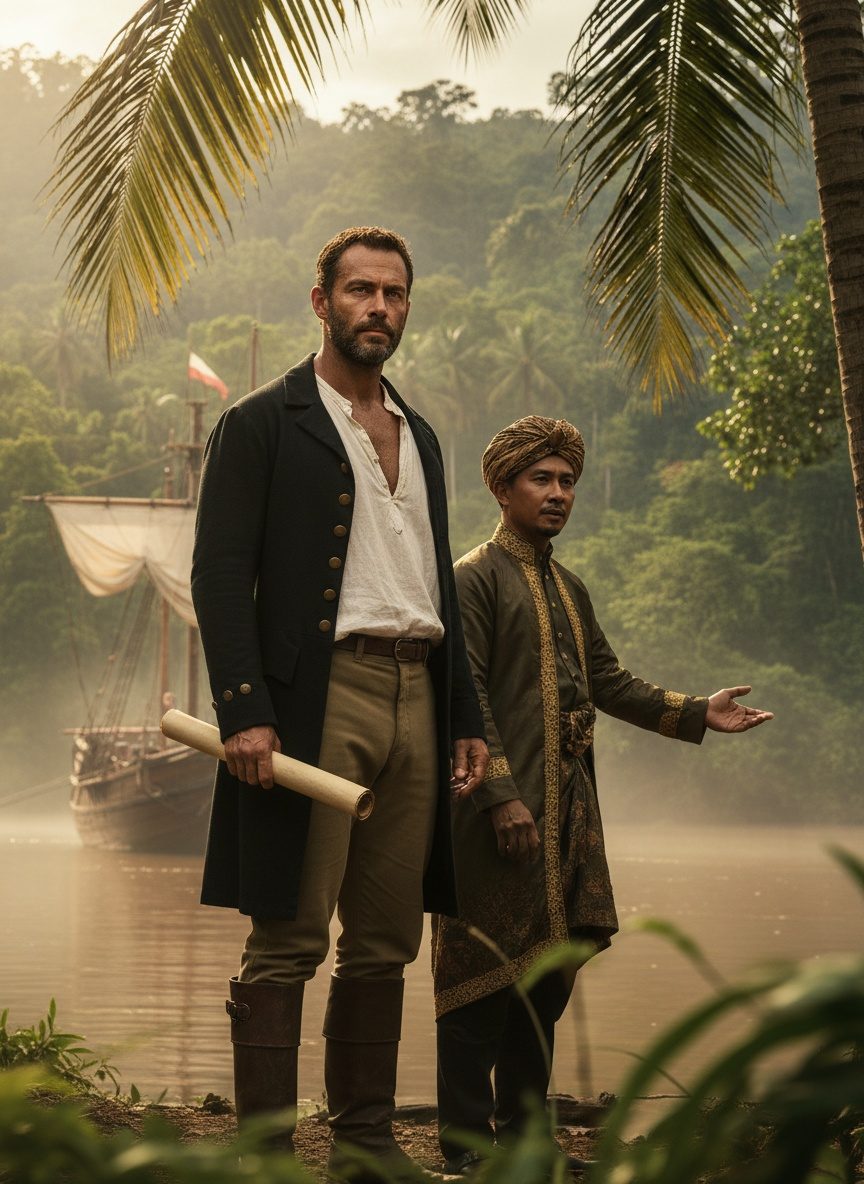
The transition of the Gold Coast to Ghana was a simple changing of flags. But beneath this ceremonial gesture was a profound transformation that reshaped a nation's destiny.
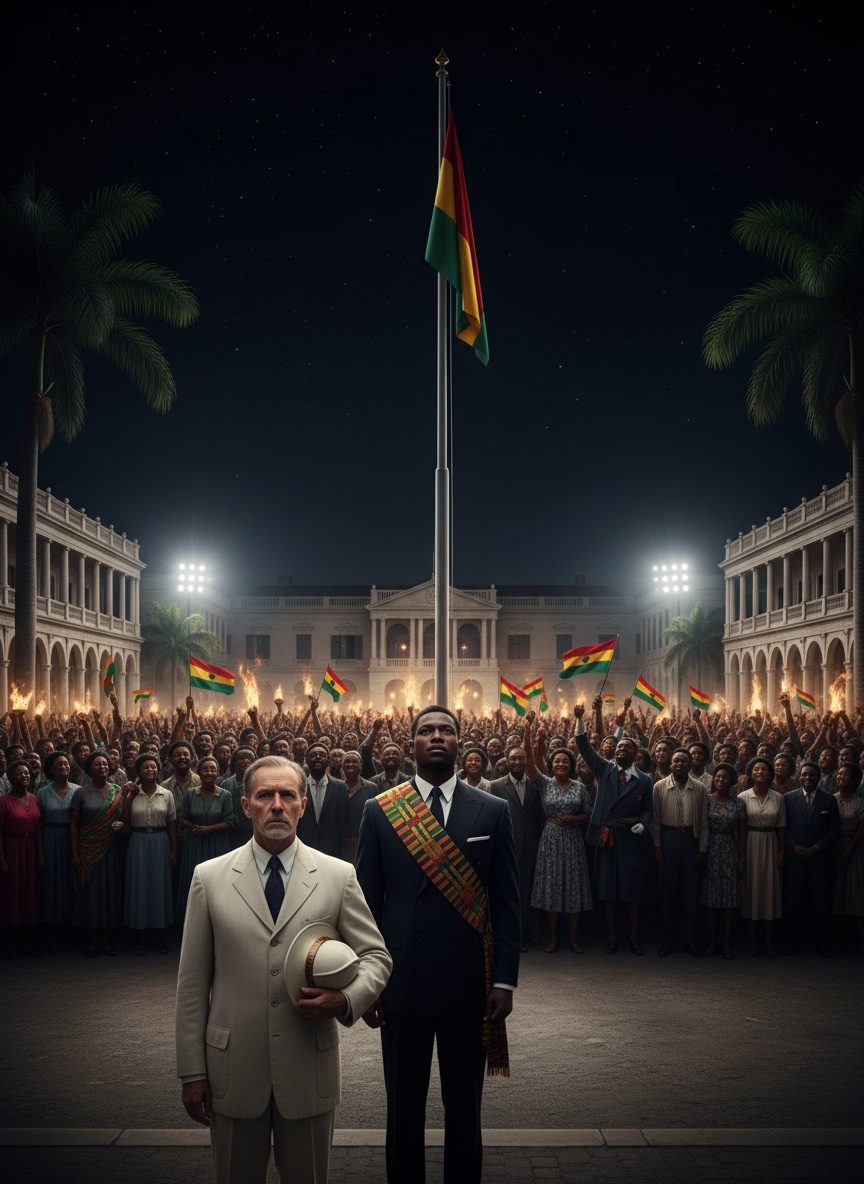
As the first light of March 6, 1957, began to filter through the early morning haze, Accra lay under the quiet anticipation of a historic dawn. Streets that usually thrummed with the everyday clatter of traders and passerby were instead filled with a throng of one hundred thousand souls, their collective heartbeat echoing with hope and possibility. The Union Jack, which had billowed over the Gold Coast for generations, was poised to come down for the last time, giving way to a new symbol — Ghana's red, gold, and green flag adorned with a bold black star. This was more than a simple swap of flags; it was a passing of the torch, a turning of the pages in a story that the colonial rulers had long been scripting without the voices of the people who lived it.
The audience, gathered as far as the eye could see, represented a microcosm of a nation poised at the precipice of change. Among them were statesmen clad in traditional kente, women in vibrant sarongs, and children perched on their parents' shoulders, eyes wide with the thrill of witnessing history in the making. This was not merely a governmental transition; it was the dawning of a cultural renaissance that had been yearning to break free from the chains of imperialism. Every face in that crowd seemingly shared the same hopeful gaze, as if urging history to lean in their favor.
The emotions that swept through the gathered masses were as palpable as the morning mist. At the stroke of midnight, as the last note of "God Save the Queen" faded into the night, the silence was filled by the resonant chords of the new national anthem. It was a moment suspended in time, marking the end of British colonial rule and the birth of a new national identity. Accra became the epicenter of Pan-African aspirations, a beacon for a continent that watched with bated breath.
Yet the birth of Ghana was not an impromptu triumph. It was the culmination of decades of political maneuvering, visionary leadership, and relentless struggle. Figures like Kwame Nkrumah — though unnamed in traditional textbooks — had orchestrated this symphony of liberation through diplomacy, activism, and socioeconomic reform. Nkrumah, a cornerstone of this movement, acknowledged that independence was as much about breaking free from political shackles as it was about creating a future where African pride could flourish unabated by external influences.
The euphoric scenes in Accra were mirrored across the newly minted nation, from the cocoa farms in the west to the minerals-rich terrains in the east. The richness of Ghana’s land had long made it a jewel in the crown of the British Empire, and as such, its path to independence was watched keenly not only by the colonial powers but also by fellow African territories. Ghana’s independence was a catalyst, igniting a ripple effect that inspired other colonies to dream — and eventually achieve — freedom.
For the British, the departure from Accra marked an unprecedented moment in their colonial enterprise. It was the first time a sub-Saharan colony had transitioned to self-governance through peaceful means, setting a legal and diplomatic precedent. The transfer of power on that historic midnight was neither abrupt nor unanticipated; it was a carefully orchestrated event that required tactful negotiation and the foresight to avert bloodshed and chaos.
As the crowd erupted in jubilant celebration at the sight of their new flag rising, the British governor-general stood solemnly, a silent testament to the ebbing tide of an empire that had once stretched across continents. He was a part of something much larger than himself, a change that signaled a new chapter not only for Ghana but for Africa and the world order. The resounding cheers were a blend of joy and acknowledgment that a new era had dawned, one built on self-determination and the rich tapestry of diverse cultures interwoven into a singular national identity.
Accra's night became a canvas painted by the bright hues of fireworks and the jubilant dances of a redefined people. Under the vast African sky, young dreamers dared to re-imagine the bounds of possibility, inspired by stories of past resilience and future potential. Older generations, seasoned by years of struggle, finally saw their hopes crystalize into reality. Communities once distant from the political discourse now found their voices resonating in the echoes of colonial departure.
This transformation was not solely about political boundaries; it was a reconnection to roots, an unearthing of history sculpted by its indigenous people. The Gold Coast's transformation to Ghana was an ode to a continent's rich legacy before colonial interference, a reclaiming of narratives long overshadowed by imperial chapters. It was a revitalization of traditions, languages, and stories waiting to be rediscovered and redefined by a younger generation ready to write their own future.
The turning of power on that March night was a signal of promise, yet it did not mark the end of challenges. The complexity of building a unified nation from the vestiges of colonial infrastructure required intentional forging of alliances, economic foresight, and continued dedication to educational emancipation. But the spirit of unity and resilience, so vibrantly on display in Accra that night, promised a path forward based on collaboration and innovation.
Today, the legacy of that midnight handover extends far beyond geographic confines. Ghana’s journey from colony to the nation serves as both a historical guidepost and a beacon of hope for peoples worldwide striving for self-identification amidst modern complexities. It reminds us that the most transformative changes often come not from abrupt upheaval but from the quiet, resolute determination to reclaim one's narrative. As Ghana continues its path on an ever-evolving continent, the indelible echoes of that fateful night mingle with the sounds of a new day — one that carries with it the whispers of those who witnessed the first unfurling of hope in 1957.