
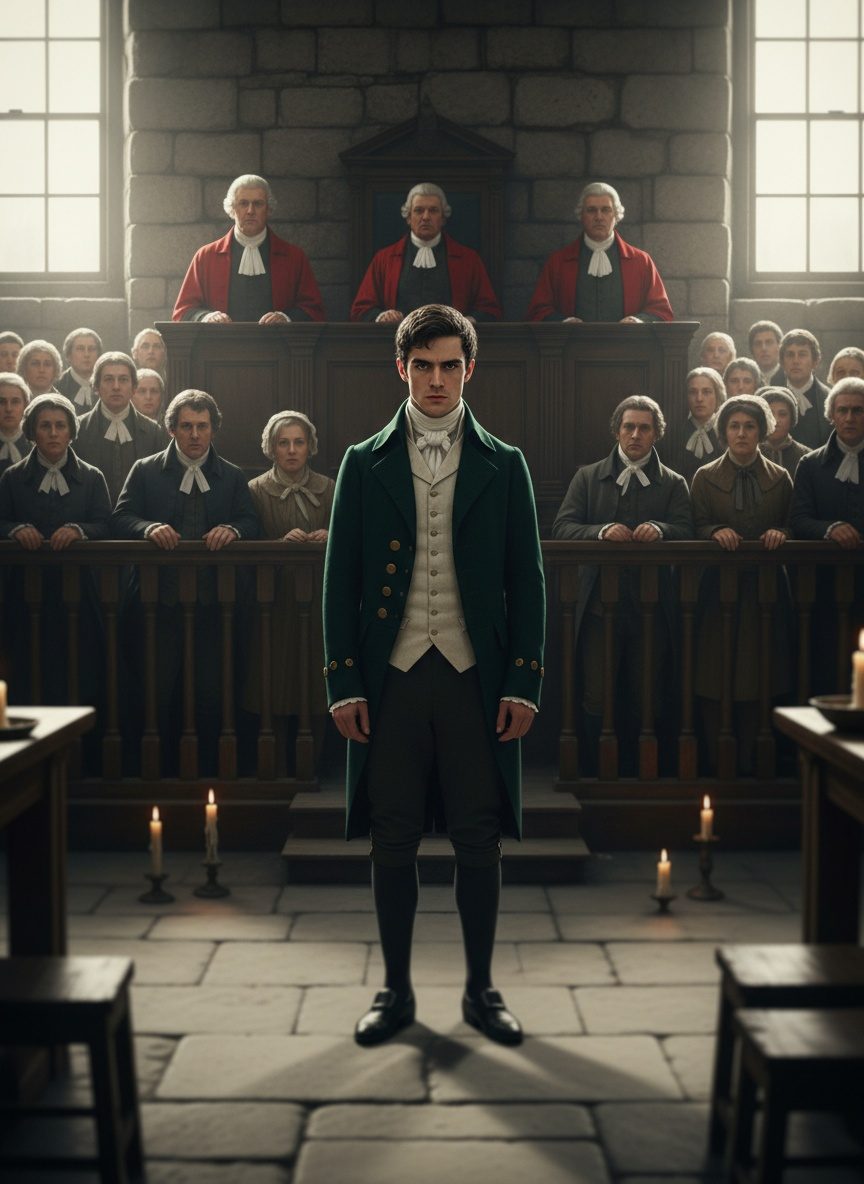
He was twenty-five years old. Never before did Robert Emmet hold command in battle, yet he dared to dream the impossible.
The Lawyer Turned Rebel
Robert Emmet was not the sort one would expect to find at the forefront of an insurrection. Born to a Protestant family in Dublin, educated at Trinity College, he seemed destined for a prestigious law career rather than rebellion. Yet, Emmet's heart beat with an Irish fervor that spoke volumes of longing for freedom. It was his time at Trinity that stirred those embers to flame; there, in the heart of academia, he became entangled in the complex tapestry of Irish nationalism. His passion for the cause embroiled him in the activities of the United Irishmen, a radical group aimed at ending British domination. As the 1798 rebellion faltered and was ultimately crushed, Emmet's resolve only intensified.
In the summer of 1803, at the ripe age of twenty-five, he orchestrated one of the boldest, if not most quixotic, ventures in Irish history. With fewer than one hundred men, Emmet intended to seize Dublin and spark a nationwide uprising. It was a plan born from youthful idealism and desperation, yet one that promised the kind of dramatic change that no mere legislative debate could achieve. His vision was simple yet profound — to strike a blow against the British Empire so resonant that the world would have no choice but to take notice.
The Ill-Fated March on Dublin Castle
Emmet's chosen day of rebellion was marked more by mishap than martial prowess. His plan was meticulous, involving an elaborate array of homemade weapons and strategic infiltrations. However, the fates were unkind. The premature explosion of a powder depot he intended to use alerted the authorities ahead of time. The rebel forces, drawn largely from the restless and disenfranchised, possessed no formal military training. Their ardor was high, but discipline was another matter.
Despite dwindling support, Emmet pressed on. On July 23, 1803, his scant band of men took to the streets of Dublin, a chaotic ensemble against the might of the British guards. To call it a skirmish would be generous. Confrontations were disjointed, foiled by misunderstanding and betrayal. Yet for a few fateful hours, on the cobblestone streets shadowed by Dublin's architecture, hope mingled briefly with fear and flames. The dream of an emancipated Ireland was tangible in every clash of iron.
The Speech that Stirred a Nation
The brief rage against the empire was quickly quelled. Emmet, captured before he could escape the city, found himself facing the gallows. It was here that Robert Emmet would carve his name into the annals of Irish resistance—not with a sword, but with words. His final speech, delivered extemporaneously from the dock, echoed with a passion that transcended the courtroom's confines. "Let no man write my epitaph," he declared, vowing that his legacy should live in deeds, not a graven stone forgotten by passing time.
This speech was more than a defense; it was a testament to the convictions that had driven him. Emmet's defiance encapsulated the spirit of rebellion, one that would reverberate across Ireland and the world. His words were like a seed, planted in the fertile soil of Irish soul and struggle, nurturing the century of uprisings that would follow. While history's footnotes might record him as a failed revolutionary, those who heard his speech or read of it in clandestine papers heard a clarion call.
The Echoes of the Scaffold
Emmet's execution on Thomas Street bore an aura of tragedy, yet it was this final act of sacrifice that immortalized him. With the noose in place, the crowd watched, somber beneath Dublin's often-clouded sky. Onlookers included soldiers, common folk, and even some rumored spies. Rumblings pervaded the crowd as silence draped over the scene like a somber autumn fog. It was in this silence that the spirit of resistance found one of its most poignant symbols.
His death was not the extinguishing of rebellion’s flame but its kindling. That day, as life was taken from him, life was given to an ideal. From 1803 onward, every insurgent, every freedom fighter, would draw from the well of Emmet’s resolve. His story spread far beyond Ireland, reaching the ears of revolutionaries across the globe, from American shores to the edges of Europe. Emmet’s scaffold became a symbol of martyrdom and atonement, transforming a failed coup into timeless courage.
An Undying Legend
Robert Emmet's brief rebellion did not achieve its immediate goals, but its legacy has influenced generations. Behind every uprising that saw hardened hands take up arms, that saw freedom embraced from Belfast to Ballinasloe, laid the shadow of this young revolutionary. Martha Ballard, an ordinary midwife in a burgeoning America, penned in her diaries her admiration for Ireland’s fight, echoing sentiments felt worldwide in not-so-unsympathetic whispers.
The past may have swallowed the sound of Emmet’s voice, but his words remain. For Ireland, he became emblematic of an eternal struggle for self-determination. His short, impassioned life and tragic end have ensconced him in the pantheon of Irish heroes, reminders of the cost and value of resistance. Two centuries later, the story of one man's defiant stand at the gallows serves as both inspiration and warning — that rebellions, though bloodied, may lay the groundwork for nations reborn.