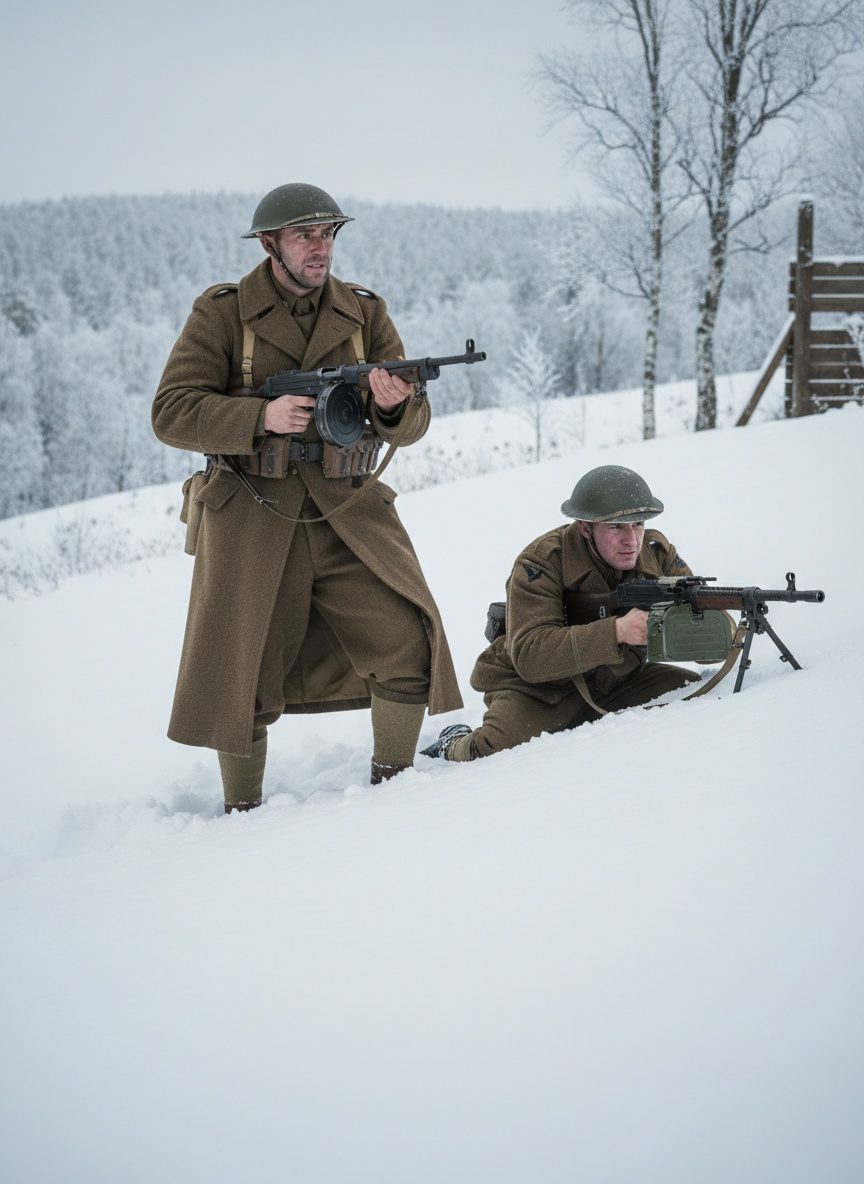
March, 1942. The ground was a blanket of glistening white, the snow laying heavy around the training grounds near Hawick in the Scottish Borders. The air was sharp, carrying a biting chill that seeped through layers of fabric and skin, promising to harden even the most resilient soldiers.
Forged in Ice
The desolate Scottish countryside seemed an unlikely forge for warriors destined for Europe’s fiercest battlegrounds, yet in 1942, it became the crucible in which Royal Marines were tested. No enemy signal flares punctuated the cold sky above, no thundering artillery shattered the peace of the white valleys—only the low hum of discipline and determination reverberated through the cold air. The Royal Marines Division was preparing for a war not yet fully defined but anticipated with grim certainty. Thrust into these martially untouched landscapes, they were challenged by a different foe: the raw, unyielding ferocity of nature itself.
While the specifics of their future orders remained shrouded in the wartime bureaucratic fog, the purpose of their training was crystal clear. Men moved swiftly through snowdrifts, resembling phantom figures against the white tableau, their breath visible in desperate huffs. The Thompson submachine guns clutched in their frost-stiffened hands became extensions of themselves, as did the Bren guns, whose strategic importance required mastery despite numb fingers. Each exercise served to build endurance and adaptability, qualities as critical as marksmanship in warfare.
The Hidden Theatre of Hawick
Situated in the heart of Scotland's Borders, the Hawick training grounds appeared as a timeless expanse secluded from the chaos that engulfed much of Europe. Yet, the isolation offered unmatched advantages. It allowed for uninterrupted drills where men honed their skills to razor-sharp precision, their silhouettes dark blots against the vast white void. Contrary to popular belief, the true theatre of war lies not only where battles are fought but where they are planned—and in Hawick, strategies were improvised and revised with relentless determination.
The bitter cold became an adversary that challenged the resolve of even the most steadfast soldiers. Yet, this was by design. The British military leadership understood that the ability to endure—and operate effectively—in brutal conditions could spell the difference between success and disaster when engagements carried troops to the diverse and often unpredictable European battlefronts. Thus, Scotland, with its rugged hills and unpredictable weather, stood in for countless hypothetical theatres, ensuring that when the moment came, these men would respond with the practiced precision of veterans.
Men Among Shadows
In recounting the stories of these Marines, one might marvel at the ritualistic nature of their preparations. Rising to the sound of tinny bugles cutting through frigid dawn air, these men, many only just freed from civilian lives, found themselves redefined by the discipline and demands of military life. Over hot, steaming cups of tea that served as lifelines through the biting cold, camaraderie flourished. They joked about frostbitten toes and made light of calloused hands; humor softened the harsh edges of their reality, while shared hardships bonded them—a brotherhood born of necessity.
Illustrative of their impending reality were the faceless orders: nothing more than crude shadows on a map, ever-changing yet pointing forward. Each Marine understood he could be shipped to any corner of an empire besieged on multiple fronts. In the thorough drilling, they learned more than just tactical maneuvers or weapon handling; they developed an instinctive response to commands, a sense of unity and trust that transcended rank and individual ambition. And in doing so, they moved in harmony—a human mechanism prepared to tip the scales of conflict in their favor when called upon.
Into the White Unknown
As March snow continued to fall on Hawick’s training hills, the scene epitomized the greater uncertainty of wartime. Amidst the drills and the frost, these men of the Royal Marine Division were unaware of the intricate chess game playing out far above them—yet their role as pawns and knights in the grand strategic scheme loomed ever closer. What remained unchanged was their readiness to be thrust into the foreboding unknown, with no certainty of return.
This story matters because it casts light on a page often left unread beneath the chronicles of decisive battles and clattering tank brigades. It underscores the unseen but staggeringly essential gears of war: training, preparation, and the resilience needed to endure hostile environments for missions that eventually reshaped the tides of history. As we reflect on the quiet courage of those who trained in Scotland’s frosty embrace, their dedication resonates in the silent acknowledgments long overdue—perhaps that’s the legend they left out of the textbooks, but today, it is told.