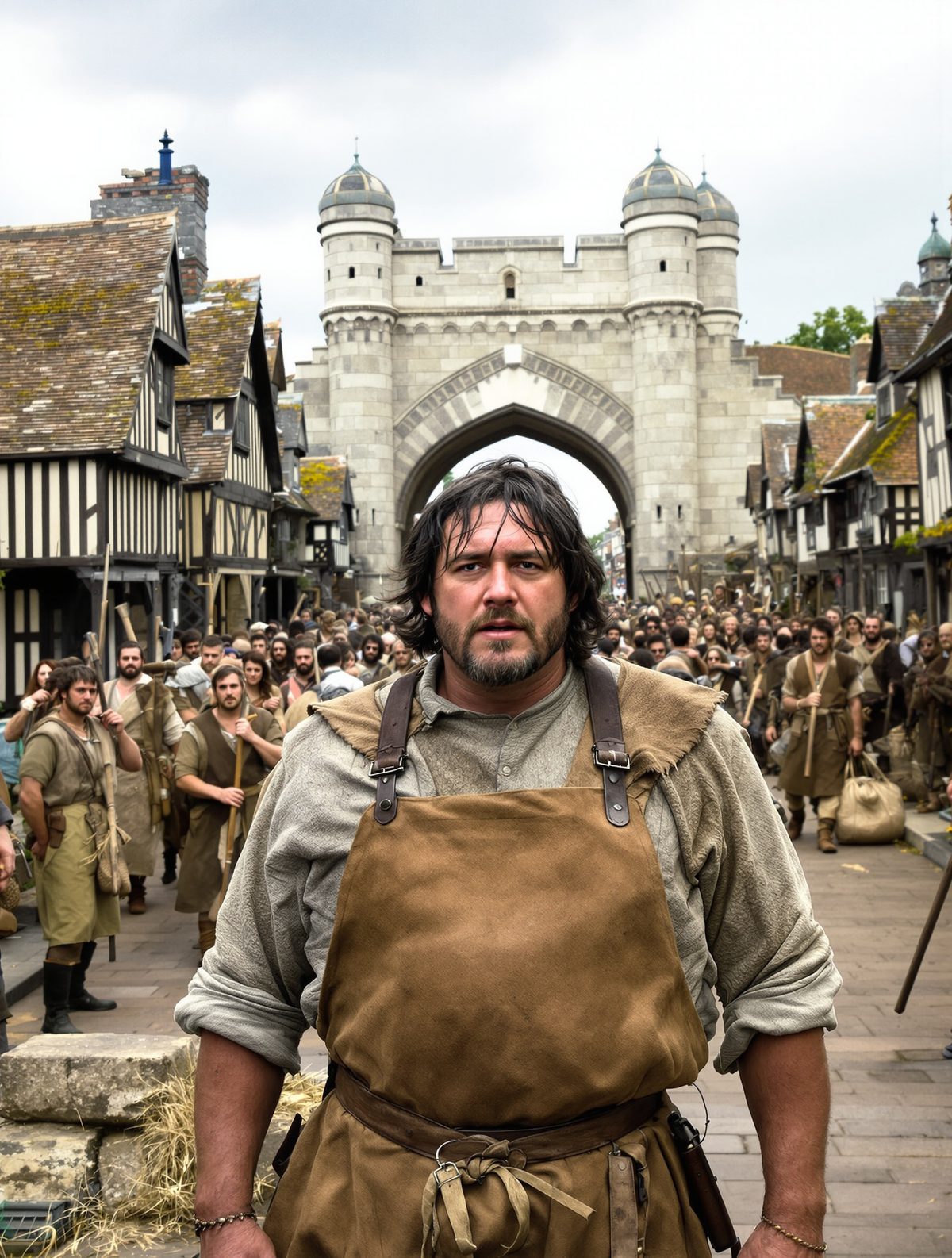
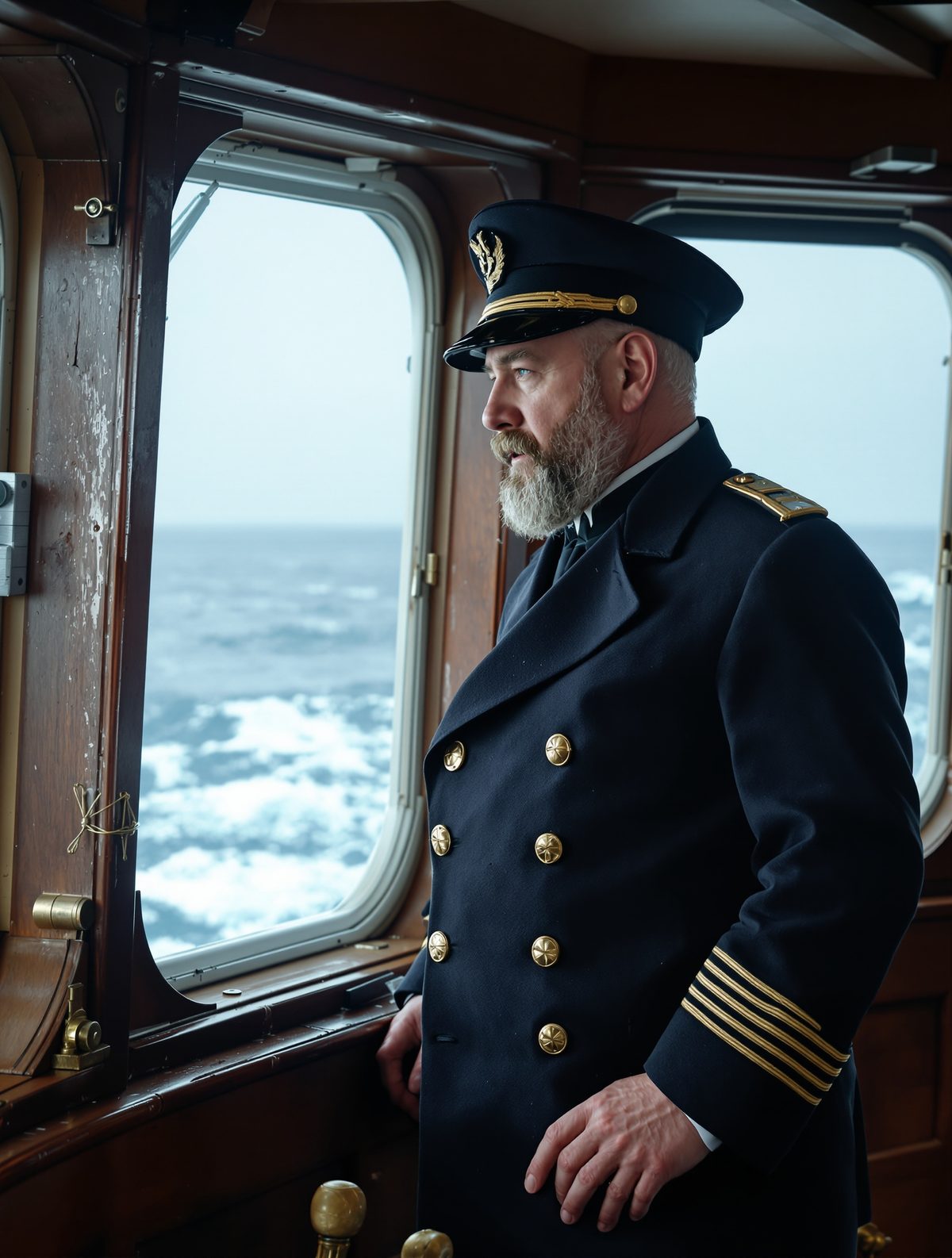
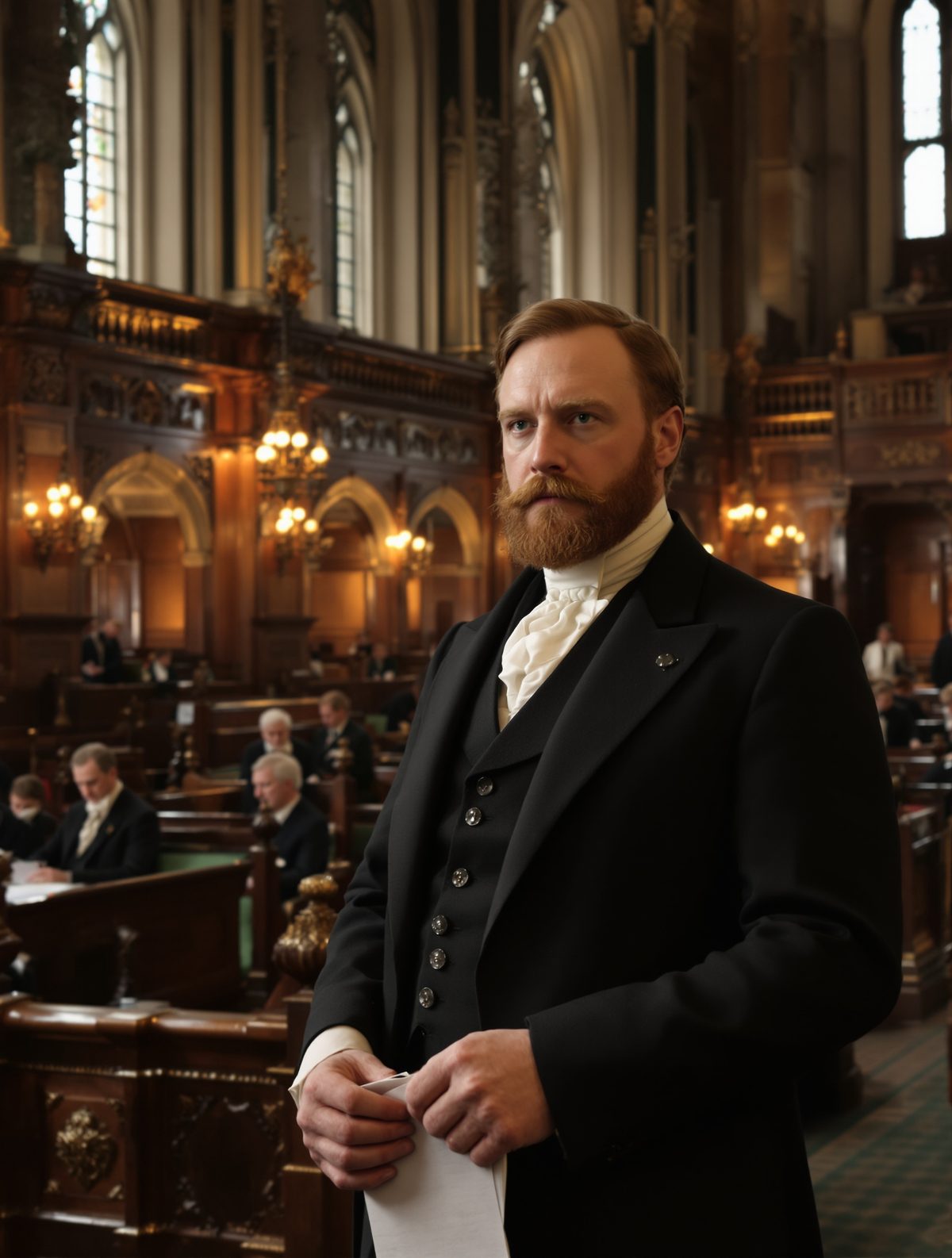
The flickering candlelight cast dancing shadows across the rough stone walls as Dr. Arthur Neve steadied his trembling hands. Outside, the wind howled through the peaks of Kashmir at 11,000 feet above sea level, but inside his makeshift operating room, time seemed suspended. Before him lay Tenzin, a weathered Tibetan trader who hadn't seen his wife's face in three years. Cataracts had stolen his sight, but tonight—if the British missionary's steady hands held true—that was about to change forever.
It was 1894, and in the remote mountains where ancient trade routes carved through impossible terrain, word of the strange English doctor who performed miracles was beginning to spread like wildfire across the roof of the world.
The Unlikely Mountain Healer
Dr. Arthur Neve never intended to become a legend. Born in 1858 to a comfortable English family, he had trained at the prestigious London Hospital before answering the call of the Church Missionary Society in 1882. His destination: Kashmir, that jewel of the Himalayas where the British Empire maintained its most precarious foothold against the Russian advance.
But Neve saw something his military and administrative counterparts missed entirely. While they focused on the Great Game of imperial politics, he noticed the countless people suffering without any medical care whatsoever. In Srinagar, the summer capital, he established his first hospital. Yet it was his decision in 1893 to build a second facility in Leh, Ladakh—at an altitude that would challenge even modern medical facilities—that would cement his extraordinary legacy.
The numbers alone tell an incredible story. At 11,500 feet above sea level, Leh sits higher than the peak of Mount Washington. The winter temperatures regularly plummeted to -40°F. There was no electricity, no running water, and certainly no modern surgical equipment. Supply caravans could only reach the outpost during four months of the year when the mountain passes weren't buried under avalanches.
Yet somehow, in this impossible place, Neve would perform over 6,000 operations during his four-decade career.
Surgery by Candlelight in the Forbidden Land
The operation that changed everything took place on a bitter February night in 1894. Tenzin had traveled for six weeks from his village beyond the Tibetan plateau, guided by his teenage son and sustained only by rumors of the English doctor who could restore sight to the blind. When they arrived at Neve's hospital—a modest building constructed from local stone and timber—Tenzin was near death from exhaustion and frostbite.
Cataract surgery in the 1890s was perilous even in London's finest hospitals. At altitude, with primitive equipment and no anesthesia beyond what Neve could improvise from local herbs and alcohol, it seemed almost suicidal. But Neve had been studying the condition obsessively. He'd noticed that many traders and pilgrims arriving from Tibet suffered from cataracts, likely caused by the intense ultraviolet radiation at extreme altitudes combined with the blinding glare off snow and ice.
Working by the light of yak-butter candles, Neve made his incision. His instruments were basic: a small knife he'd fashioned himself, forceps, and steady nerves honed by years of frontier medicine. The entire procedure took less than twenty minutes. When Neve finally removed the bandages three days later, Tenzin's eyes filled with tears—not of pain, but of wonder. He could see his son's face clearly for the first time in years.
What happened next would have seemed impossible to anyone familiar with the jealously guarded secrets of Himalayan trade routes.
When Miracles Travel the Ancient Routes
The news of Tenzin's restored sight spread along the very same paths that had carried silk, spices, and precious stones for over a thousand years. Tibetan merchants, many of whom traveled these routes annually, carried the story from monastery to village to trading post. Within months, a steady stream of patients began arriving at Neve's mountain hospital.
The logistics were staggering. Families would sell livestock and jewelry to fund journeys that could take two months each way. They crossed passes over 18,000 feet high, where the air is so thin that even native highlanders struggle to breathe. Many arrived in the dead of winter, when temperatures could kill an exposed person in minutes, because they simply couldn't wait for spring.
Neve's patient logs, meticulously maintained and now preserved in the archives of the Church Missionary Society, reveal the extraordinary diversity of people who sought his care. Tibetan monks walked from Lhasa, over 400 miles away. Kashmiri shepherds descended from summer pastures. Afghan traders diverted from the Silk Road. Hindu pilgrims en route to sacred sites. Even occasional Russian explorers, technically enemies of the British Empire, sought treatment under an informal medical neutrality that Neve enforced with quiet determination.
By 1900, Neve was performing over 200 cataract surgeries annually—a number that would be impressive for a modern eye clinic, let alone a frontier hospital operating without electricity or running water.
The Hospital at the Edge of the World
As his reputation grew, so did the challenges. Neve's hospital in Leh became a remarkable institution that defied every conventional notion of medical practice. The building itself was a marvel of adaptation: thick stone walls to withstand the brutal winters, windows positioned to capture every precious ray of mountain sunlight, and a surprisingly sophisticated system of ventilation that prevented the buildup of smoke from heating fires.
But the human logistics were even more extraordinary. Neve's wife, Ethel, proved to be an indispensable partner, training local women as nurses and managing the complex cultural sensitivities that arose when treating patients from dozens of different ethnic and religious backgrounds. She learned to speak Ladakhi, Tibetan, Urdu, and several local dialects—skills that often meant the difference between successful treatment and cultural misunderstanding.
The hospital operated on principles that were radical for the time. Neve refused to evangelize to his patients, believing that medical care should never be contingent on religious conversion. He learned local healing practices and incorporated herbs and techniques that proved effective. Most remarkably, he trained local assistants in surgical procedures, creating what was essentially the first medical school in the region.
Supply procurement became an art form. Surgical instruments had to be ordered from London and transported by ship to Bombay, by rail to Rawalpindi, and then by caravan through some of the most dangerous terrain on earth. A single scalpel might take eight months to reach Leh. Medicines had to be carefully selected for their ability to survive extreme temperature variations and months of transport on pack animals.
The Ripple Effect Across the Himalayas
By 1905, Neve's influence had created something unprecedented: a medical network spanning the highest mountains on earth. Former patients became informal medical ambassadors, teaching basic eye care in their home villages. Trading communities began organizing group medical expeditions, pooling resources to bring multiple patients to Leh simultaneously. Monasteries started collecting donations specifically to fund medical journeys for impoverished villagers.
The British colonial administration, initially skeptical of Neve's work, gradually recognized its strategic value. His hospital became a soft power asset that no amount of military force could match. Russian expansion into Central Asia, a constant British nightmare, became less threatening when local populations viewed Britain as a source of healing rather than merely conquest.
Neve's surgical innovations, born from necessity and isolation, would eventually influence eye surgery far beyond the Himalayas. His techniques for operating in extreme conditions, his improvisations with local materials, and his methods for preventing infection without modern antiseptics were studied and adopted by military surgeons and frontier doctors throughout the Empire.
Perhaps most remarkably, his hospital created one of history's first examples of medical tourism—though the tourists risked their lives to reach it.
Legacy Written in Light
When Dr. Arthur Neve finally retired in 1920, he had personally restored sight to over 5,000 people at his mountain hospital. But his true legacy extended far beyond those individual operations. He had proven that sophisticated medical care could flourish in the most unlikely places, that cultural barriers could be overcome through genuine compassion, and that sometimes the most profound human connections happen at the very edges of the world.
Today, as telemedicine and global health initiatives struggle to reach remote populations, Neve's story offers both inspiration and practical lessons. His success came not from advanced technology, but from deep cultural understanding, relentless adaptation, and an unwavering commitment to serving those who had nowhere else to turn. In our hyperconnected age, when we can consult specialists halfway around the world through video calls, it's humbling to remember a time when healing required someone brave enough to carry a scalpel into the mountains and steady enough to use it by candlelight.
The flickering flame that illuminated Tenzin's surgery in 1894 became a beacon that drew thousands across impossible distances, proving that sometimes the most powerful force in human history isn't conquest or politics, but simply the promise of being able to see clearly again.