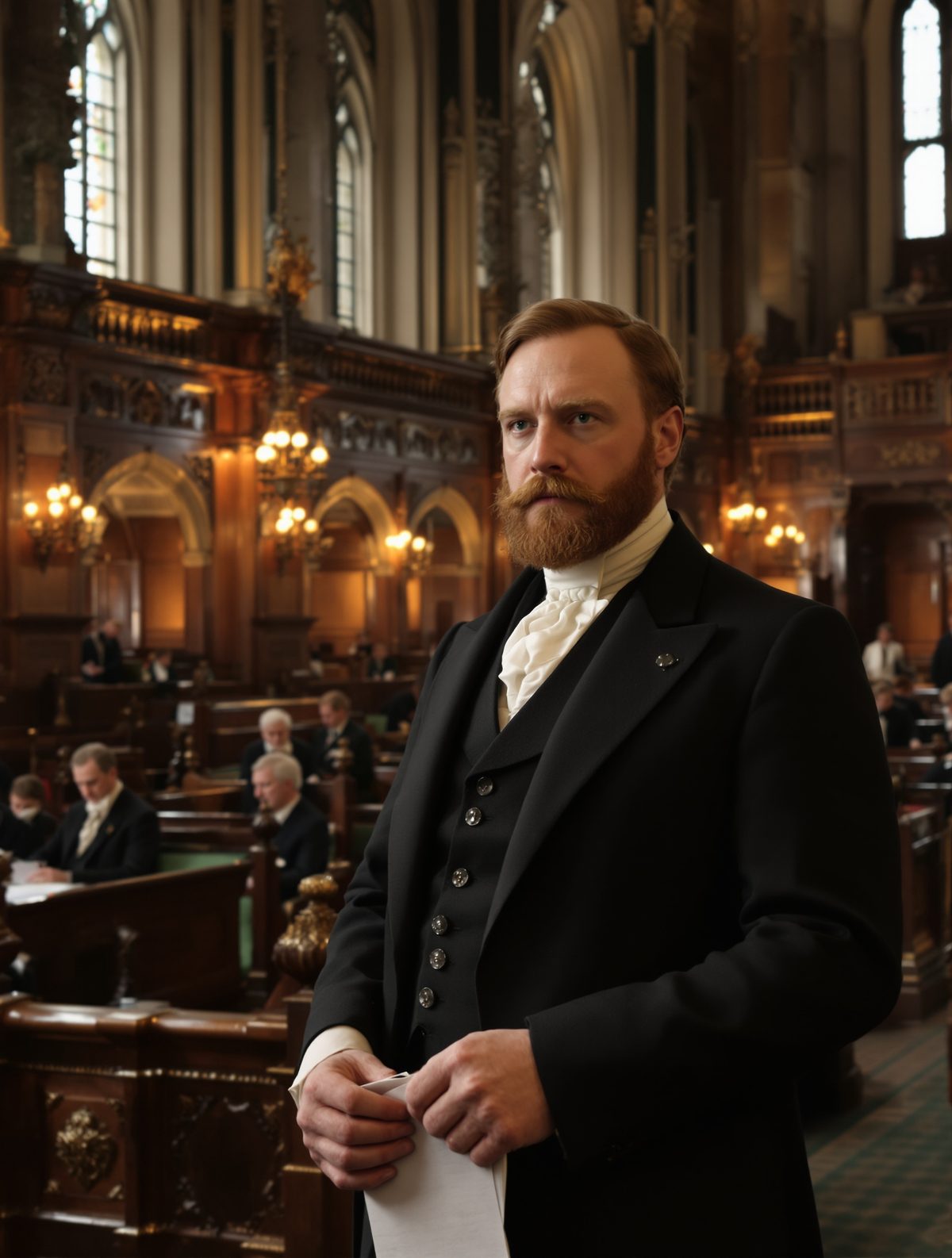
On the morning of June 13, 1381, the most powerful city in England lay defenseless before an army of peasants. No castle walls protected London—just a single stone bridge spanning the dark waters of the Thames. And on that bridge, something unprecedented was happening: the guards were laying down their weapons and opening the gates to a blacksmith from Kent who commanded 100,000 souls hungry for freedom.
Wat Tyler had done the impossible. A man who worked iron for a living had forged the common people of England into a weapon that would shake the very foundations of medieval society. For three extraordinary days, the capital of a kingdom would bow before farmers, laborers, and craftsmen who dared to demand what had never been theirs: liberty.
The Spark That Lit England Ablaze
The revolution began not with grand speeches, but with coins—or rather, the lack of them. In May 1381, tax collectors arrived in the Essex village of Fobbing, demanding the third poll tax in four years. These weren't taxes on property or trade, but a flat fee demanded from every person over fifteen, regardless of their ability to pay. A duke and a ditch-digger owed the same amount: twelve pence, equivalent to several days' wages for a common laborer.
But England in 1381 was a powder keg waiting for a spark. The Black Death had killed one-third of the population just thirty years earlier, creating a massive labor shortage. Surviving peasants suddenly found themselves in demand, able to command higher wages and better conditions. The nobility, watching their wealth evaporate, responded by passing the Statute of Laborers, legally freezing wages at pre-plague levels and binding peasants to their lords' land.
When the tax collector arrived in Fobbing, the villagers did something remarkable: they said no. They declared they'd already paid and demanded proof of any outstanding debt. The collector fled, but he returned with soldiers. The villagers drove them off too. Word spread like wildfire across the countryside—resistance was possible.
Enter Wat Tyler, a blacksmith from the Kentish town of Dartford. Historical records tell us frustratingly little about the man who would lead the greatest popular uprising in English history. We know he was skilled with hammer and anvil, that he possessed an almost supernatural ability to inspire ordinary people, and that he carried a grudge against the establishment that burned white-hot. Some chronicles suggest his rebellion was triggered by a tax collector's assault on his daughter, though the truth may be simpler: Tyler had watched oppression grind down his neighbors for too long.
The March That Shook a Kingdom
Tyler's genius lay not in military strategy, but in understanding the power of hope. As his rebel army swelled from hundreds to thousands to tens of thousands, he didn't promise easy victory—he promised justice. His demands were revolutionary for their time: an end to serfdom, fair rents of four pence per acre, free trade in markets, and pardons for all rebels. Most radical of all, he wanted the abolition of lordship itself, except for the king.
The rebel army that marched toward London in early June was unlike anything England had ever seen. Chronicles describe a force of 100,000 people—though this number is likely inflated, even 30,000 would have been massive for medieval standards. They came from every corner of southeastern England: blacksmiths and carpenters from Kent, farmers from Essex, laborers from Suffolk. Many carried the tools of their trade as weapons—hammers, scythes, bill-hooks, and staves.
But this wasn't a mindless mob. Tyler's army displayed remarkable organization and discipline. They targeted specific enemies: tax records went up in flames, but standing crops were left untouched. They executed hated officials like Chief Justice John Cavendish, but ordinary people were generally left unharmed. They even issued crude forms of safe-conduct passes to sympathizers.
By June 12, Tyler's forces had reached the southern banks of the Thames, staring across the water at London Bridge—the only way into the city from the south. The bridge itself was a marvel of medieval engineering, lined with houses and shops, its gatehouse bristling with defensive positions. It should have been impregnable.
The Day London's Gates Opened
What happened next reveals the most shocking truth about Tyler's rebellion: it enjoyed massive popular support, even within London itself. The city's rulers had assumed their walls would protect them, but they'd forgotten that common people lived on both sides of those walls.
The garrison at London Bridge faced an impossible choice. Fire upon the rebels, and they'd be shooting at people who looked exactly like their own brothers, fathers, and sons. Many of the guards were themselves from humble backgrounds, earning meager wages to protect a system that offered them little. When Tyler's army approached the bridge on the morning of June 13, calling for solidarity rather than surrender, the guards made their decision.
They opened the gates.
The moment marked a seismic shift in English history. For the first time since the Norman Conquest three centuries earlier, the common people had seized the capital. Chronicles describe scenes of jubilation as the rebels poured across London Bridge, welcomed by cheering crowds of London's poor and working people. The wealthy barricaded themselves in their houses while Tyler's army swept through the streets like a liberating force.
But Tyler's men weren't conquerors—they were surgical revolutionaries. They made straight for the Savoy Palace, the magnificent residence of John of Gaunt, Duke of Lancaster and the most hated man in England. The rebels didn't loot the palace; they systematically destroyed it, burning tapestries, smashing furniture, and throwing silver vessels into the Thames. When one rebel tried to pocket a piece of silver, his comrades threw him into the flames along with the treasure. This was about justice, not profit.
Face-to-Face with the Crown
Fourteen-year-old King Richard II found himself in an unprecedented situation: trapped in the Tower of London while peasants controlled his capital. The royal court was paralyzed with terror. Some advisors urged the king to flee the city; others wanted to call in foreign mercenaries. But Richard, displaying courage that belied his youth, chose a different path—negotiation.
On June 14, the king agreed to meet Tyler's army at Mile End, outside London's walls. The encounter was extraordinary: a teenage monarch facing down 60,000 rebels led by a blacksmith who addressed him as an equal. Tyler's demands were read aloud: freedom from serfdom, fair rents, free trade, and general pardons. To everyone's amazement, Richard agreed to them all.
But Tyler wasn't finished. The next day, he demanded a second meeting at Smithfield, this time with even more radical demands: the redistribution of Church lands, the abolition of bishops, and Tyler himself to be appointed chief royal advisor. This was no longer reform—it was revolution.
The meeting at Smithfield would become one of history's most dramatic confrontations. Tyler rode out to meet the king, displaying the confidence of a man who believed he held all the cards. According to chronicler Jean Froissart, Tyler demanded wine and water, rinsed out his mouth "in a very rude and disgusting fashion before the King's face," and handled the young monarch with shocking familiarity.
Then everything went wrong. Exactly what happened next remains disputed, but the most likely account suggests that London's Mayor William Walworth accused Tyler of disrespecting the king, drew a sword, and struck Tyler down. The blacksmith who had brought a kingdom to its knees fell dying in the mud of Smithfield.
The Revolution's End and England's Transformation
Tyler's death could have triggered a massacre. Sixty thousand rebels faced a handful of nobles and the boy king. For a moment that seemed to stretch into eternity, England's future hung in the balance. Then Richard II, showing remarkable presence of mind for a fourteen-year-old, spurred his horse toward the rebels and shouted, "I am your king, I will be your leader!"
It was a masterstroke of medieval propaganda. The rebels, leaderless and confused, followed the king from London. Once they were dispersed, Richard systematically revoked all his promises. The charters of freedom were declared invalid, rebel leaders were hunted down and executed, and the old order was brutally restored.
Yet Tyler's revolution had changed England forever. The psychological barrier between ruler and ruled had been shattered. Never again would the common people seem so powerless, or the nobility so secure. The poll tax was quietly abandoned, wages gradually rose despite legal restrictions, and serfdom began its slow decline toward extinction.
More importantly, Tyler had planted an idea in English soil: that ordinary people possessed rights that transcended the accident of birth. That idea would germinate for centuries, flowering eventually in the English Civil War, the American Revolution, and every subsequent struggle for human dignity.
Today, when populist movements shake established orders across the globe, Wat Tyler's rebellion offers both inspiration and warning. It shows us the explosive power that builds when people feel excluded from the societies they sustain. Tyler's army controlled London for just three days, but the memory of those days—when a blacksmith's son could look a king in the eye and demand justice—proved impossible to kill.
The legends may have left Wat Tyler out of most textbooks, but his ghost still walks whenever ordinary people dare to believe that the world can be different than it is.