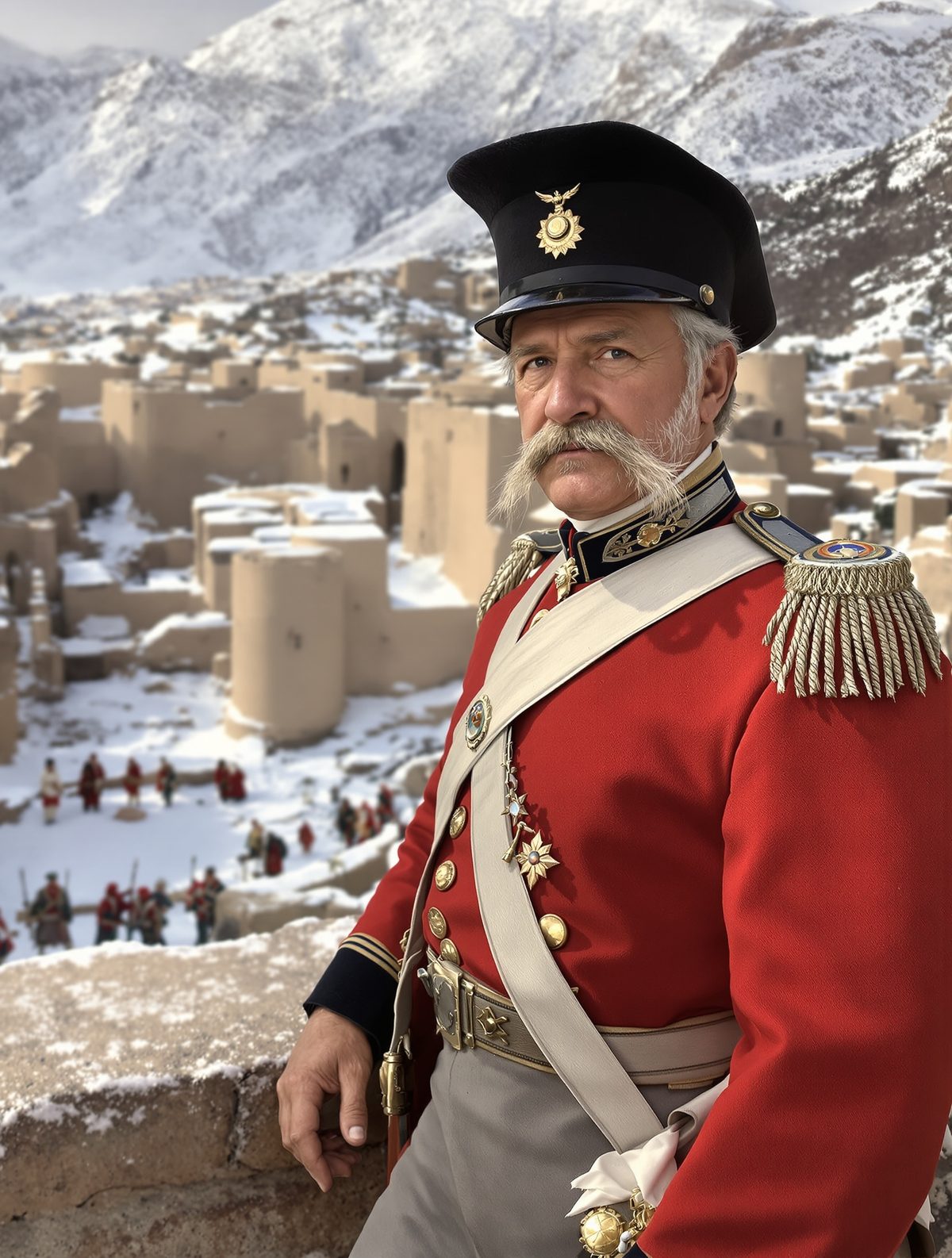
The wolves had been following her for three days. Kate Marsden could hear them howling in the darkness beyond her campfire, their yellow eyes glinting like fallen stars in the Siberian night. Her Russian guides had abandoned her 200 miles back, terrified by tales of the cursed leper colony that lay ahead. Now, with frostbite blackening her fingers and her horse stumbling through knee-deep snow, the 29-year-old English nurse pressed on alone through the most hostile wilderness on Earth. In her saddlebags lay medicines that could save hundreds of lives—if she could survive long enough to deliver them.
It was February 1891, and Kate Marsden was embarking on what would become the most extraordinary medical mission of the Victorian age. Armed with nothing but determination, a basic knowledge of Russian, and an unshakeable belief in a legendary Siberian herb that could cure leprosy, she was riding into the unknown to reach Russia's most remote outcasts.
The Nurse Who Refused to Look Away
Kate Marsden's journey began not in the frozen wastes of Siberia, but in the blood-soaked battlefields of Bulgaria. As a young nurse during the Russo-Turkish War of 1877-78, she had witnessed horrors that would have broken lesser spirits. But it was a chance encounter with Russian soldiers suffering from leprosy that changed the course of her life forever.
While other medical staff turned away from these men in disgust and fear, Marsden stayed. She bathed their wounds, changed their bandages, and listened to their stories. One soldier, his face ravaged by the disease, told her of a miraculous herb that grew wild in the forests of Siberia—a plant that local shamans claimed could halt leprosy's terrible progression. Most dismissed such tales as folklore, but Marsden filed the information away, her scientific mind intrigued by the possibility.
Returning to England, Marsden couldn't forget what she had seen. Leprosy, one of humanity's oldest and most feared diseases, was considered incurable by Victorian medicine. Sufferers were condemned to a living death, exiled to remote colonies where they slowly wasted away, forgotten by the world. But what if that Siberian herb was real? What if there was hope after all?
Into the Heart of Imperial Russia
By 1890, Marsden had made her decision. She would travel to Siberia, locate this mysterious herb, and establish proper medical care for the thousands of lepers languishing in Russian exile. It was a plan so audacious that even her closest friends thought she had lost her mind. Victorian ladies simply did not ride alone through the Russian wilderness, especially not to visit lepers.
But Marsden was no ordinary Victorian lady. Born in 1859 to a middle-class family, she had already broken multiple social conventions by pursuing nursing—a profession still considered barely respectable for women of her background. She spoke several languages, had traveled extensively, and possessed an iron will that had carried her through the carnage of war. If anyone could survive such a mission, it was Kate Marsden.
Her first challenge was gaining permission from the Russian authorities. Siberia was the empire's vast prison colony, a frozen wasteland where political dissidents and common criminals were sent to die. Foreigners, especially British ones, were viewed with deep suspicion. But Marsden's reputation as a nurse and her genuine humanitarian motives eventually won over key officials, including the wife of the Governor-General of Moscow.
On a bitter February morning in 1891, Marsden set out from Moscow with a small convoy of sledges, her precious medical supplies packed carefully against the cold. The first leg of the journey took her east across European Russia toward the Ural Mountains—the traditional boundary between Europe and Asia. Already, temperatures were plummeting to -40°F, cold enough to freeze exposed skin in minutes.
Abandoned in Wolf Country
As the expedition pushed deeper into Siberia, conditions deteriorated rapidly. The primitive roads—where they existed at all—were buried under massive snowdrifts. Marsden's party was forced to navigate by compass and local knowledge, often traveling for days without seeing another human soul. The landscape was breathtaking in its desolation: endless forests of pine and birch stretched to the horizon, broken only by frozen rivers and the occasional abandoned village.
It was somewhere in this wilderness that disaster struck. Marsden's Russian guides, already nervous about their destination, began hearing stories that terrified them. The leper colony they were approaching, locals whispered, was cursed. Demons walked among the sick, and anyone who ventured there risked eternal damnation. These weren't just superstitions—in Orthodox Russian culture, leprosy was often seen as divine punishment for sin.
One morning, Marsden woke to find her guides gone. They had fled in the night, taking most of the provisions with them. She was alone in the Siberian wilderness with only her horse, her medical supplies, and about a week's worth of food. Most people would have turned back immediately, but Marsden pressed on. She had come too far to give up now.
The next week tested every ounce of her courage and resourcefulness. Wolves followed her constantly, their howls echoing through the frozen forest. Her fingers and toes began showing signs of frostbite, and exhaustion made every mile feel like ten. She navigated by following frozen rivers, sleeping rough in abandoned hunters' shelters when she could find them, and eating whatever provisions remained.
The Leper Colony at the Edge of the World
When Marsden finally reached the leper colony of Vilyuisk in March 1891, she was barely recognizable. Frostbite had blackened her fingers, her face was windburned and gaunt, and her clothes were caked with ice. But her medicine chest was intact, and her determination was unbroken.
What she found at Vilyuisk defied every preconception about medical care in Imperial Russia. The colony housed nearly 1,000 patients, men and women suffering from various stages of leprosy. They lived in primitive wooden barracks with virtually no medical supervision, surviving on meager rations provided by the state. Many were missing fingers, toes, or facial features to the disease's relentless advance.
But perhaps most shocking of all was the patients' gratitude at seeing her. Many wept openly when they realized that this strange English woman had traveled thousands of miles specifically to help them. They had been written off by society, condemned to die forgotten in the Siberian wilderness. Yet here was someone who cared enough to risk her life for their sake.
Marsden immediately set to work, distributing medicines and treating wounds with supplies she had carried from England. She documented everything meticulously—patient numbers, symptoms, living conditions, and treatment outcomes. This wasn't just a humanitarian mission; it was a scientific expedition aimed at understanding leprosy better.
As for the legendary herb that had started her quest, Marsden did indeed find it. Local shamans showed her a plant they called "kusso"—likely a species of flowering shrub with genuine anti-inflammatory properties. While not the miracle cure she had hoped for, it did seem to provide some relief for patients' symptoms. More importantly, her detailed botanical notes would later help other researchers identify potentially useful compounds.
The Journey That Changed Everything
Marsden spent several months at Vilyuisk, establishing proper medical protocols and training local staff in basic hygiene practices. When she finally began the long journey back to civilization, she carried with her detailed reports that would revolutionize European understanding of leprosy treatment. Her documentation proved that with proper care, nutrition, and basic medical intervention, many patients could live relatively normal lives.
Upon returning to England, Marsden became an international celebrity. Her book "On Sledge and Horseback to Outcast Siberian Lepers" became a bestseller, and she embarked on lecture tours across Europe and America. More importantly, her work led to substantial improvements in Russian leprosy care and contributed to the global movement for more humane treatment of Hansen's disease patients.
But Marsden paid a heavy price for her heroism. The frostbite she suffered during her journey left her with permanent nerve damage, and she struggled with health problems for the rest of her life. She also faced criticism from some quarters who questioned whether a woman should have undertaken such a dangerous mission, and whether her methods were scientifically sound.
A Legacy Written in Ice and Courage
Today, as we face our own global health challenges, Kate Marsden's story resonates with startling relevance. Her willingness to risk everything to help society's most marginalized members speaks to the best of human nature. In an age when infectious disease still inspires fear and discrimination, her example reminds us that compassion and scientific curiosity can triumph over prejudice.
Marsden's journey also highlights something we often forget about the Victorian era—it wasn't just an age of imperial expansion and industrial progress, but also one of remarkable individual courage. Long before modern transportation and communication made the world smaller, people like Kate Marsden were willing to venture into the unknown, driven by nothing more than the belief that every human life had value.
The herb she sought may not have been the miracle cure she hoped for, but her real discovery was far more important: that with proper care, dignity, and medical attention, even the most feared diseases could be faced with hope rather than despair. It's a lesson that echoes through every modern hospital ward and research laboratory, a testament to one woman's refusal to accept that some suffering was simply inevitable.