She was a linguist and a botanist. Yet her scribbled notes helped shape the laws of nations.
The Unlikely Architects of Empire
The year was 1858. In the sprawling offices of the British administration, a group of Englishmen, many of whom had never set foot in the lands under their jurisdiction, began the gargantuan task of codifying laws for India, a territory throbbing with cultures far from their own. With quills poised and books of precedents at hand, these men embarked on a task that would reverberate through history. It’s a tale as grand as the Empire itself — when Britannia's reach was not just about territory, but also about law and order. Perhaps surprisingly, the task of translating English justice into a universal language fell to people like Sir Henry Maine, a legal scholar with a romantic's heart. Fascinated not only by law but by ancient societies and their traditions, Maine saw India as a living museum of ancient customs that deserved to be studied, preserved, and judicially molded.
Though they were far from modern notions of cultural sensitivity, these administrators, including Maine, knew that their laws had to resonate with local traditions to stand a chance. The legal code crafted was more than a blunt instrument of imperial control. It was a deeper confluence of English legal traditions and local customs, a delicate dance of authority and nuance. For the British, this legal transplantation was about influence as much as governance — an assertion of values they believed universal. Little did they know that the jurisprudence they were creating would one day underpin the legal systems of nearly a quarter of humanity. While the Victorian era was heady with dreams of empire, the transfer of English Common Law was an unforeseen legacy, one passed down through courtrooms, not battlefields.
Courts and Colonies: Molding Justice
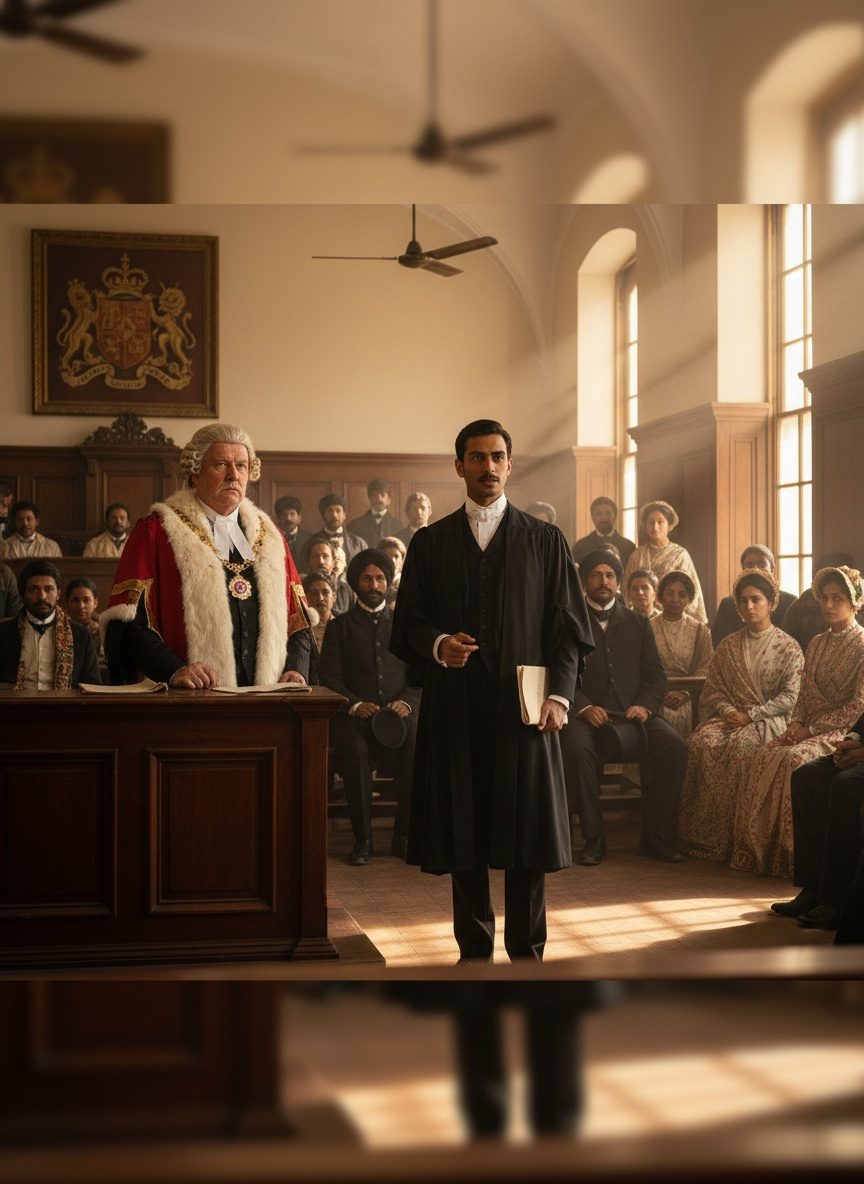
Imagine a room in colonial Calcutta, its open windows beckoning languid breezes. Here, barristers argued cases not too dissimilar from those that filled London's courtrooms. The British legal principles — habeas corpus, trial by jury, and the right to counsel — were now the ideals that these barristers championed. The translation of these notions into the colonial realm was not seamless, yet it was pivotal. For the local populace, while the face of justice often retained a British accent, the principles began to fuse with local traditions over time.
One must not only think of courts and judges, but also of those people calling for justice in a newly codified system. The law, while foreign, offered a potent structure that could be leveraged by the colonized. In Victorian society, justice was a bulwark against chaos, and within the colonies, courts now mirrored that desire. From Jamaica to Australia, the colonial courts interpreted laws through a distinctly British lens, even as they absorbed cultural particularities of their territories.
Yet, this was not an act of legal goodwill. These judicial systems were aimed at controlling the populace, prioritizing British interests. Nonetheless, they provided a framework that, paradoxically, armed these nations with the structure to claim their own rights and ultimately, their independence. The very laws imposed to control them became the tools for shaping autonomous futures. The courtrooms became theaters where future leaders learned the language of resistance and reform. Countries emerged with legal systems that were simultaneously remnants of, and rebels against, their colonial past.
The Legacy Written in Law Books
Fast forward to today, and the legacy of those Victorian scribes is starkly visible. From the bustling bazaars of New Delhi to the serene landscapes of Wellington, the concepts birthed in the halls of Westminster find echoes. Forty-seven nations, diverse in language and culture, nonetheless ride the current of legal tradition born from that small, once-isolationist island. This wasn’t a mere adoption; it was an adaptation. Take India, which houses one of the world's largest legal professions. Their courts look not only to ancient texts but also to English Common Law for guidance, balancing statute and customary law while advocating for human rights.
In Australia, the reverberations of English justice still ring through legislation and court rulings. Jamaicans might swear on an oath crafted in England, yet their laws have evolved, reflecting the vibrant Caribbean ethos. These adaptations are demonstrations of how imperial mandates transformed into tools for justice and sovereignty.
The story of English Common Law is not merely about a framework imposed; it is about adaptation, resilience, and the unforeseen influence of law as a legacy of colonial ambition. It's about how a Victorian meeting of minds, scribes, and courthouse echoes became the unexpected blueprint for a modern world threading through continents. We live in a world stitched together by the silver gavel of English jurisprudence—each swing, a nod to the past and a step toward futures yet to unfold.
What was once an empire's tool became a democratic legacy, testament to a shared human quest for justice over dominion. As nations continue to evolve those legal scripts to fit their own humanity, the language written in 1858 will remain — a syllable in the grand lexicon of global justice and independence.