He was twenty-three years old when he began his Naval career. By March 1811, Captain William Hoste had already become a seasoned commander, having cut his teeth under none other than the legendary Admiral Horatio Nelson. Hoste did not fit the image of a haggard, battle-worn captain typically enshrined in maritime lore; instead, he epitomized a fresh, calculated resolve when he sailed into the Adriatic at the helm of HMS Amphion. On that fateful day off the island of Lissa, Hoste would draw inspiration from his mentor Nelson, crafting a battle plan as audacious as it was brilliant.
March 13, 1811, dawned with a tense calm over the choppy Adriatic waters. Hoste’s flotilla, comprised primarily of the HMS Amphion and supported by three other ships, faced a formidable squadron of Franco-Venetian forces. The enemy fleet outnumbered his own, nearly twice its size, promising a dread challenge on a canvas of frothy seas and looming clouds. Yet, Hoste held in his possession not just a squadron of quality British frigates but the shared ethos imbued by Horatio Nelson. It was Nelson’s audacity and unwavering confidence that Hoste sought to emulate, drawing from his experiences as one of Nelson’s favored captains.
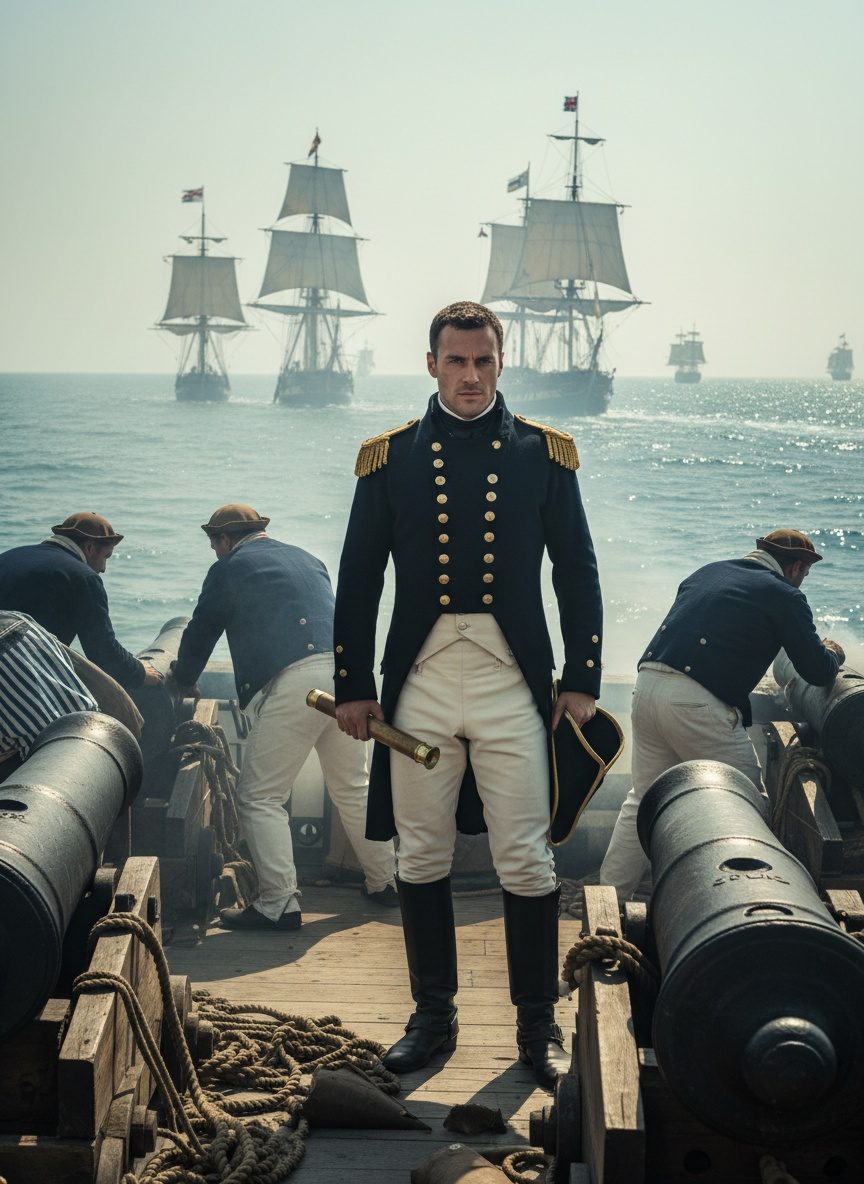
Hoste's seamen and officers were handpicked men, drilled into an efficient force ready to face any threat, and sharing a bond strengthened under the guidance of Nelson during previous encounters. Through the telescope’s haze, the enemy ships loomed larger by the minute. It was then, in a moment imbued with dramatic reverence, that Hoste ordered Nelson’s famous signal to be raised: "England expects that every man will do his duty." For the men on board, who served at Trafalgar with Nelson or heard tales spun with humble pride, these words were not mere letters dancing in the wind—they were a rallying cry, an invocation to face the gales of war and emerge victorious.
Hoste's decision to charge with inferior numbers was not borne of reckless bravado; it was a strategic gamble, knowing that surprise and aggressive speed might unnerve the largescale Franco-Venetian fleet. As cannon smoke crested over the turquoise sea and the sound of drumbeats quickened their pulse, the British fleet split into two divisions aiming to confound the French with their unusual formation. Hoste led his ships with the kind of ferocity usual of Nelson’s exploits, recognizing the strategic shores of Lissa as both a battleground and sanctuary.
The action itself unfolded in a brief, turbulent surge. These were not stately ships engaging with the decorum of classical warfare; these were vessels of war, belching flame and iron, shredding sails and splintering wood in a chaotic chorus. As mittens of smoke wrapped tightly around them, Hoste's men persisted, their resolve unbroken as iron balls cannoned through the hulls and masts of their assailants. Captains and crew endured, harnessing winds not just for transport but as allies in a brutal symphony of power and pluck.
One by one, facing such unexpected ferocity and tactics, the Franco-Venetian vessels faltered beneath the sustained British onslaught. After three hours of relentless engagement, the tables turned as four enemy vessels struck their colors, yielding to Hoste's considerably smaller force. Despite the engagements' intensity, not a single British ship was lost—a testament to Hoste's leadership and the discipline of his crew. It was not just a battle won, but a narrative reshaped: the Royal Navy, outgunned yet unbeaten, proving once more that the waters belonged to Britannia.
The triumph at Lissa not only underscored the tactical brilliance that Hoste had absorbed under Nelson's tutelage but also secured British naval dominance within this critical corridor, the Adriatic Sea. The jubilant victory sent ripples through Europe’s naval theater, a strategic pivot asserting Britannia’s maritime expertise and unsettling the aerial sureness of Napoleon’s extensive fleet. In a conflict marked by measured risks and grander consequences, Hoste's victory was a beacon of what skill, cunning, and dare coupled with technology could achieve against formidable odds.
For Captain William Hoste, the lessons of Lissa reverberated beyond the battlefield. He reflected not merely on the tangible prizes of victory—the captured ships, the raise in reputation—but on the enduring principles of leadership: inspired morale, calculated boldness, and adaptability in the face of changing tides. These were the proficiencies Nelson had etched into his soul, mentorship that sailed with him even as the Nelsonian vision of an unconquerable British navy came to fruition through Hoste's legacy.
While etched in the annals of naval history, the story of Lissa is more than just an account of maritime prowess. It’s a tale that illuminates the essence of strategic ingenuity over sheer power, a triumphant assertion of an underdog’s unyielding spirit. In this resonant episode lies a compelling reminder: even against superior might, the calculated audacity of a few well-directed souls can redefine the landscapes of nations and hearts. Amidst the vast theater of Napoleonic conflicts, Captain Hoste’s stand at Lissa remains a vivid chapter of how tactical innovation and the spirit of duty can indeed create legends untold.