The African sun had dipped below the horizon, casting an amber glow across the sprawling landscape of Matabeleland. The rustling grasses whispered tales of uneasy calm, the air heavy with the scent of impending rain. Above, the sky was mottled with darkening clouds that threatened to break at any moment. The stillness of the evening was deceptive, masking the peril that lay concealed within the bush. In November 1893, beneath this ominous cover, a handful of men stood at the heart of what would become a harrowing last stand. Major Allan Wilson and his beleaguered troop faced a sea of warriors, their backs literally against the rising waters of the Shangani River, destined to fade into legend.
The Call Across Shangani
It was a decision forged in the fiery cauldron of British imperial ambition. With the Scramble for Africa well underway, the British South Africa Company sought to cement its influence in the region. Major Allan Wilson, entrusted with the risky mission, led an exemplary force of thirty-four men on horseback into the heart of Matabeleland. His orders were clear: pursue Lobengula, the retreating Matabele king, who had decamped to evade capture by the advancing British force.
The crossing at the Shangani River marked the beginning of this fateful encounter. The river, swollen by seasonal rains, was a formidable barrier, its waters threatening to sever Wilson’s connection with reinforcements. With calloused resolve, Wilson moved forward, crossing the treacherous waters under the canopy of dusk. Yet, as night descended, the river swelled in silence, sealing off any route of retreat for Wilson and his men.
A Circle in the Bush
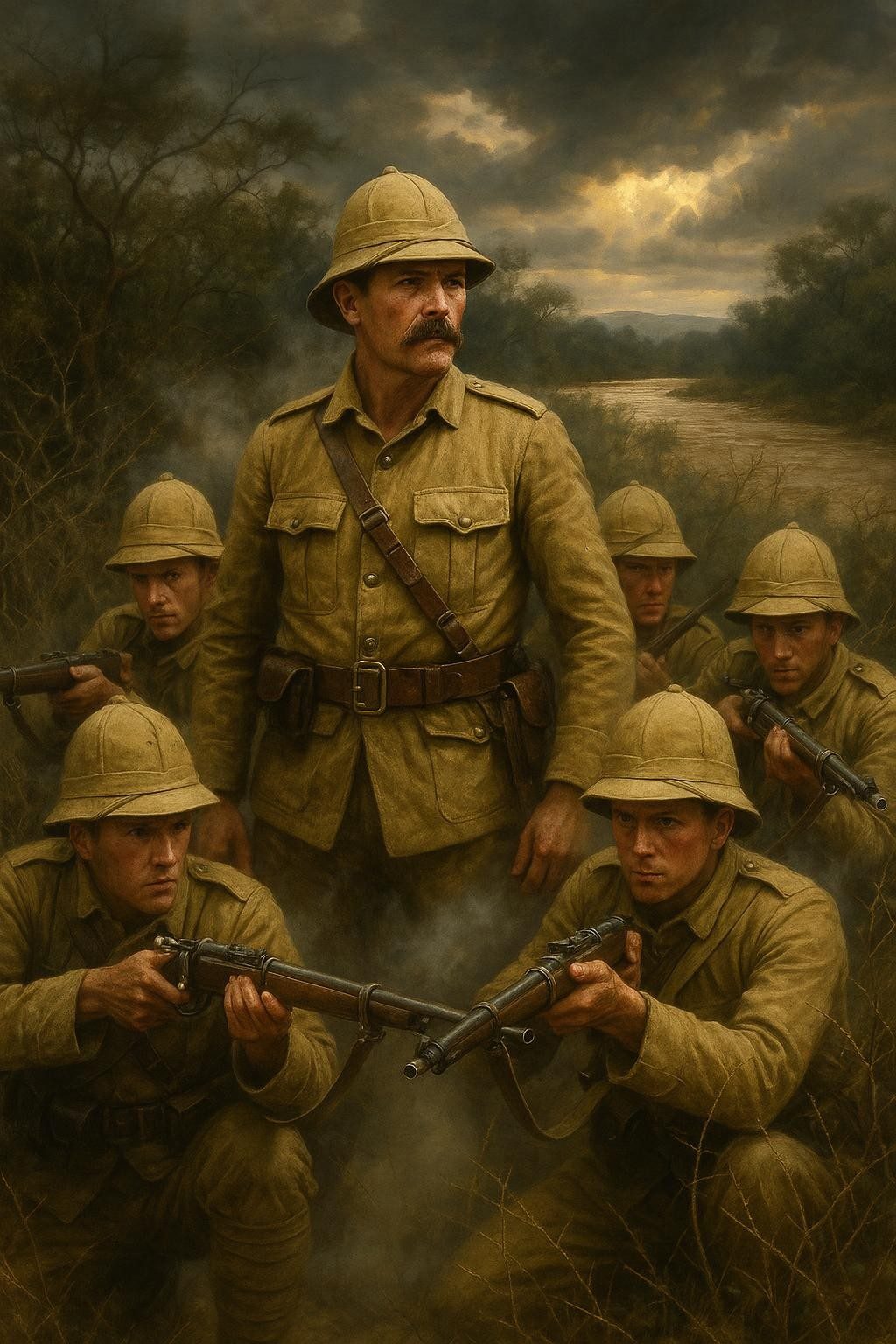
As dawn broke, the weight of their predicament became starkly apparent. The landscape was deceptive, its gentle bends and grassy knolls hiding the furious might of King Lobengula's warriors, ready to reclaim what was theirs. Somewhere in the thickets and tall grass, Wilson’s men made their stand. They formed a tight circle, their faces lined with determination, prepared to face insurmountable odds. Nearby, the sounds of the encroaching warriors grew more distinct, a relentless, rhythmic drumbeat rising in tempo. The Matabele force, driven by ancestral pride and fueled by a century-old struggle against foreign encroachments, descended with overwhelming numbers.
The sharp crack of rifles began to echo through the African morning. Wilson and his men, armed with single-shot Martini-Henry rifles, fired into the advancing wave, each shot deliberate. Their circle, no larger than a cluster of determined lives, became a bastion of defiance. The trumpet calls of the Matabele warriors pierced the air, marking each surge with a terrifying cadence. But none flinched. In that moment, courage held the line.
Lines in the Sand
The battle raged through the day, the sun climbing high into the feverish sky, casting long shadows over this impromptu theatre of war. The men, trained and disciplined, fought with grim resolve. Each man aware of the inexorable truth — help would not, could not, arrive in time. The rising water and relentless rains had made sure of that, turning the river into an impregnable moat around their tragic redoubt.
The relentless Matabele warriors, undeterred by the casualties, displayed a prowess that matched their fierce tradition. The clash was not merely a struggle for dominion but a collision of worlds — the diminishing frontier of a proud kingdom defending its terrain and traditions from the ever-expanding claws of an empire on which the sun never set. Yet, even in their desperation, Wilson's men held the line, not straying from their appointed task even as hope slipped further and further away from their grasp.
Final Echoes
As the supplies dwindled and the ammunition slowly ran out, a hush fell over the circle. The air no longer reverberated with the thunder of gunfire. This was the final act, a quiet testament to valor far removed from the thundering cannon and bustling order of larger battles elsewhere. With the last cartridge spent, the remaining men and their beloved commander prepared to meet the inevitable with unwavering steadiness. The screams of enemy swordsmen charging through the clearing sent ripples through the air. Not one among them wavered, each resolve hardened into a steady, unyielding stare toward the oncoming fate. The silence that followed was profound, a sudden cessation of all that gave the world its shape and sound.
Though each man fell, stories of their courage seeped beyond those grassy confines. Stories which, traversing the lands they once defended and the empire they served, emerged as legends — tales of resolve and duty, of humanity trapped at the crossroads of empire and autonomy.
The Resonance of Valor
Though consigned to the annals of history, this stand amidst the vast wilds of Shangani holds a mirror to the follies and virtues of imperial ambition. It reveals truths not frequently documented yet resonant through the ages. In their defiant stand, Wilson and his men demonstrated a raw bravery that echoed beyond military success or failure. While the history of empires narrates tales of conquest and dominion, it is the human elements of sacrifice and unfaltering resolve that linger in memory, whispering through time with lessons often lost to the conqueror's narrative.
The story of Shangani is more than an isolated episode of military strategy; it is a poignant reflection on the relentless tide of change which swept across continents during the scramble for Africa. It reminds us of the often invisible toll on those swept up in the tides of history — human attributes of courage, futility, and the unyielding spirit of those who dared to hold their ground as the world spun inexorably on, draping its new cloak over the old. Even as the river of time flowed past Shangani, the echoes of that night in 1893 still ripple through the waters of history.