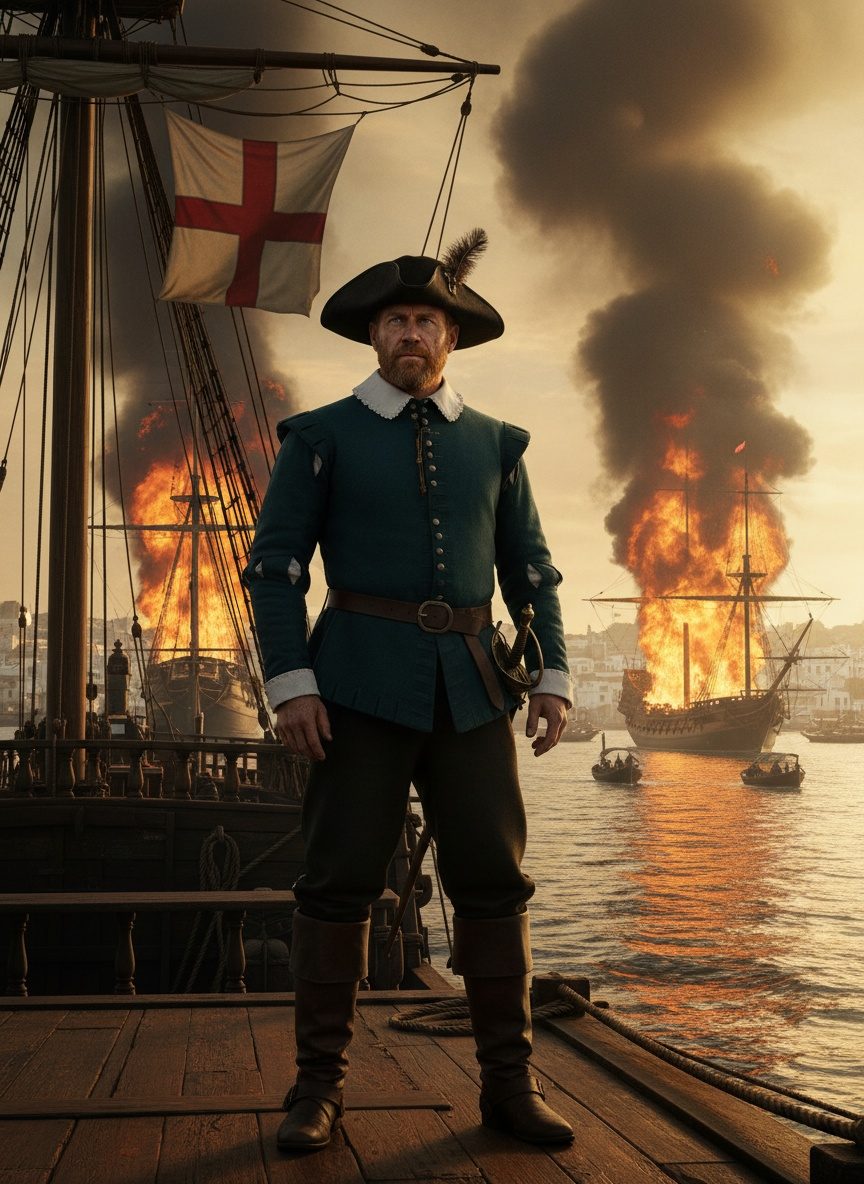
The morning light glinted sharply off the waters of Cadiz harbour, casting long shadows over the bustling fleet of Spanish ships. The air was heavy with the salty tang of the sea, mingled with the scent of tar and fresh timber, and the cries of seagulls mingled with the cries of sailors preparing vessels for what promised to be a monumental campaign. For Spain, it was meant to be the staging ground for the greatest invasion fleet ever assembled, the mighty armada intended to bring England to its knees. Yet, the slightest flutter of sails on the horizon heralded an audacious twist of fate — Francis Drake, the legendary English sea captain, was lurking and ready to strike.
The Audacity of the Seafarer
Francis Drake, with his cunning and indomitable spirit, had become the embodiment of English maritime prowess in the late 1580s. The conflict between England and Spain was intensifying, with Spain amassing the largest fleet the world had ever seen. King Philip II of Spain was determined to subdue England, whose defiant Protestantism was both a personal affront and a political threat. Yet, while the Spanish prepared meticulously for their campaign, Drake and his 18-ship fleet decided not to sit idle.
With a comprehension of naval warfare that bordered on the prescient, Drake understood that the best defense was a good offense. On the auspicious day in April 1587, Drake daringly sailed straight into the harbor of Cadiz. This act of sheer audacity was not only a blow to Spanish pride but also a strategic masterstroke. In broad daylight, amidst the startled cacophony of rushing sailors and the clang of alarm bells, Drake ignited chaos. He burned and pillaged with ruthless efficiency, destroying thirty-seven Spanish vessels in a single afternoon, each ship burned, representing a small, searing defeat for Philip II.
Drake’s success lay as much in psychological impact as physical destruction. The Spanish, whose naval preparations were still underway, were thrown into disarray. Shipbuilders and sailors were left to survey the smoldering wreckage that had, just hours earlier, been a formidable assembly. Rumors of Drake's audacity and Spain's unprecedented vulnerability spread like wildfire across Europe. English observers hailed the bold raid as "singeing the King of Spain's beard," a metaphor as biting as it was whimsical, perfectly capturing Drake's audacious style.
Amidst Flames and Fury
The scene in Cadiz port on that infamous afternoon was one of profound chaos and fear. Flames leaped from vessel to vessel, the inferno consuming sails and rigging, while thick black smoke churned skyward, obscuring the frantic efforts below as Spaniards battled to save what ships and goods they could. The tumultuous sounds of cracking wood and exploding barrels mingled with shouts in rapid Spanish, their voices carrying over the blustery winds to Drake, who watched through the salty veil from the deck of his ship.
Yet Drake's mission was more than just a physical attack on Spain's armada; it was a psychological battle waged against the nerve and confidence of an entire nation. The Spanish Armada was unrivaled in might and reputation, a potent symbol of Spain’s burgeoning supremacy. Yet on that day, fire and cunning leveled the playing field, seeding doubt in crewmembers and commanders alike. As Spanish vessels smoldered in ruins, each lost ship symbolized an extension in time for England, an ephemeral breather to bolster defenses.
Beyond the flames, Drake’s incursion disrupted supply lines, poised to strain Spain's resources and strategic focus. As historians would later reflect, it wasn't merely the tactical damage but the implication of vulnerability that held significance. Spain's maritime reputation, previously impregnable, had suffered a severe blemish. Rumors festered, planting seeds of doubt and fear that would echo through councils and courts, across an empire unaccustomed to such flagrant defiance.
Shifting Tides of Empire
Drake's raid on Cadiz was more than a daring naval maneuver; it marked a pivotal shift in the geopolitical dynamics of the era. Though the Spanish Armada would eventually sail against England in 1588, the raid had bought England precious time. Queen Elizabeth's forces, inspired by Drake's success, worked feverishly to bolster their defenses, enhancing ships and training sailors, and preparing more heartened for the inevitable confrontation.
What made Drake's feat extraordinary was not just the physical destruction but its success in fracturing the myth of Spanish invincibility. English morale soared; tales of Drake's bravery invigorated a nation that saw themselves as David to Spain's Goliath. His actions highlighted the power of preemptive strikes and psychological warfare as formidable weapons, threads in the tapestry of budding naval doctrine.
In the longer term, this singular event signified the erosion of Spanish hegemony and the rising tide of English imperial ambition. At a time when empires rested on the backs of maritime prowess, a single afternoon in Cadiz revealed the fragility of even the mightiest fleets. The raid showcased how cunning and audacity could counterbalance raw power and prepared England for her pivotal role on the global stage.
This story, woven into the fabric of Elizabethan history, encourages reflection on how singular acts of bravado can alter the balance of empires. It serves as a compelling reminder of how tactical ingenuity can redefine destiny, a timeless lesson not taught in textbooks but eternal in its reverberations through history.