She was Cornish by birth and defiantly outspoken by nature. But the steely resolve of Emily Hobhouse, forged far from her home, was tempered in the sun-scorched lands of South Africa. At a time when the colonial landscape of the Cape Colony seemed to stagger under the relentless weight of war and drought, Hobhouse became an unexpected beacon of hope for countless British families left behind in a ravaged land.
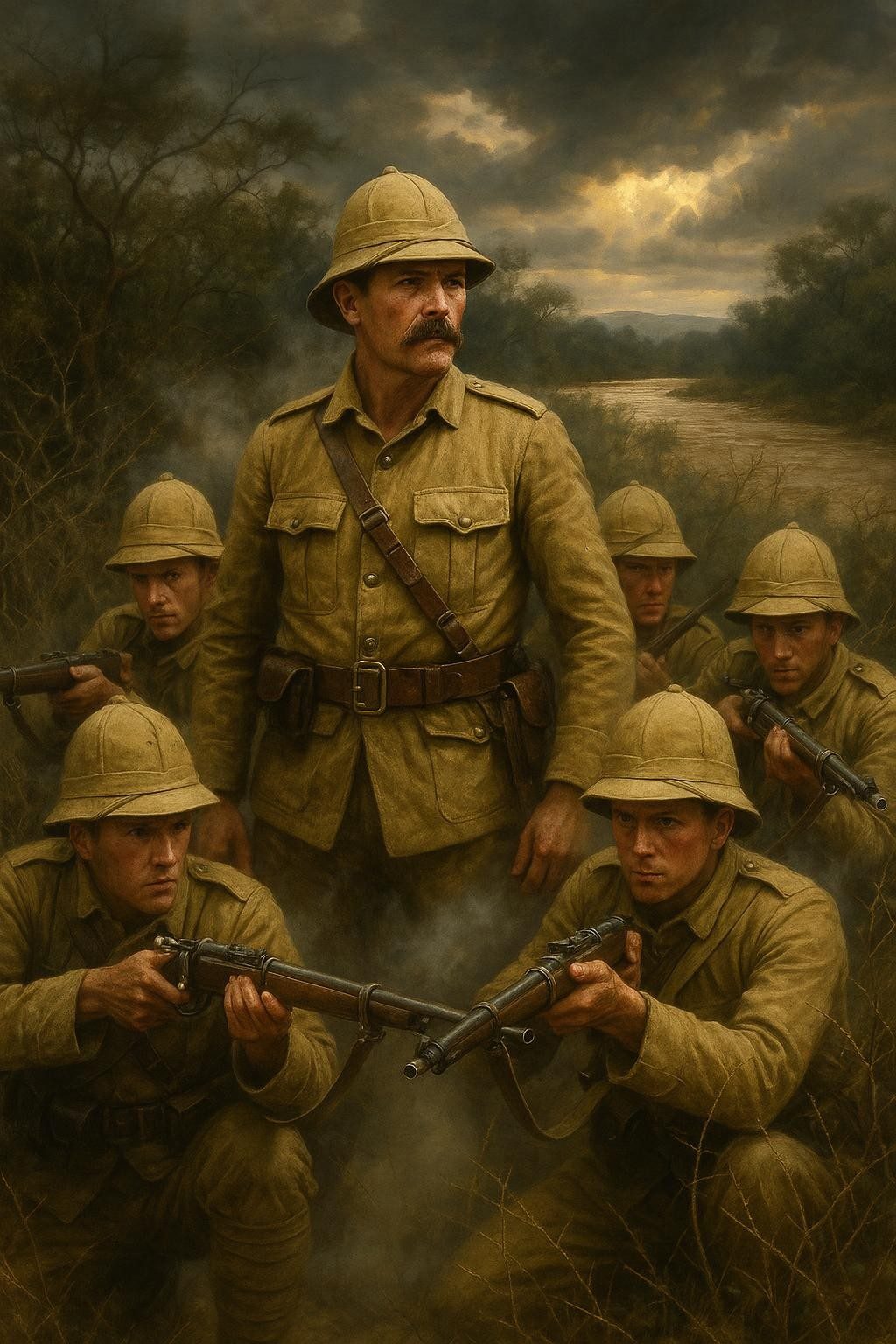
In 1901, the Anglo-Boer War raged on, its echoes of conflict rumbling across the vast reaches of South Africa. The men who should have been tending to the frontier homesteads of the Cape Colony were instead called away to the front lines. Farms were left in the hands of women and children, who now battled against a foe more formidable than any soldier – a parching drought that laid waste to the unyielding ground beneath them. The sheep farms, once the backbone of the colony's economy, were struck by a merciless sun that rendered the earth cracked and barren. With their livelihoods dashed, the specter of starvation loomed large over these beleaguered settlers.
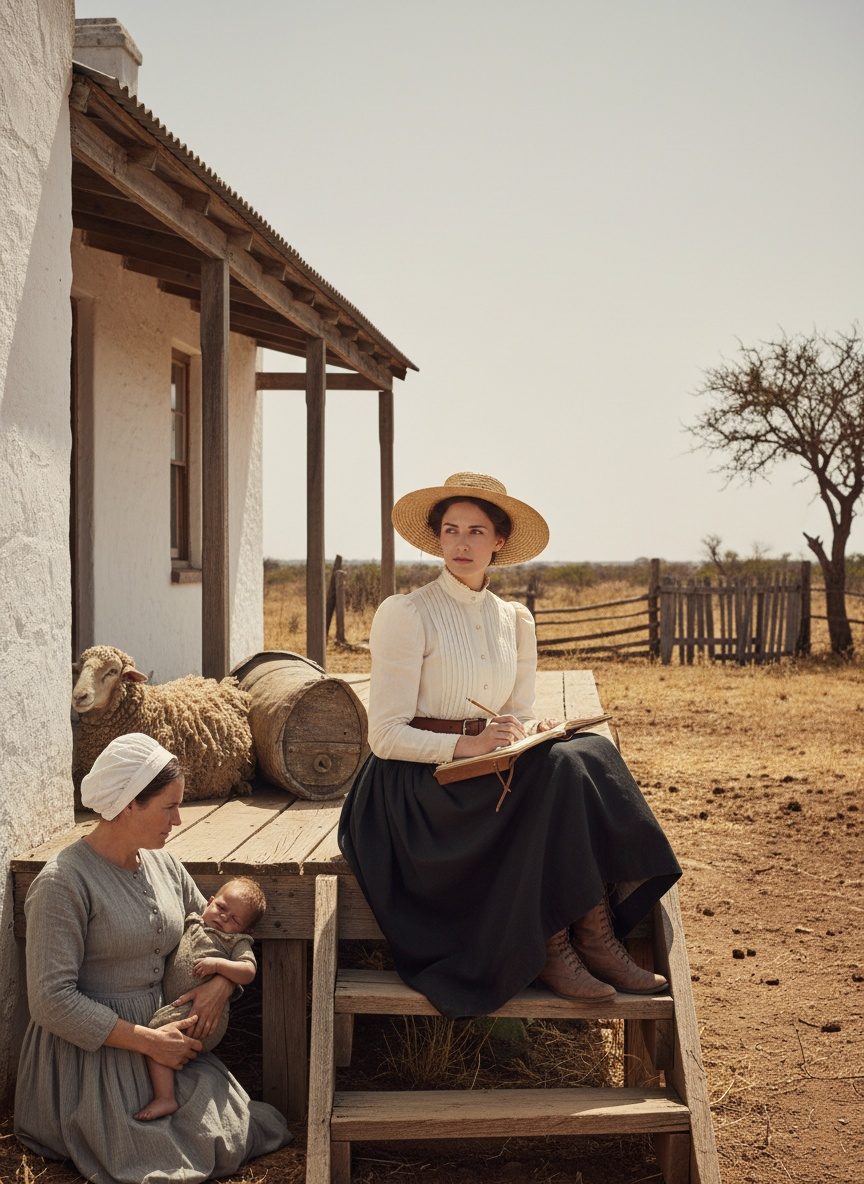
Into this arena of despair rode Emily Hobhouse, driven by a fierce compassion that would not allow her to look away. She had ventured to South Africa initially to report on the conditions of Boer women and children interned in British-run concentration camps. Yet, the dire situation faced by the British colonists caught her unwavering attention. Setting out alone on horseback across the desolate homesteads of the Cape, Hobhouse bore witness to scenes that would be etched indelibly into her heart and memory.
Emily encountered families on the brink of collapse, their resilience sapped by hunger and the oppressive solitude of abandonment. With no word or aid from a government embroiled in the grand theatre of war, these settlers had been left to wither in silence. Some British families, scattered across the dusty inland tracts, were subsisting on scraps. Others had deserted their homesteads entirely, seeking refuge wherever they could find it. Yet, for every story of desertion, there was another of quiet endurance, and Emily Hobhouse was determined that these stories would not go untold.
Hobhouse’s approach was one marked by empathy as well as action. She was not content merely to observe and report; hers was a mission of immediate relief. With a few supplies and an indomitable spirit, she brought food to the starving families, dishing out meals that staved off the painful grip of hunger and igniting a flicker of hope amid overwhelming despair. She was neither a politician nor a bureaucrat, yet her actions spoke in a language understood across the political spectrum—that of humanity and responsibility.
It was a vivid tableau of fraying pleats and creased resolve, juxtaposed against a backdrop of desolate agricultural land. An unforgiving sun glazed the landscape as Hobhouse made her rounds, reaching homestead after homestead. Her mere presence was challenging the negligence directed toward these isolated settlers, forcing a reconsideration of priorities for a government that had, until then, chosen to turn a blind eye. Her accounts of their plight, threaded through letters sent back to England, stirred something within the upper echelons of society that no dry government report could match. Emily’s narrative—and the critical scrutiny it invited—began illuminating the human faces behind the colony's neglected numbers.
Emily Hobhouse’s journey was not solely defined by the physical distances she traveled; it traversed the chasms of indifference that had paved the settlers’ harsh realities. Her relentless advocacy reached ears that mattered, shaming the British Empire into recognizing the suffering it had inadvertently wrought upon its own subjects. And as news of her self-propelled relief efforts spread, so too did the realization of the fragility of life on the colonial frontier—a realization that galvanized efforts to provide more extensive support for the beleaguered families of the Cape Colony.
Yet, much like the stories of those she saved from destitution, Emily Hobhouse’s contributions risk fading into obscurity, overshadowed by the grander narratives of wartime politics and territorial conquests. Her heroism lay not in public policies or large-scale interventions, but in the simplicity of shared humanity and resolute selflessness. The Cape Colony’s eventual survival through drought and adversity owed much to the courage and tenacity of one woman who dared to ride out alone and make a difference—not through power or authority but through compassion and unyielding determination.
The quiet legacy of Emily Hobhouse during 1901 sheds light on the broader tapestry of human resilience against a backdrop of war and environmental distress. Her story is a vivid reminder that pivotal change often begins with individual courage and action, inspired not by the leverage of power, but by the belief in our shared humanity. It leaves us with a profound realization that sometimes, in the sagas unwritten and unsung, history’s unsung champions impact lives in ways that ripple far beyond their solitary journeys—across time, place, and consciousness.