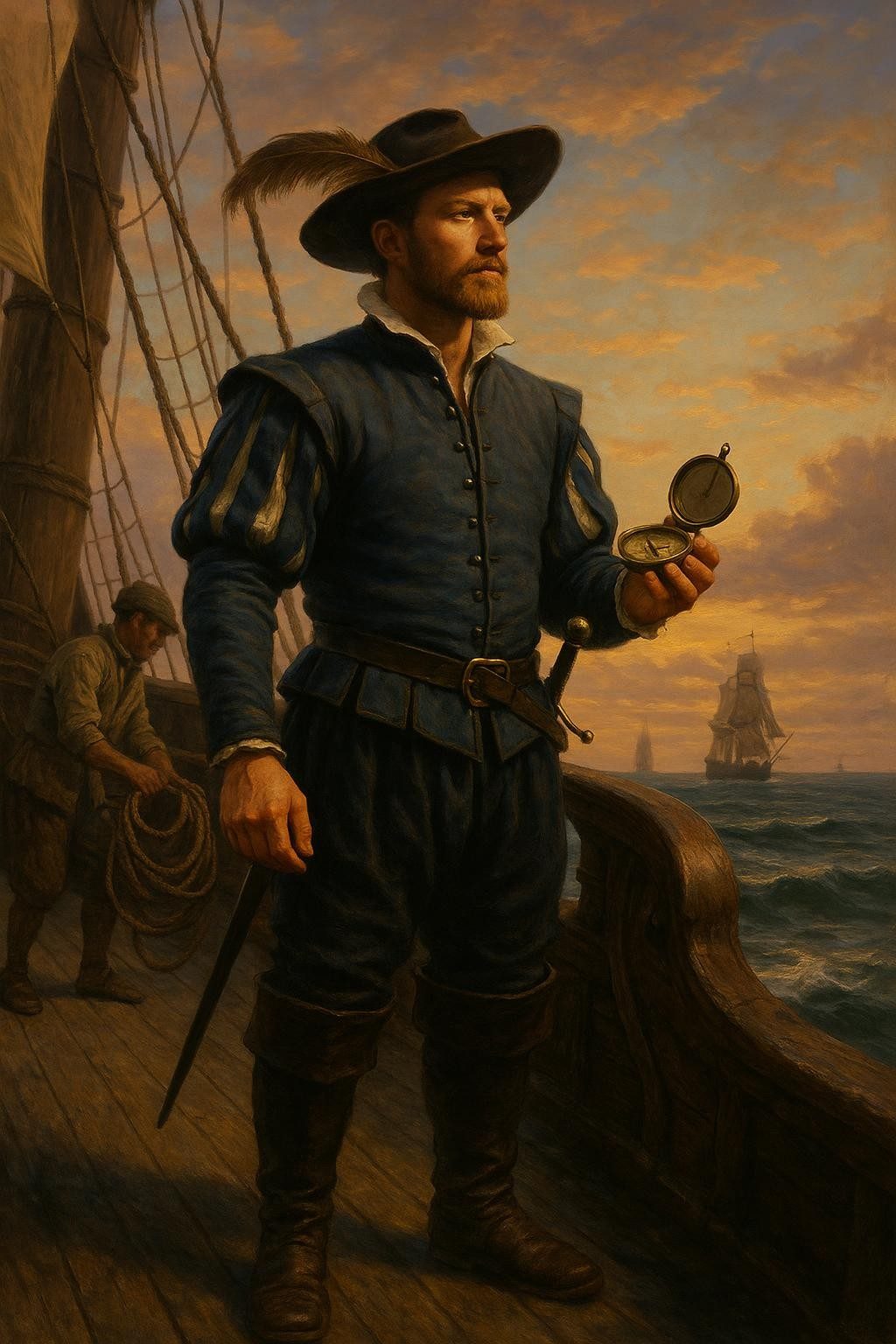
The wind howled through the rigging, the cold Atlantic spray a merciless baptism as Sir Francis Drake gripped the helm of the Pelican. Raging seas pitched the ship violently, testing the resolve of the crew. This was no ordinary venture — Drake was leading a fleet of five vessels into the uncharted waters beyond the known world, driven by a mission cloaked in secrecy and whispered ambitions of war. The air, thick with salt and tension, was alive with the anticipation of discovery.
Into the Unknown
The December of 1577 carried with it more than the biting chill of winter — it bore the curiosity and dread of English mariners plunging into the vast, inhospitable Atlantic. Departing from Plymouth, Drake sailed under the confident, if clandestine, endorsement of Elizabeth I. The Queen had entrusted him with a mission that balanced on the knife-edge of audaciousness and diplomatic catastrophe: to target the vulnerable underbelly of the Spanish Empire by raiding their Pacific ports. Well aware of the stakes, Drake said little to his crew about their true destination, for the walls of ships have ears, and any leak could reach the hostile shores they aimed to plunder.
Within weeks, two ships had been lost to the temperamental tantrums of the sea and internal dissent. Yet it was among the jagged cliffs of Tierra del Fuego that the expedition faced its greatest test. Navigating the treacherous Strait of Magellan, a passage lined with icy waters and wind-whipped mountains, required a bond of trust between man and sea. As the crew strained against sails and spirit, the fates played their hand — the winds shifted abruptly, and the vessels were tossed out into the Pacific, a realm that still bore the markings of terra incognita on most maps.
Despite these immense challenges, Drake's resilience set him apart from lesser men. He guided his lone surviving ship, now renamed the Golden Hind, with acute precision. With the specter of Spanish retribution ever looming, his crew adopted the stealth of hunters, embarking on a campaign of surprise attacks. Riches flowed into their holds as they plundered the Lord of the New World's treasure-bearing galleons, turning the unknown into opportunity captured by fortune-seekers.
A Fortune Gambled and Won
Drake and his crew inhaled the intoxicating taste of success, even as each encounter carried the risk of a final, galling defeat. The Golden Hind, overloaded with Spanish silver and other plunder, became a symbol of hope and defiance against the Spanish Crown. Crafting each raid like a master composer, Drake used deception, guile, and a touch of boldness to snatch victories from under his enemy’s watchful eye. With each coin loaded and cannonade fired, the significance of this expedition grew, teetering on the brink of creating an irresistible path of conflict between England and Spain.
Yet the demands of their long voyage began gnawing at the very core of the crew. The Pacific lay as vast and unyielding as ever imagined, its promise of riches offset by the spectral specter of unknown dangers. Food dwindled, tempers frayed, and the limits of human endurance were tested. However, just when despair risked capsizing their morale, providence smiled down upon them. Navigating through this seemingly solitary ocean, the Golden Hind stumbled upon the fabled Spice Islands, laden with riches that dwarfed previous hauls.
Drake's accomplishment wasn't merely a material victory; it revealed a world with possibilities beyond Spanish dominion, illustrating England's potential to rival its enemies on the global stage. Surprisingly, the known adventure found an end: a supplier of untold wealth, a bridge over which new ideas and possibilities could cross, spawned from audacity and resilience in equal capacity. Courage overwrote fear, just as unknown maps became mere annotations in the diaries of returning sailors, now men of means.
The Journey Home
The eventual return of the Golden Hind to English shores on a breezy September day in 1580 marked not just the end of a harrowing ordeal but the confirmation of a naval achievement previously unthinkable for an isolated island nation. Three years had passed since their embarkation, but it might as well have been an eternity, spanning an epoch of change. Knighthood awaited Drake—a gesture of gratitude, recognition, and challenge from the monarchy, indicative of more to come.
Yet the voyage held stories within stories, emotions enshrined in each scar earned, each nugget of South Sea gold stashed in the folds of his narrative. Beneath the more tangible rewards, subtle victories lay veiled. England’s burgeoning ambition no longer whispered, but shouted across oceans, its echoes bouncing back with news of a new world navigated by Englishmen — a notion as terrifying as it was exhilarating.
Drake's journey speaks to the unending human pursuit of discovery and the latent quest to redefine borders, conquer fear, and engrave one's name into the annals of time. As we stand at the precipice of our interconnected world today, this epic tale of exploration reminds us that every stride forward begins with a step into the unknown. Perhaps, like Drake, the greatest voyages we undertake might yet lie ahead, waiting to unfurl their own legends and lessons.