April 16, 1896. The wind carried the scent of smoke over the Matabeleland grasslands.
The Heart of Darkness
In the heart of southern Africa, beneath the scalding sun of British-controlled Matabeleland, the Lobengula's kraal—an intricate cluster of huts enclosed by a palisade—stood as a formidable bastion of Ndebele power. It was here, amidst the tension and threat of the Matabele uprising, that an extraordinary act of audacity and skill unfolded, intriguing even the most seasoned soldiers of the Victorian era. The Ndebele, skilled warriors known for their use of the assegai spear and for their fierce resistance to European settlers, held the upper hand; they threatened any attempt at expansion with tenacity that both British and Boers had come to fear.
Frederick Russell Burnham, a scout of exceptional abilities, emerged as an unlikely hero during this volatile period. Known by many as the "King of Scouts," Burnham was no stranger to the African terrain or its myriad dangers. Yet, the mission he embraced in April of 1896 tested even his limits. With the Matabele warriors blocking vital routes and cutting off the British column's lines of communication, Burnham's task was both simple and perilous: infiltrate the enemy stronghold, gather intelligence, and return unscathed.
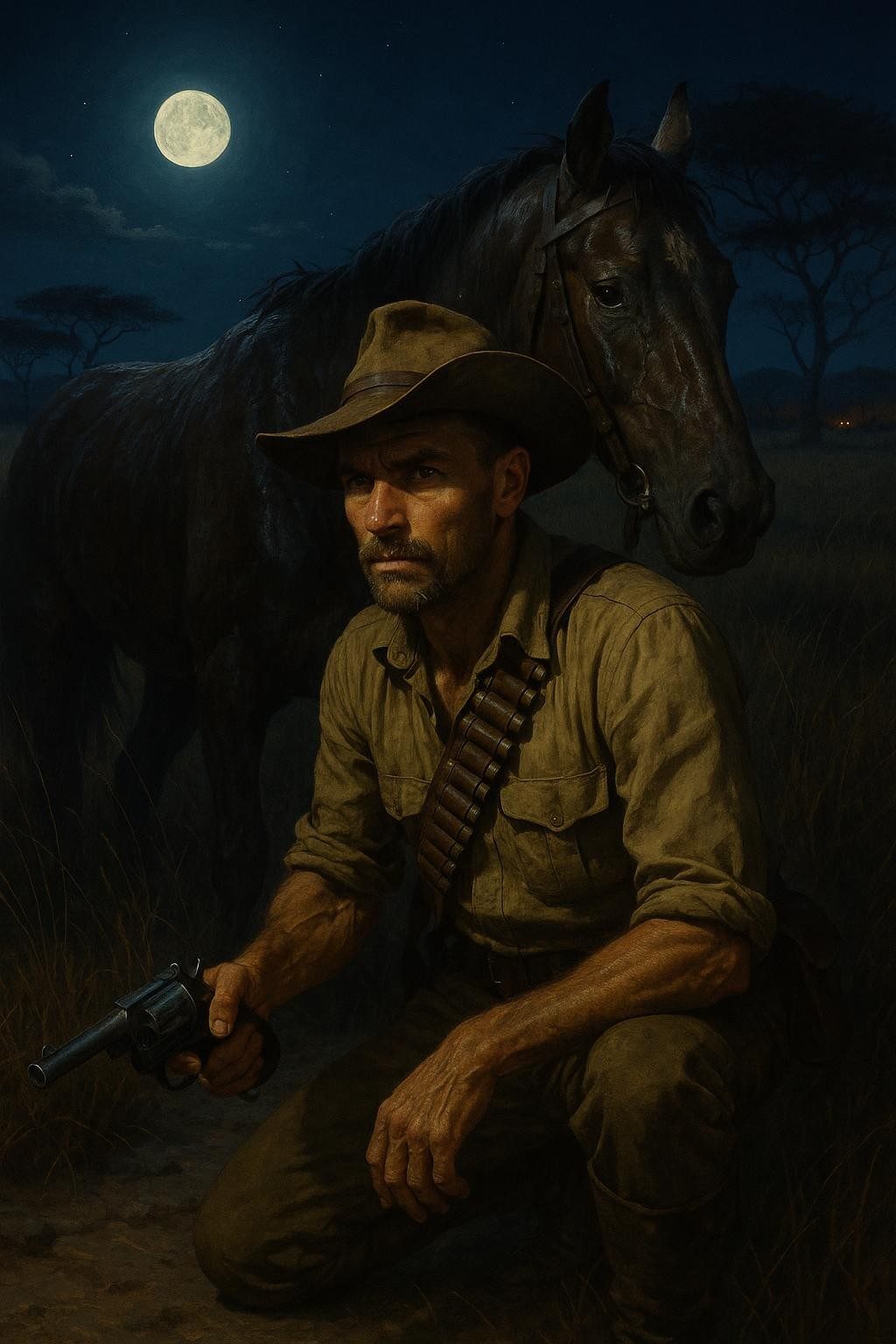
As the sun dipped below the horizon, the mercurial light of the African night presented a fleeting advantage. The cover of darkness that enveloped the land offered Burnham his best hope of survival, a natural cloak to shroud his movements as he slipped through enemy lines, alone but for the revolver at his side and the instinct honed from years of scouting.
A Ride Against Time
The journey was fraught with challenges few could endure. Burnham navigated through dense bush and wide open plains, where every rustle of grass might announce the presence of a watchful adversary. Armed with only his intuition and a revolver, he managed to maintain a course that took him deep into the territory of the Ndebele. The route drawn in Burnham's mind was as much guided by skill as it was by chance; the terrain of Matabeleland was perilous and unforgiving, known to swallow men whole with its hidden perils of both nature and native hostility.
Each mile brought him closer to the heart of the Matabele defiance. The kraal of Lobengula, though now occupied by his son and heir, served as the nerve center of the uprising. It was here Burnham sought the knowledge that could alter the fate of the besieged British troops. Moving with the agility of a big cat through the tall grass and deceptively serene landscapes, every moment teetered on the edge of discovery. If caught, Burnham's fate would almost certainly have been sealed by the spears and ire of the Ndebele.
The silence of the African night was punctuated by the distant calls of nocturnal animals and the crackle of fires in the kraal as Burnham approached. Keeping to the shadows, his observations of the Ndebele's numbers, movements, and preparations were committed to memory with precision. By dawn, the scout had discerned enough details to provide the British command with the tactical advantage they desperately needed.
The Turning Tide
Under a veil of darkness once more, Burnham embarked on the treacherous return journey. With thirty miles separating him from safety, he retraced his path, reversing the intricate dance through enemy territory. The knowledge he carried was direly needed to change the grim realities facing the encircled British forces. As he neared the British lines, the situation was becoming increasingly desperate; ammunition was depleting, and morale was low.
Burnham's successful return bore not just intelligence but a beacon of hope. With the information he provided, the British forces were able to devise strategies that capitalized on the weaknesses he had identified. His lone foray had gathered intelligence critical enough to turn the tides of conflict; the Matabele defenses were not impervious, and with renewed tactics, the British forces began to regain their footing.
Frederick Russell Burnham's solitary ride into Lobengula’s kraal was nothing short of legendary—a feat that exemplified not only personal courage but the pivotal role that sharp minds play in the theatre of war. The story of this lone scout, moving like a shadow through the veil of night, serves as a testament to the power of one man's daring determination against the tempestuous backdrop of the Scramble for Africa. More than a tale of survival, it is a narrative that underscores the intricate dance between knowledge and power, where the right intelligence at the right moment can shift the course of history. Burnham's intrepid endeavor in Matabeleland reflects an era of exploration and conflict where the human spirit triumphed as both a force of conquest and a beacon of resilience.