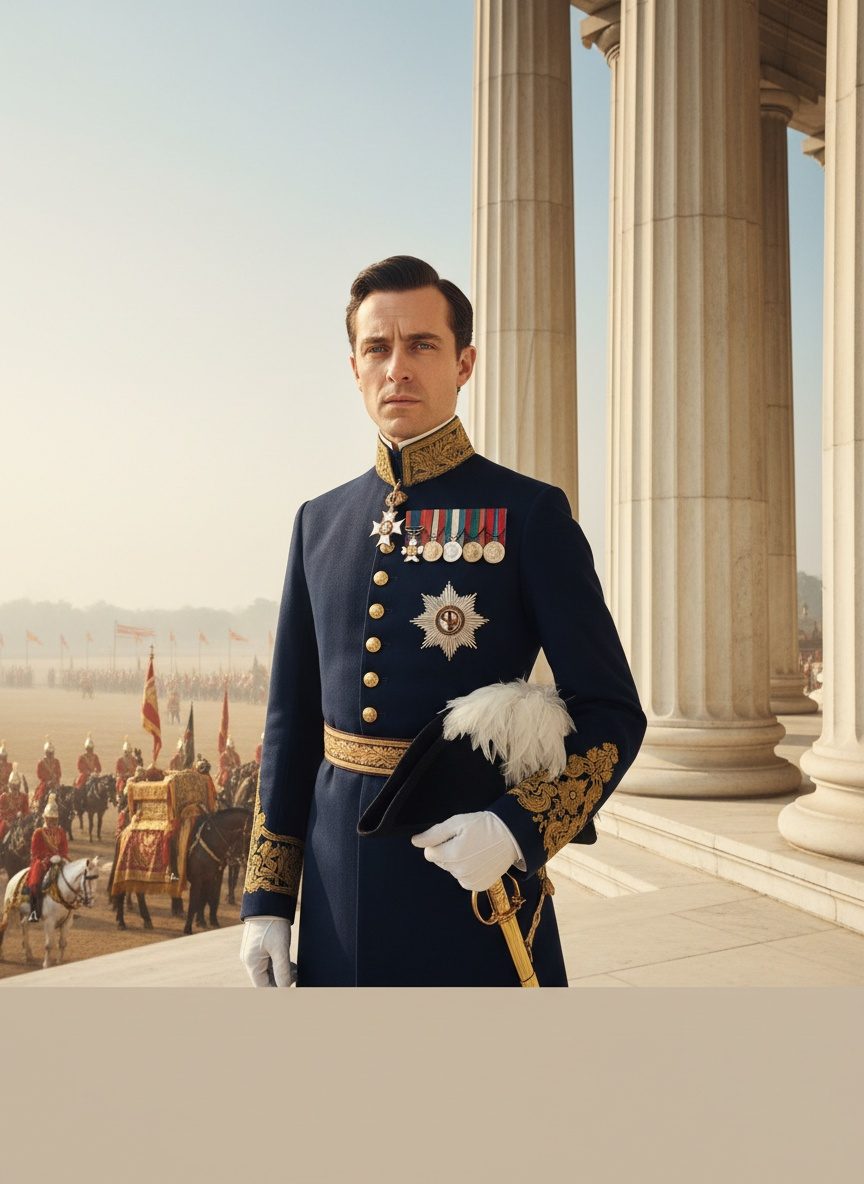
The trumpets blared, slicing through the crisp January air like a clarion call to glory. The golden and scarlet plumes of the mounted cavalry shimmered under the brilliant Indian sun, a parade so splendid it seemed to defy the very clouds that hung upon the horizon. At the heart of this spectacle stood George Nathaniel Curzon, the Viceroy of India, alone in thought amid the orchestrated splendor arrayed before him at the Delhi Durbar of 1903. His eyes, intense beneath the brim of his plumed hat, surveyed the endless sea of humanity—a staggeringly grand expanse of peoples and cultures, summoned to witness the zenith of imperial spectacle. Yet, in the deepest recesses of Curzon's mind, merged the stark awareness of ambition and the needle of fragility that only men of power can feel in the wake of immense plans.
The Architect of Grandeur
Curzon had risen early on this day, not just to oversee preparations but to immerse himself in the sensory anticipation of history in the making. As the orchestrator of the Durbar, every detail bore his meticulous imprint. George Nathaniel Curzon, a bright intellect shaped by Eton and Balliol College, came to his viceregal role with a singular vision: to cast the British Empire upon India as an eternal symbol of benign rule and unassailable power. Yet, Curzon was more than just a figurehead encased in the trappings of imperial regalia. At thirty-nine, half-crippled by the vigors of service and the demands of his own mind, he wrestled with his limitations even as he stood at the height of his influence.
The Durbar was his magnum opus, an endeavor to eclipse even the grandeur of past imperial gatherings. Set against the historic backdrop of Delhi’s storied landscape, the festivities unfolded with unprecedented pomp. There were elephants adorned in finery that could have belonged to the court of the Mughal emperors, and an assembly of British and Indian nobility dressed in regalia so richly colored that it might have made even a peacock envious. This was no mere celebration; it was a theater meant to broadcast an unwavering dominion—Curzon’s formidable statement to the world that the British Empire was not just intact, but formidable.
Curzon understood well the power of symbolism. He believed that through ceremonial splendor, he could reaffirm the Emperor King’s presence—King Edward VII, in absentia—before the Indian populace. It was a bold calculation that relied not on mere spectacle, but on the fusion of might and benevolence—a delicate dance articulated through moves as precise as those of the nawabi dancers, who twirled with measured grace at his command.
A Splendor on Shaky Grounds
As the ceremonies reached their crescendo, a symphony of colors and sounds erupted around Curzon. Cacophonous cheers mingled with the rhythmic pounding of regimental drums, while the air was thick with the scents of spices and jasmine. Yet behind this grand festival lay an unsettling fragility—a microcosm of Britain’s paradoxical hold over India. For inside the layers of imperial confidence churned the whispers of dissent, the undercurrents of nationalistic fervor that narratives like this sought to gloss over. Behind the glittering façade, Curzon himself—a titan among administrators—felt the weight of opacity. An empire so meticulously crafted could, with a single misstep, unravel with surprising swiftness.
Curzon’s obsession with detail, while impressive, was also revealing. It mirrored an inherent fragility reflected in the fundamental imbalances—economic, social, and political—that characterized the British Raj. Beyond the eye-catching durbar and the royal salutes, few would discern the signs of an empire spread thin over a land diverse, complex, and inherently Indian. Though celebrated as the governor who materialized his will into the duress of Indian magnificence, Curzon was marked by the internal strife of the imperial mission itself. He was both revered and reviled, seen as a force of progress by some, yet deemed out of touch by others who yearned for self-governance and regional agency.
Still, Curzon’s resolve remained his most potent weapon. He considered the British trustees of modernity’s light—galvanized by an aura of paternalistic duty. Yet, he well understood that beneath the uniforms and cultural performances teetered an empire on the brink of historical change, precarious in its vanity and its subtle, fundamental dependencies.
The Aftermath of Imperial Splendor
As the echoes of the Durbar began to fade and the lights of the extravaganza dimmed, George Nathaniel Curzon lingered at the edges of history, profoundly aware of his solitary role as the architect of Britain’s Indian dream. The dawn of a new century, rife with change and impending challenges, was perhaps more daunting than the fading glory of the Durbar itself.
For many, the event had been a display like no other—a fixation of color, sound, and emotion intended to solidify British dominance. Yet, it was in the eyes of the common Indian attendees that Curzon might have glimpsed the uncertain future. Their faces were not to be dismissed as mere observers of pageantry but as a chorus of quiet resistance and latent possibility. Within the festivities lay seeds of the future—a palpable yearning for identity and autonomy concealed beneath the sheen of imperial control.
Curzon’s vision for the British Raj, though revolutionary in scope, laid bare the ultimate delusion of imperial permanence. Standing before countless subjects at the gates of Delhi, he had governed through extravagant displays of might and opulence, yet the unspoken narrative simmered beneath. It was a story of dual empires—one apparent and external, the other growing internally, silently reshaping the history yet to be written. It was a reminder that amidst the grandeur of what Curzon had willed into existence lay the seeds of an irreversible shift, from the echoes of colonial triumphs to the dawns of new nations breathing to life.