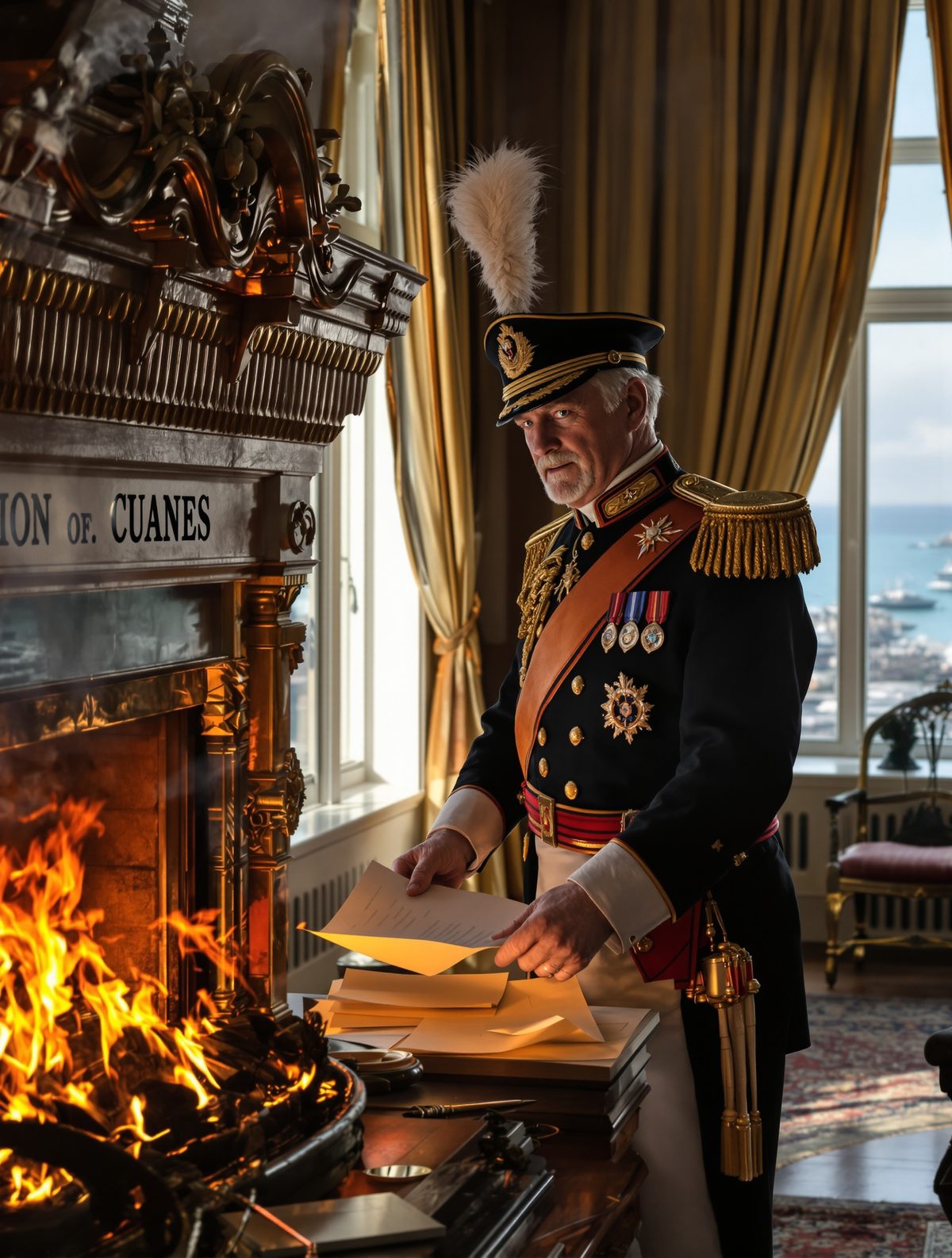
Picture this: a pudgy Yorkshire draper standing in his modest shop in 1837, measuring cloth for the local gentry, completely unknown beyond the ancient walls of York. Fast-forward just seven years, and that same man is striding into the House of Commons as an MP, controlling more railway track than anyone in Britain, and commanding a personal fortune worth tens of millions in today's money. His name was George Hudson, and he pulled off what might be the most audacious business empire-building feat in Victorian history—before it all came crashing down in the most spectacular fashion imaginable.
From Cloth to Capital: The Unexpected Inheritance
George Hudson's transformation from provincial nobody to national titan began with the kind of stroke of luck that Victorian novelists loved to weave into their tales. Born in 1800 to a farmer in Howsham, Yorkshire, Hudson had worked his way up to owning a modest drapery business in York by his thirties. He sold fabric, not dreams—until 1837, when everything changed.
That year, a great-uncle died and left Hudson the staggering sum of £30,000—roughly £3 million in today's money. Most men might have expanded their shop, bought a country house, or lived comfortably for life. Hudson saw something else entirely: the iron ribbons of railway track beginning to snake across Britain, and the fortunes being made by those bold enough to bet on steam and steel.
The timing was perfect. Britain was in the grip of railway mania, but the network was a chaotic patchwork of competing lines, many poorly managed and financially shaky. Hudson, with his inheritance burning a hole in his pocket and an eye for opportunity that bordered on genius, began buying shares in struggling railway companies around York. Within months, he wasn't just an investor—he was calling the shots.
The Railway King's Iron Throne
What Hudson did next was breathtakingly simple in concept but brilliant in execution. Instead of building new railways from scratch—an expensive and risky proposition—he systematically bought up existing lines, merged them, and created vast integrated networks. By 1844, this former draper controlled the York and North Midland Railway, the Midland Railway, and the Eastern Counties Railway, giving him dominion over 1,016 miles of track.
To put that in perspective, Hudson personally controlled more than one-third of Britain's entire railway network. Passengers traveling from London to Scotland, or from the industrial heartlands to the ports, likely rode on Hudson's rails. He had become, quite literally, the Railway King—a title the press bestowed on him with a mixture of awe and suspicion.
His methods were as audacious as they were effective. Hudson would identify struggling railway companies, buy shares at rock-bottom prices, engineer boardroom coups to gain control, then merge these lines with his existing network. He understood something that many of his contemporaries missed: railways weren't just about moving people and goods from point A to point B—they were about creating systems, networks that became more valuable the larger they grew.
Living Like a Victorian Rockstar
Success went to Hudson's head in spectacular fashion. By the mid-1840s, he was living like a railway-era tech billionaire. He owned multiple grand houses, including a mansion in London's exclusive Albert Gate and a palatial estate in Yorkshire. He threw lavish parties where politicians, aristocrats, and fellow industrialists competed for his attention—and investment opportunities.
Hudson's personal fortune peaked at an estimated £300,000 (around £30 million today), but his influence extended far beyond money. He became Conservative MP for Sunderland in 1845, using his political position to advance railway interests while his railway empire boosted his political capital. The press hung on his every word about railway expansion, and his stock picks could move markets.
Perhaps most remarkably, this son of a Yorkshire farmer was welcomed into the highest circles of British society. He dined with dukes, advised government ministers, and was consulted on major infrastructure decisions. Victoria's Britain was still largely aristocratic, but Hudson proved that in the new industrial age, a man with vision and railways could buy his way to the top table.
The Cracks in the Kingdom
But Hudson's empire was built on foundations that were starting to shift dangerously by 1847. The Railway Mania that had fueled his rise was cooling, and investors were beginning to ask harder questions about the astronomical sums they'd pumped into railway companies. More importantly, some were starting to look closely at Hudson's books.
The Railway King had been playing a dangerous game, using increasingly creative accounting methods to keep his empire expanding. He paid dividends to shareholders not from profits, but from new share issues—essentially using new investors' money to pay returns to existing ones. Sound familiar? It's the same basic structure as a Ponzi scheme, though it wouldn't be called that for decades.
Hudson also engaged in what we'd now call insider trading on an epic scale. He would use his knowledge of planned railway routes and mergers to buy land and shares ahead of public announcements, then sell at massive profits. In one notorious case, he purchased thousands of acres along a proposed railway route, then ensured the route went exactly where he'd bought—netting him a fortune while railway shareholders unknowingly funded his land speculation.
The Great Unraveling
In 1849, the house of cards finally collapsed. A Parliamentary committee investigation into railway finances uncovered Hudson's web of questionable transactions, dubious accounting practices, and outright fraud. The revelations were devastating: Hudson owed various railway companies a staggering £600,000—money he'd effectively stolen to fund his lavish lifestyle and further investments.
The man who had been feted as an industrial visionary was suddenly exposed as what one newspaper called "a commercial criminal of the most gigantic description." Shareholders who had trusted their savings to the Railway King's magic touch found themselves ruined. Hudson's political career evaporated overnight—he resigned his parliamentary seat in disgrace.
The fall was as spectacular as the rise had been meteoric. Hudson was forced to sell his mansions, his art collection, and most of his railway shares to pay creditors. He spent his final years in exile in France, returning to England only briefly before dying in 1871, largely forgotten and definitely unforgiven.
The King's Lasting Legacy
Yet here's the fascinating paradox of George Hudson's story: while the man was disgraced, his vision proved absolutely correct. The integrated railway network he built became the backbone of Victorian Britain's economic miracle. The routes he planned and consolidated carried the coal, steel, and goods that powered the Industrial Revolution. The connections he forged between industrial centers and ports helped make Britain the workshop of the world.
Hudson's rise and fall reads like a Victorian morality tale about the dangers of greed and speculation. But it's also a story about how transformative infrastructure gets built—often by individuals willing to take enormous risks, bend rules, and bet everything on a vision others can't yet see. Today's tech titans who move fast and break things while building the digital infrastructure of the 21st century might recognize something of themselves in the Railway King's relentless ambition.
The next time you board a train in Britain, remember George Hudson. Many of the routes you travel were first envisioned and built by a pudgy draper from York who saw the future coming down the track—and grabbed it with both hands, consequences be damned.