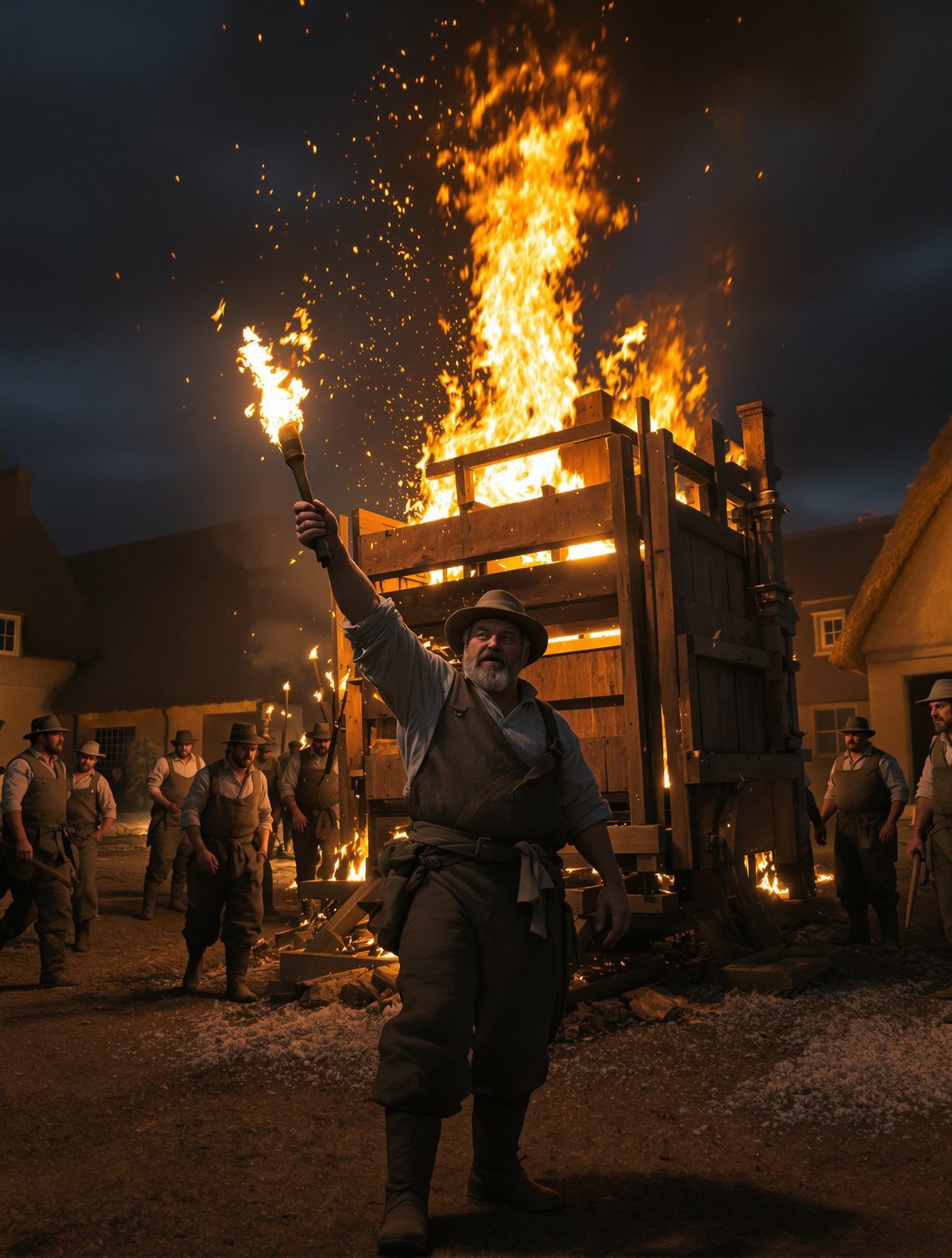
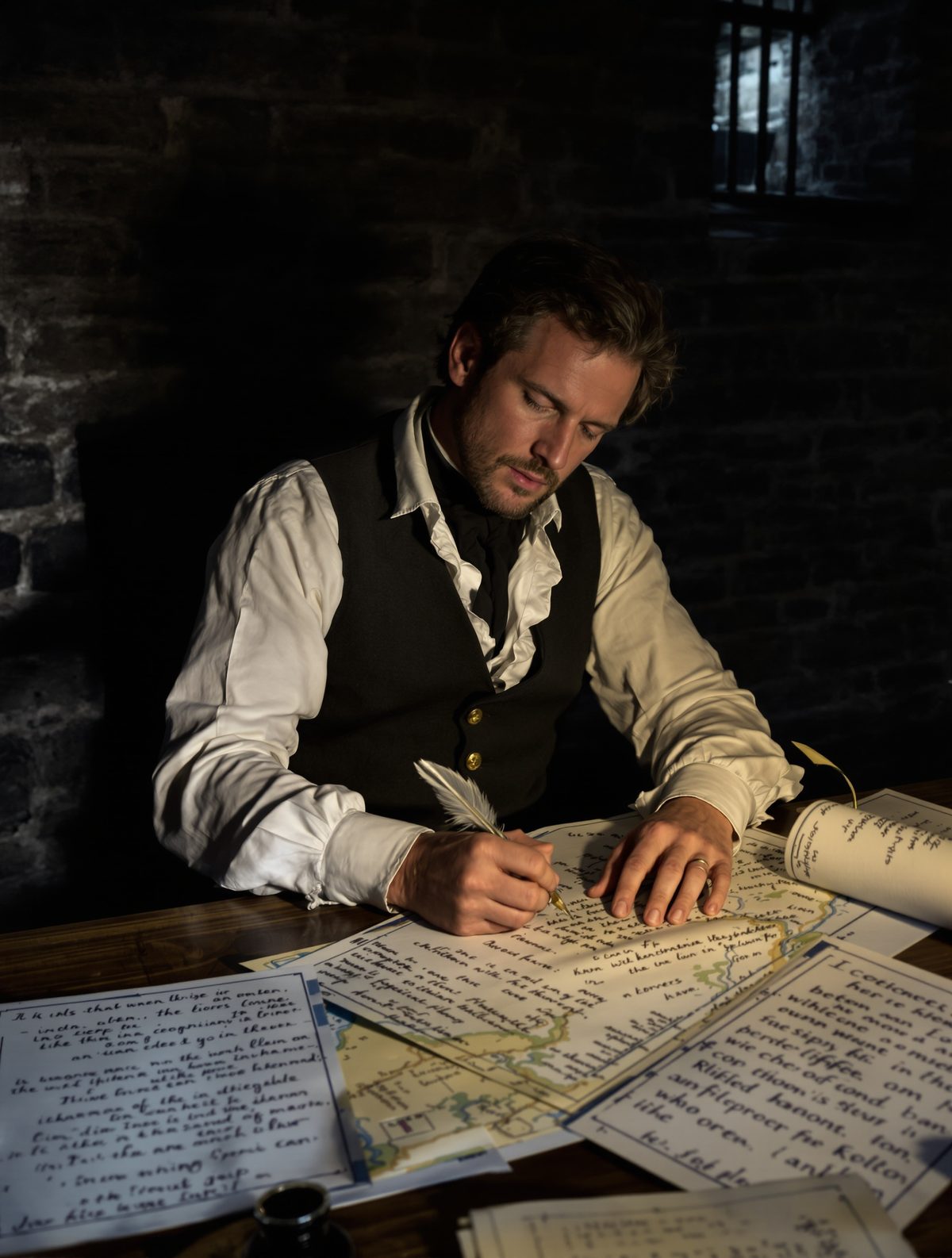
The smell of burning paper filled the Governor's study as Sir Rex Hunt fed classified documents into the fireplace one by one. Outside Government House, the crack of rifle fire echoed across Port Stanley's harbor as Argentine marines stormed the beaches of the Falkland Islands. It was 6:00 AM on April 2nd, 1982, and the British Empire was about to lose its last colonial outpost in the South Atlantic—but not without a fight that would begin with one man's stubborn refusal to let his secrets fall into enemy hands.
Hunt, a career diplomat who had governed these windswept islands for three years, methodically destroyed cipher codes, intelligence reports, and diplomatic cables as the sound of invasion grew closer. His wife Mavis helped feed the flames, while their housekeeper calmly prepared breakfast as if this were just another morning in one of the world's most remote colonial postings. But this wasn't just another morning—it was the last morning of British rule over the Falklands, and Hunt was determined to end it with dignity.
The Governor Who Wouldn't Run
Sir Rex Masterman Hunt—yes, that was really his middle name—was not your typical colonial administrator. At 57, the former Royal Air Force pilot had spent decades in diplomatic postings across the shrinking British Empire, from Uganda to Indonesia. He had requested the Falklands posting specifically, drawn by the challenge of governing Britain's most isolated territory. With a population of just 1,800 sheep farmers and their families scattered across islands larger than Northern Ireland, it seemed like a peaceful way to end his career.
But Hunt had been watching the storm clouds gather for months. Argentine newspapers had been full of militant rhetoric about reclaiming Las Malvinas, and military dictator General Leopoldo Galtieri desperately needed a patriotic victory to shore up his crumbling regime. British intelligence had intercepted communications suggesting an invasion was possible, but most experts believed it would come much later—perhaps in the southern hemisphere's autumn, not the dying days of summer.
They were wrong. On March 31st, Hunt received an urgent telegram from London: Argentine naval movements suggested an attack was imminent. He had perhaps 48 hours to prepare for war with a force of exactly 68 Royal Marines and a handful of local defense volunteers. The nearest British military base was 8,000 miles away.
A Very British Breakfast Under Fire
As dawn broke on April 2nd, Hunt was awakened not by his alarm clock but by radio chatter from the Marine barracks. Argentine landing craft had been spotted approaching Yorke Bay, just south of Port Stanley. The invasion had begun.
What happened next reveals something quintessentially British about both Hunt and the bizarre nature of late colonial life. While Argentine commandos were literally storming the beaches, Hunt's housekeeper insisted on serving a proper breakfast. Hunt himself later recalled the surreal scene: "There I was, burning state secrets in the fireplace, and she's asking whether I'd prefer marmalade or jam on my toast."
The Governor had already sent his deputy and most of the Government House staff to safety, but he refused to abandon his post. Instead, he systematically destroyed every classified document in the building. Cipher codes went first—these would have given the Argentines access to British diplomatic communications across South America. Then came intelligence reports, including assessments of Argentine military capabilities that London definitely didn't want falling into enemy hands.
The most sensitive documents concerned British submarine movements and Royal Navy deployments. Unknown to the Argentines, HMS Spartan and HMS Splendid were already racing south at full speed, part of what would become the largest British naval task force assembled since World War II. Hunt's flames ensured that secret would remain safe.
Ceremonial Defiance in Full Dress Uniform
By 8:30 AM, the battle for Port Stanley was effectively over. Major Mike Norman's Royal Marines had put up fierce resistance, but they were hopelessly outnumbered by nearly 1,000 Argentine troops. As white flags began appearing around the town, Hunt made a decision that would define his legacy: he would surrender, but he would do it his way.
Retiring to his bedroom, Hunt carefully donned his full ceremonial uniform—white dress jacket with gold braiding, ceremonial sword, plumed hat, and every decoration he had earned in 30 years of imperial service. "If I'm going to surrender the Falkland Islands," he told his wife, "I'm bloody well going to do it properly." Mavis Hunt later recalled thinking her husband looked "rather magnificent, actually—like something out of a Kipling story."
The choice of uniform was more than theatrical. In an age of casual diplomacy and business suits, Hunt was making a statement about dignity, duty, and the weight of history. He was the 37th—and as it turned out, last—British Governor of the Falkland Islands, a position that traced its lineage back to the great age of exploration and empire. If that tradition was ending today, it would end with proper ceremony.
The Standoff That Almost Sparked a Firefight
When Argentine forces reached Government House around 9:30 AM, they found Hunt waiting on the front steps in full regalia, flanked by two Royal Marines in dress uniform. The scene that followed was almost farcical—and nearly fatal.
The Argentine commander, Admiral Carlos Busser, had expected to find either an empty building or a cowering bureaucrat. Instead, he was confronted by what looked like a Victorian-era colonial governor who had stepped out of a painting. Hunt's first words, delivered in perfect Spanish, were: "You have landed unlawfully on British territory. I order you to withdraw immediately."
For a moment, nobody moved. Argentine soldiers, many of them young conscripts who had never been in combat, stared at this bizarre figure who seemed completely unaware that he had already lost. Some later admitted they weren't sure whether to salute or shoot. The standoff stretched for nearly ten minutes before Busser, perhaps impressed by Hunt's sheer audacity, agreed to accept a formal surrender.
But Hunt had one more card to play. He insisted on negotiating terms—not for himself, but for the Falkland Islanders who would now live under Argentine occupation. In fluent Spanish honed during postings across Latin America, he extracted promises that civilians would be protected and that Argentine forces would respect private property. Remarkably, for the most part, they did.
The Cipher Codes That Never Burned
Here's where the story takes an unexpected turn that remained classified for decades. While Hunt was busy burning his diplomatic codes, he had no way of knowing that other British personnel scattered across the islands were doing the same thing—except for one crucial location.
At the remote telecommunications station outside Port Stanley, a young Royal Navy technician named David Hart made a split-second decision that would prove invaluable to the British war effort. Instead of destroying his communications equipment and codes as ordered, he buried them in a sealed container near the station. When British forces retook the islands 74 days later, Hart's hidden cache provided crucial intelligence about Argentine radio frequencies and communication patterns.
Even more remarkably, Hart had used those final hours before surrender to transmit detailed reports about Argentine troop movements and equipment to British forces at sea. These intercepts gave task force commanders their first accurate picture of what they would be facing—information that may have saved hundreds of lives during the eventual British landings.
The Last Governor's Legacy
Sir Rex Hunt's burning of the cipher codes and his ceremonial surrender might seem like mere historical theater, but they represent something profound about the end of empire and the nature of institutional dignity under pressure. In an age where politicians flee at the first sign of trouble and institutions crumble under social media pressure, Hunt's performance offers a different model of leadership.
His insistence on proper procedure—even in defeat—helped ensure that the handover of power occurred with minimal civilian casualties. His destruction of sensitive documents protected British lives and military operations during the war that followed. And his dignified bearing in those final moments provided a template for how great powers might gracefully cede territory without losing face.
Today, as we watch institutions strain under pressure and leaders abandon their posts at the first sign of crisis, Hunt's example resonates in unexpected ways. The Falklands War that followed his surrender lasted 74 days, cost nearly 1,000 lives, and ultimately restored British sovereignty over the islands. But it all began with one man standing in his study at dawn, feeding secrets to the flames while maintaining the fiction that empires end with dignity rather than simply fading away.
In our interconnected world of instant communication and digital surveillance, the image of a colonial governor burning paper codes in a fireplace seems quaint, almost medieval. But sometimes the most important battles are fought not with weapons, but with symbols—and sometimes the most effective resistance comes not from fighting to the death, but from surrendering with such style that the victors themselves are impressed.