The leather briefcase felt heavier than it should have as Governor Malcolm MacDonald walked alone through the humid Singapore night toward City Hall. Inside those worn folders lay the constitutional documents that would end 140 years of British rule over the world's busiest port. It was June 3rd, 1959, and at the stroke of midnight, he would hand the keys to empire to a 35-year-old Cambridge-educated lawyer named Lee Kuan Yew—a man the British had once jailed as a dangerous radical.
What happened in that ornate chamber would become one of history's most civilized transfers of power, yet the story of how Britain's most strategic Asian outpost slipped peacefully from imperial hands remains largely untold. This wasn't the usual tale of colonial collapse—no angry mobs, no violent revolution, no bitter retreat. Instead, it was something far more extraordinary: an empire voluntarily walking away from its crown jewel.
The Unlikely Revolutionary in a Three-Piece Suit
Lee Kuan Yew hardly looked like the man who would bring the British Empire to its knees in Southeast Asia. Standing just 5'8" with wire-rimmed glasses and an immaculate three-piece suit, he could have been mistaken for any other Cambridge don. But appearances deceived. This soft-spoken lawyer had just led his People's Action Party to a stunning electoral victory, capturing 43 of 51 seats in Singapore's first fully elected parliament.
The irony wasn't lost on British officials: they had educated their own replacement. Lee had arrived at Cambridge in 1946 on a government scholarship, studying law at Fitzwilliam College. He graduated with a starred double-first—a distinction so rare that only a handful of students achieved it each year. The Colonial Office had intended to create loyal civil servants; instead, they had forged the intellectual architect of their own departure.
Even more remarkably, Lee spoke flawless English—often better than his British counterparts. During heated debates in Singapore's Legislative Council, he would quote Shakespeare and cite British legal precedent with devastating precision. "How do you argue with someone who knows your own system better than you do?" one frustrated colonial administrator reportedly complained.
The Governor Who Chose to Let Go
Malcolm MacDonald was perhaps the only British governor who could have orchestrated such a graceful exit. The son of Britain's first Labour Prime Minister, Ramsay MacDonald, he had spent his career in the twilight zones of empire—places where the old certainties were crumbling and new realities demanded fresh thinking.
Since arriving in Singapore in 1946, MacDonald had watched the world change around him. The catastrophic fall of Singapore to the Japanese in 1942 had shattered the myth of British invincibility. Local populations across Asia were demanding independence, and the economic cost of maintaining far-flung territories was bleeding Britain dry. MacDonald understood what many in Whitehall refused to accept: the age of empire was ending, and the question wasn't whether to leave, but how to leave with dignity intact.
What made MacDonald extraordinary was his willingness to work with nationalist leaders rather than against them. While other colonial administrators saw Lee Kuan Yew as a threat, MacDonald recognized him as a potential partner. The two men developed an unlikely mutual respect—the veteran imperial administrator and the young anti-colonial lawyer finding common ground in their shared pragmatism.
The Art of Peaceful Revolution
The path to that midnight handover had been anything but smooth. In 1954, Lee Kuan Yew had co-founded the People's Action Party in a mosquito-infested community center, with just a handful of supporters and a borrowed typewriter. Their first meetings were held in coffee shops and back rooms, planning what they called a "democratic revolution" against colonial rule.
Lee's strategy was brilliant in its simplicity: he would beat the British at their own game. Instead of armed resistance, he chose parliamentary politics. Instead of fiery rhetoric about throwing off colonial chains, he spoke the language of economic development and administrative efficiency. He promised voters not just freedom, but prosperity.
The breakthrough came in the 1955 elections, when the PAP won just three seats but established itself as a serious political force. Lee used his position in the Legislative Council like a master fencer, parrying colonial policies with surgical precision while building his popular support. British officials found themselves in the strange position of being outmaneuvered by someone who never raised his voice or threw a brick.
By 1959, even the most die-hard imperialists in London recognized the inevitable. Lee Kuan Yew had created what historians would later call a "democratic fait accompli"—winning power so decisively and governing so competently that denying him self-government would have been both politically impossible and practically absurd.
The Midnight That Changed Everything
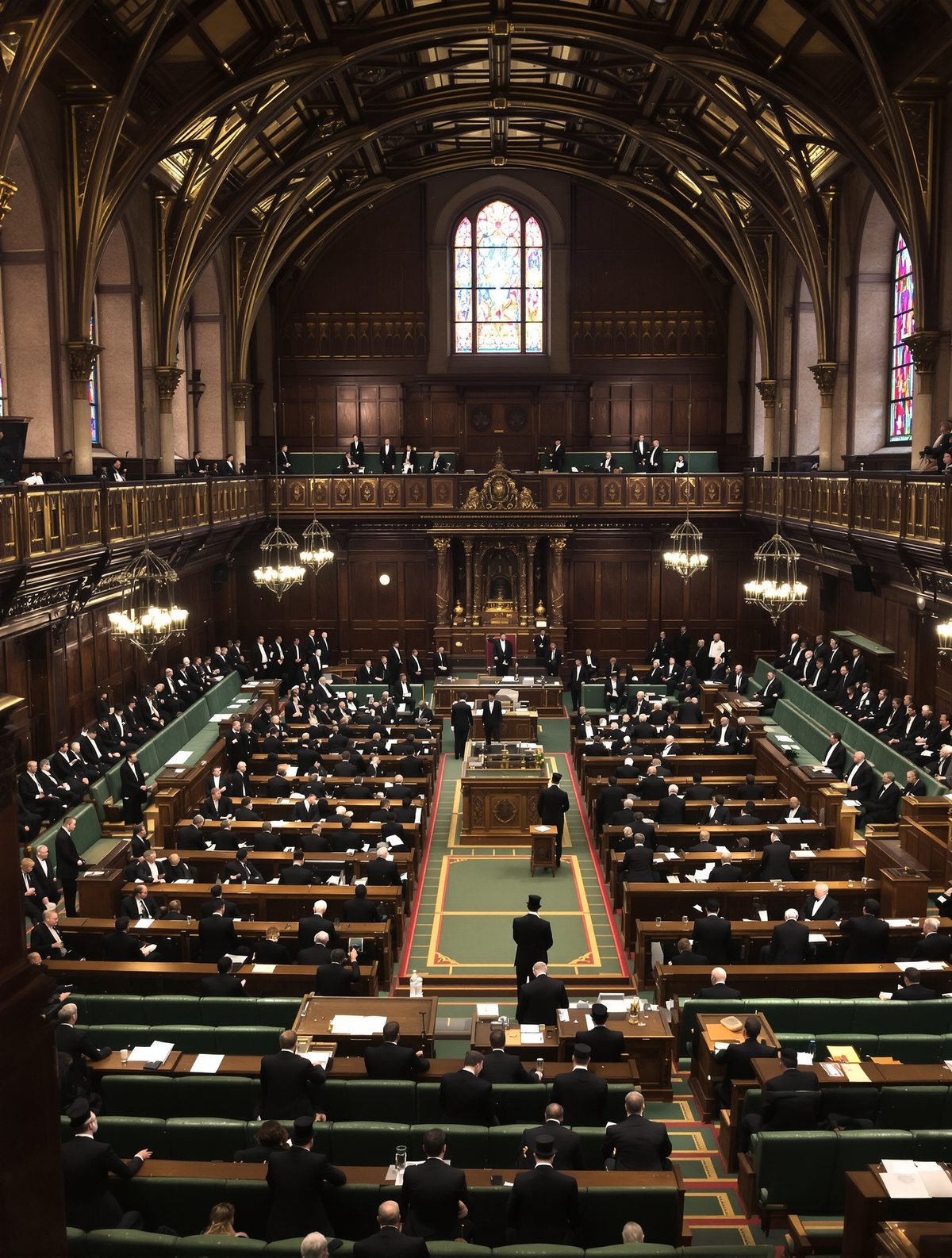
The formal ceremony on June 3rd, 1959, was deliberately understated—no brass bands, no colonial pomp, just two men in a wood-paneled room making history. MacDonald had insisted on simplicity, understanding that grand imperial theater would only emphasize what Britain was losing rather than what Singapore was gaining.
At 11:45 PM, MacDonald opened his briefcase one final time, removing the constitutional documents that would transform Singapore from a British colony into a self-governing state. Lee Kuan Yew sat across from him, flanked by his cabinet ministers—most of them, like their leader, young lawyers and professionals who had never expected to inherit power quite so quickly.
"We are witnessing the birth of a new nation," MacDonald said quietly as the clock approached midnight. "I have every confidence it will be a great one." There was no bitterness in his voice, no sense of imperial defeat—just recognition that an era was ending and a new one beginning.
At exactly 12:01 AM on June 4th, Lee Kuan Yew became Singapore's first Prime Minister. The handshake that followed lasted only seconds, but it marked the end of 140 years of British rule and the beginning of what would become one of the 20th century's most remarkable national transformations.
The Most Successful Failure in Imperial History
What happened next defied every prediction. Singapore didn't collapse into chaos, fall to communist revolution, or sink into post-colonial poverty. Instead, it became exactly what Lee had promised: a prosperous, efficient, modern state that would eventually surpass Britain itself in per capita wealth.
MacDonald remained in Singapore as Britain's first High Commissioner, watching with amazement as Lee transformed the island from a colonial trading post into a gleaming metropolis. The two men maintained their unlikely friendship for decades, with Lee later describing MacDonald as "the one British official who understood that empires don't have to end in bitterness."
Perhaps most remarkably, Singapore chose to join the Commonwealth—the voluntary association of former British territories. It was Lee's way of acknowledging that independence didn't require burning bridges. In a world where decolonization often meant decades of hostility between former colonies and their imperial masters, Singapore and Britain charted a different course.
Why This Midnight Moment Still Matters
The story of that humid June night in 1959 offers something increasingly rare in our polarized world: proof that profound change can happen without destruction, that power can be transferred without violence, and that former enemies can become partners through mutual respect and pragmatic wisdom.
Malcolm MacDonald's willingness to let go with grace, and Lee Kuan Yew's determination to build rather than simply tear down, created a template for peaceful transition that remains relevant today. In an era when political change too often comes through conflict and confrontation, their example reminds us that the most lasting transformations often happen not through dramatic gestures, but through quiet conversations between people willing to see beyond their immediate interests to longer-term possibilities.
That leather briefcase may have contained the end of an empire, but it also held the blueprints for something better: a world where nations could part as friends and former subjects could become equal partners. In our fractured age, that might be the most radical idea of all.