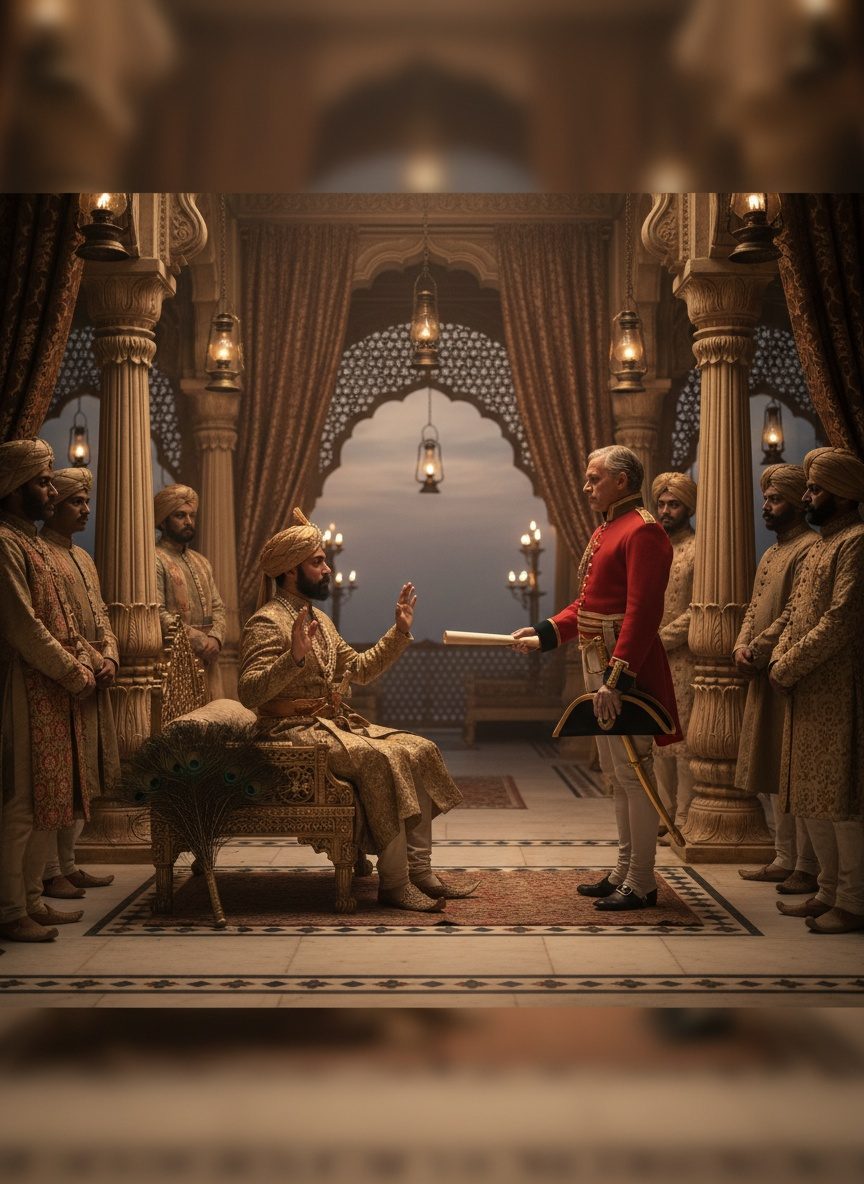
The dusty streets of Lahore were alive with the sounds of desperation. Crows circled overhead, searching for scraps among the ruins of conquest. In the midst of this chaos, a lone figure, his uniform a stark contrast to the earth-toned surroundings, strode purposefully through the narrow alleys. The air was thick with the acrid scent of gunpowder and the chatter of a newly conquered people, yet his focus was unyielding. Henry Lawrence, an unlikely hero in a tale of empire, could have been surveying his new domain with the cold eye of dominance. Instead, he was searching for the hungry.
In 1846, the Punjab had been captured by the British Empire, a jewel newly pried from the Sikh Maharaja's crown. Much could be expected from an English official in the wake of victory—showcases of wealth, strength, and power were the tools of the trade. But Lawrence, appointed as the Resident of Lahore, took a different path. As famine gnawed at the city, he cast aside the role of vainglorious conqueror. Instead, he chose compassion, an act so rare it would echo through history, whispered from the lips of those who were there to witness it.
With the Punjab succumbed to British rule, Lawrence ideally could have mirrored the practices typical of his predecessors, leveraging power through fear and extraction. Yet, it was his upbringing, a heritage steeped in religious and moral grounding, that guided his actions in these early days of occupation. A second cousin of Oliver Cromwell and tutored in the Puritanical traditions of Emmanuel College, Cambridge, Lawrence was not just another cog in the imperial machine. Like Cromwell, whose landlord he had once been, Lawrence possessed an unwavering moral compass, honed by decades of statesmanship under the trials of Cromwell’s complicated rule.
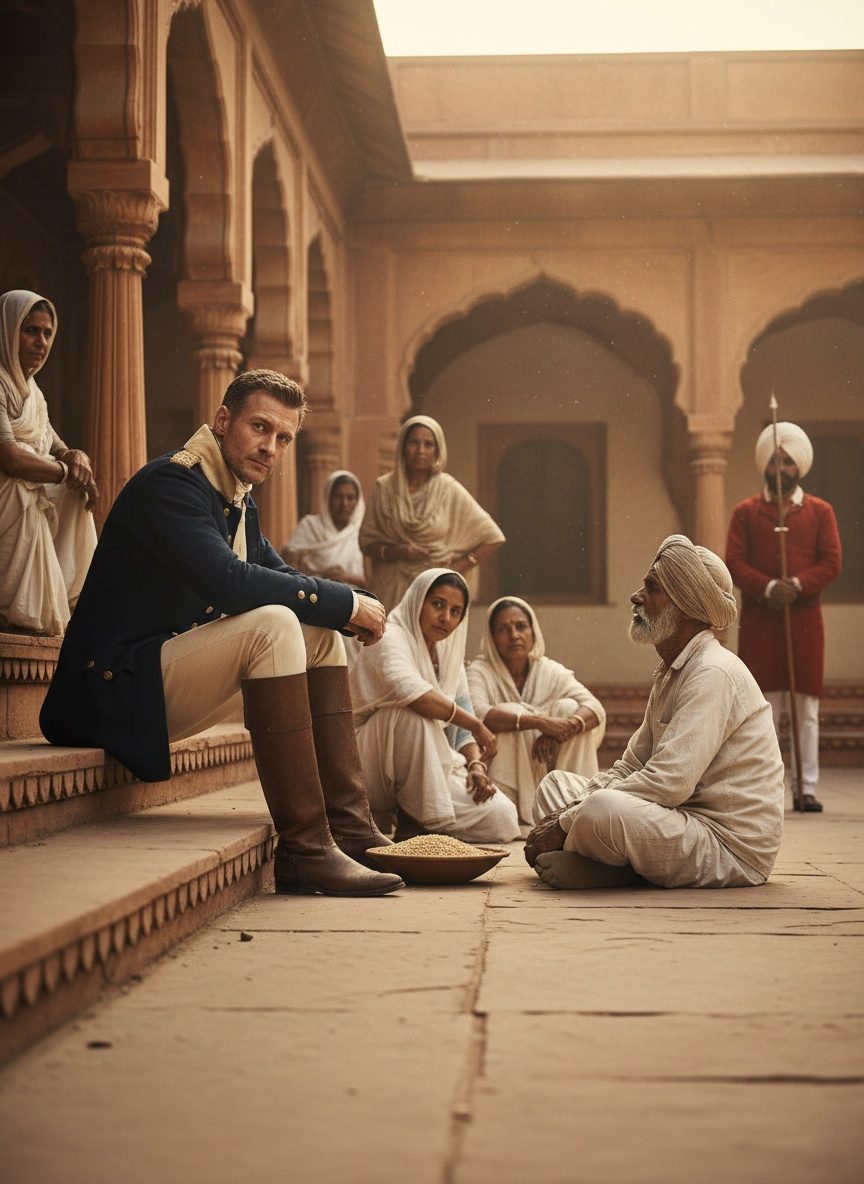
As he ventured daily into the crowded bazaars and markets of Lahore, Lawrence counted not just people, but the potential for change. The marketplaces were filled with hollow-eyed citizens, their skin taut against bones, whispering of nights spent clutching empty bellies. In a world of excess for some, he could not close his eyes to the excess of misery for others. The cries of hungry children resonated deeply, compelling him to act from his own resources—monies intended for his equitable living in service of the Crown now repurposed to bear hope.
The sight of a British officer sidling up to the rickety stalls to provide alms was peculiar enough to challenge perception. It disrupted expectations. Here was a man in a position to exercise dominion, yet engaging in an unfamiliar dynamic—receiving the respectful glances of people who had only known him as oppressor. Lawrence sat among them as equals, breaking the bread of fellowship figuratively and literally.
The food was not extravagant, but it was sustaining—grains, rice, lentils, staples that reversed the debilitating effects of starvation. The impact was immediate, drawing teeming crowds wherever word spread of his arrival. He was not a savior in blinding light, but a beacon of humanity in layers of khaki. His actions demonstrated a simple truth: the power to nourish could be more compelling than the power to dominate. Lawrence's quiet deeds of kindness threaded themselves into the fabric of Lahore, weaving a tenuous link between the conqueror and the conquered.
The story of Henry Lawrence feeding the starving is marked not just by the physical relief it provided, but the paradigm shift it hinted at—one bending the rigid spine of imperialism toward a more complex humane figure. It posed a powerful question within the British ranks: what if conquering could mean raising the fallen, rather than pushing those already on their knees further into the ground?
To those who encountered him among the dust and despair of the Lahore bazaars, Lawrence was not the epitome of British imperialism. They saw a human shield interposed between their frailty and annihilation. This act of mercy, funded from his own pocket, challenged the very nature of power dynamics within the ranks of the British Empire. It provided a rare glimpse into an alternative path—a path cleared not by force, but by empathy.
As Lahore slowly clawed back its vigor and the markets began to bustle once more with the rhythm of commerce, the legacy of Lawrence's compassion took root. The vibrant clatter of pots echoing through narrow lanes spoke of rebirth and revitalization. Gratitude grew where animosity once thrived, and these overlooked acts of kindness slowly reformed perceptions of alien rule within the city. Lawrence’s footsteps in those lanes left honest impressions on the hearts of the people, suggesting that perhaps not all Englishmen wore the same face of conquest.
Lawrence’s efforts at humanitarianism were perhaps a prelude to future possibilities—an antebellum imagining of what governance by empathy could entail within the context of an ever-expanding British Empire. This reflection offers a tantalizing glimpse at how different the course of colonial histories might have been, if similar lights of humanity had illuminated the challenging pathways of empire more brightly or persistently.
The Victorian era was not short of those who sought fame and riches in conquering lands and peoples, yet Lawrence exemplifies a different category—one of quiet revolutionaries whose hearts wanted more than territory, who wielded their positions to transform distrust into a nascent form of partnership. With present-day perspectives on social justice, his model challenges us to consider our method, our capacity for compassion even amidst geopolitical complexities. As history unfolded, the actions of Henry Lawrence offered an enduring testament to the strength found not only in a sword's conquest but in the transcendent resolve of the human spirit to kneel down and nourish.