He was armed with a German rifle and carried the burden of hope. This courageous twenty-year-old Dutch civilian had never fired a shot in anger until the night before liberation.
The Silent Network
By spring 1945, the Netherlands lay at the convergence of despair and liberation. After years of Nazi occupation, the Dutch were weary, yet amongst them, an intricate underground resistance was pulsating with clandestine activity. Unbeknownst to the occupying forces, this network was preparing an audacious show of defiance. These weren't career soldiers or trained militants; they were bakers, teachers, and farmers—ordinary people who harnessed the growing chaos of a crumbling German command as their chance to act.
Quiet whispers in back alleys and coded messages passed through trusted couriers formed the sinews of a movement ready to strike. As the British Second Army drove into Holland, the resistance knew the time had come. Weapons were not easily acquired. From stolen German rifles to handmade bombs, the ingenuity was endless. Each rusty weapon carried its own story of stealth and risk, passing from hand to hand until it reached those brave enough to wield it. The daring thefts under the noses of Nazi officers filled the Dutch with a defiant pride.
The Night of No Turning Back
As March nights descended with a cold embrace, the Dutch resistance could wait no longer. Driven by the hope of imminent liberation and the desire to contribute to their own freedom, they decided to pre-empt the arrival of Allied forces. On the eve that would become legend, a symphony of locked doors clicking open and boots shuffling echoed in small towns across Holland.
In one such town, a group of locals gathered in what was once the hub of their community—a church stripped of its former sanctity under occupation. Each carried their clandestine assignment with a gravity belying their everyday backgrounds. A signal passed quietly; it was time. Streets that had cowered under curfews were suddenly filled with furtive movement as the people took their stand. Shouts in Dutch mixed with German commands in the night, the oppressors suddenly realizing they were no longer controlling shadows, but battling ghosts of the population they sought to dominate.
Hold Until Daybreak
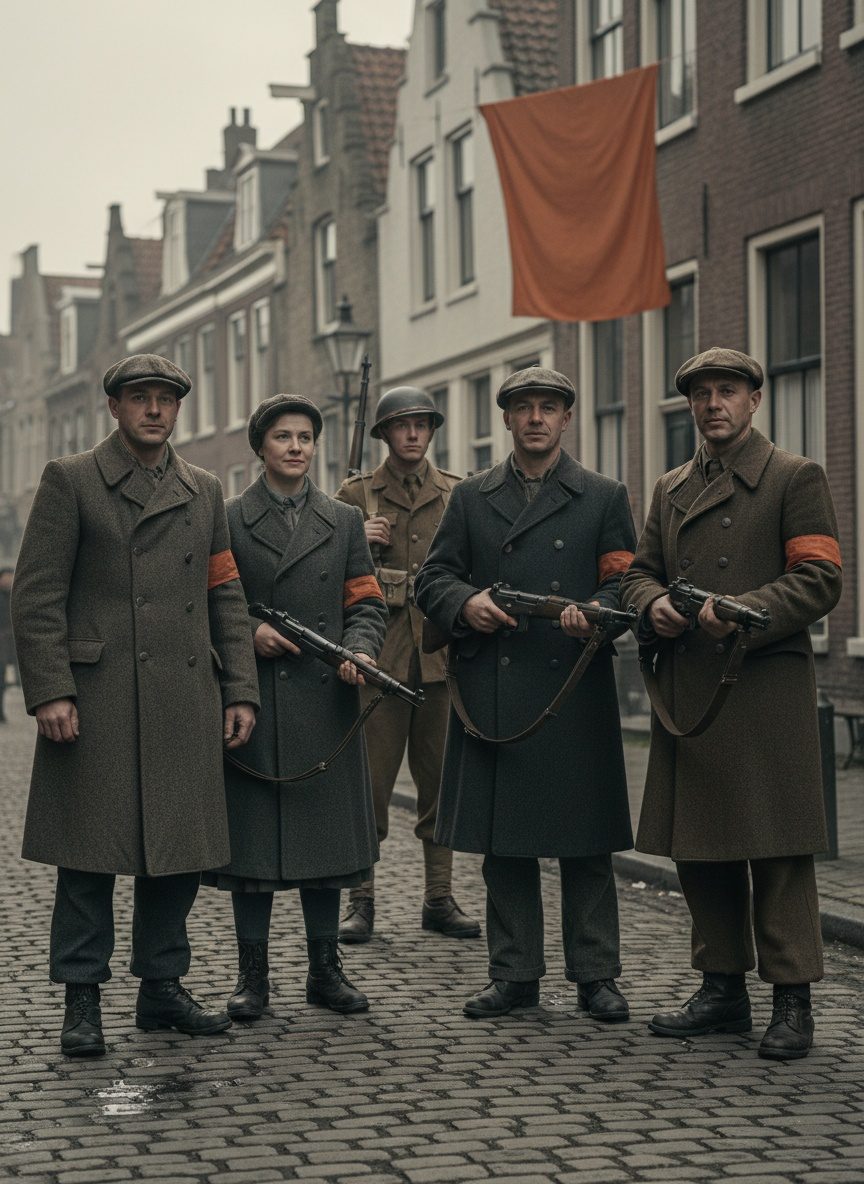
Holding their streets was more than a tactical action; it was an act of reclaiming identity. With dawn hours away, armed groups commandeered strategic positions. Makeshift barricades arose from whatever could be wrested into place. Windows opened stealthily to provide vantage points for sentries whose rifles had yet to fire—each shot tempered by the understanding of its consequences. Fear and determination played an equal part in their resolve as they first engaged with the occupying forces. The crack of a rifle here, an explosive retort there, it was hardly the symphony of a trained army, but each sound was the proof of a populace unwilling to submit any longer.
The night stretched on, both painfully slow and agonizingly fast, as adrenaline and exhaustion waged their own private battle within each civilian fighter. They held their lines, sometimes improvising, always determined. Allies edging closer would find more than liberated towns; they would discover people already tasting self-won freedom.
The Dawn’s Roar
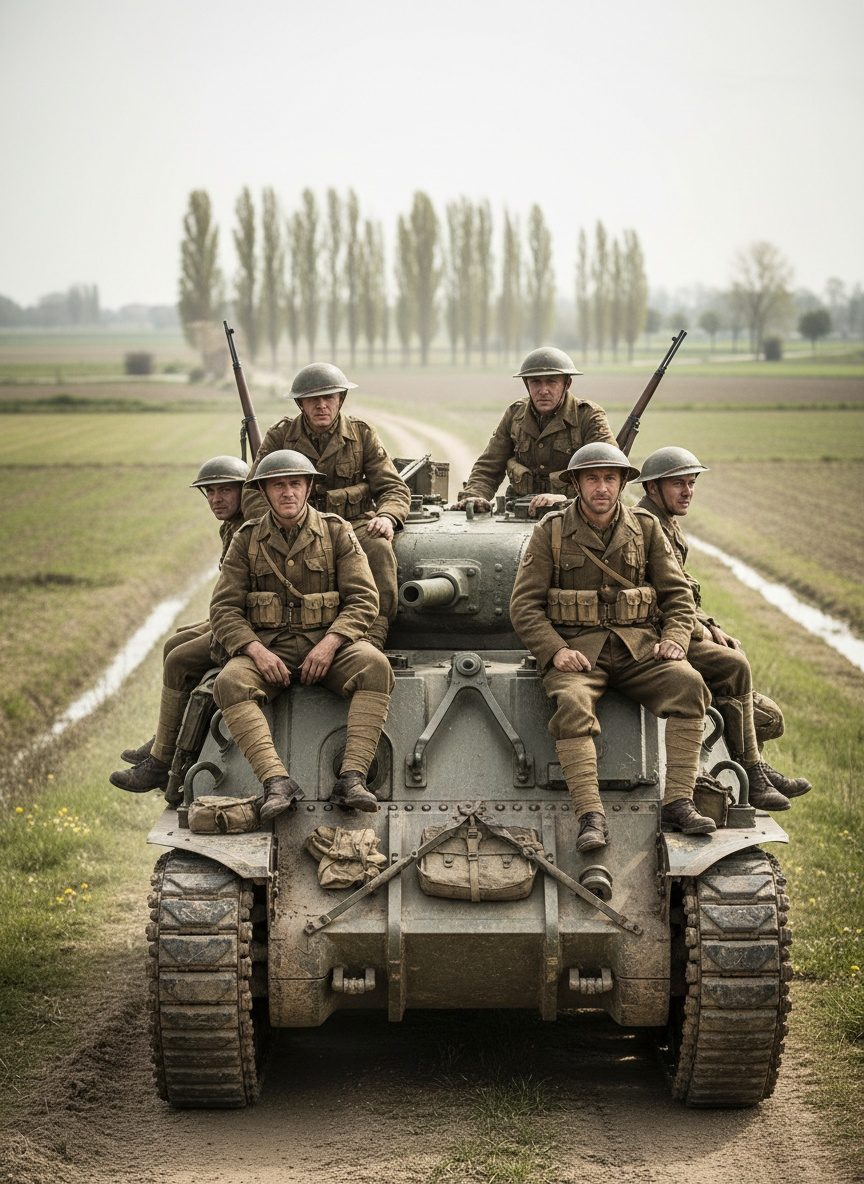
With the first glow of dawn, a new sound mingled with the sporadic gunfire—a sound that was soon to be a welcome roar for the beleaguered resistance. British tanks and troops rolled into view, greeted not by a passive village, but by triumphant cheers and exhausted yet defiant faces behind improvised defenses. The precipitous gamble of the Dutch civilians had not been in vain. What the British encountered was more than they anticipated; it was a people already seizing what's theirs.
Throughout Holland, small skirmishes took place as the Allies moved town by town. The liberation was not a singular event but a snowball of small resistances, each contributing to a larger victory. The courage of the common people, their brief yet pivotal stand, became a celebrated chapter in the tapestry of resistance and reminiscent of the human spirit’s refusal to accept oppression.
Through the Lens of Time
Many history books credit the might of the Allied forces in liberating the Netherlands in 1945, and indeed, their role was significant. But within this grand narrative lies a profound truth carved by the hands of those who dared to hold stolen weapons one dark, cold März night. The Dutch civilians’ audacious sortie became a declaration: that power always resides within the people as long as they refuse to yield their spirit.
As we reflect on the courage of those ordinary men and women, we are gently reminded that history is not solely written by its grand leaders or victorious armies. It is also inscribed in the whispers of small town revolts, fueled by borrowed courage and the fierce desire for freedom. These moments underscore the enduring lesson that sometimes, real strength is measured not in the size of one’s army, but in the heart of those who rise when the night is darkest.