He was once a trusted ally of the British. On that sweltering June day in 1857, Nana Sahib was anything but.
Veins of Defiance: A Fortress Under Siege
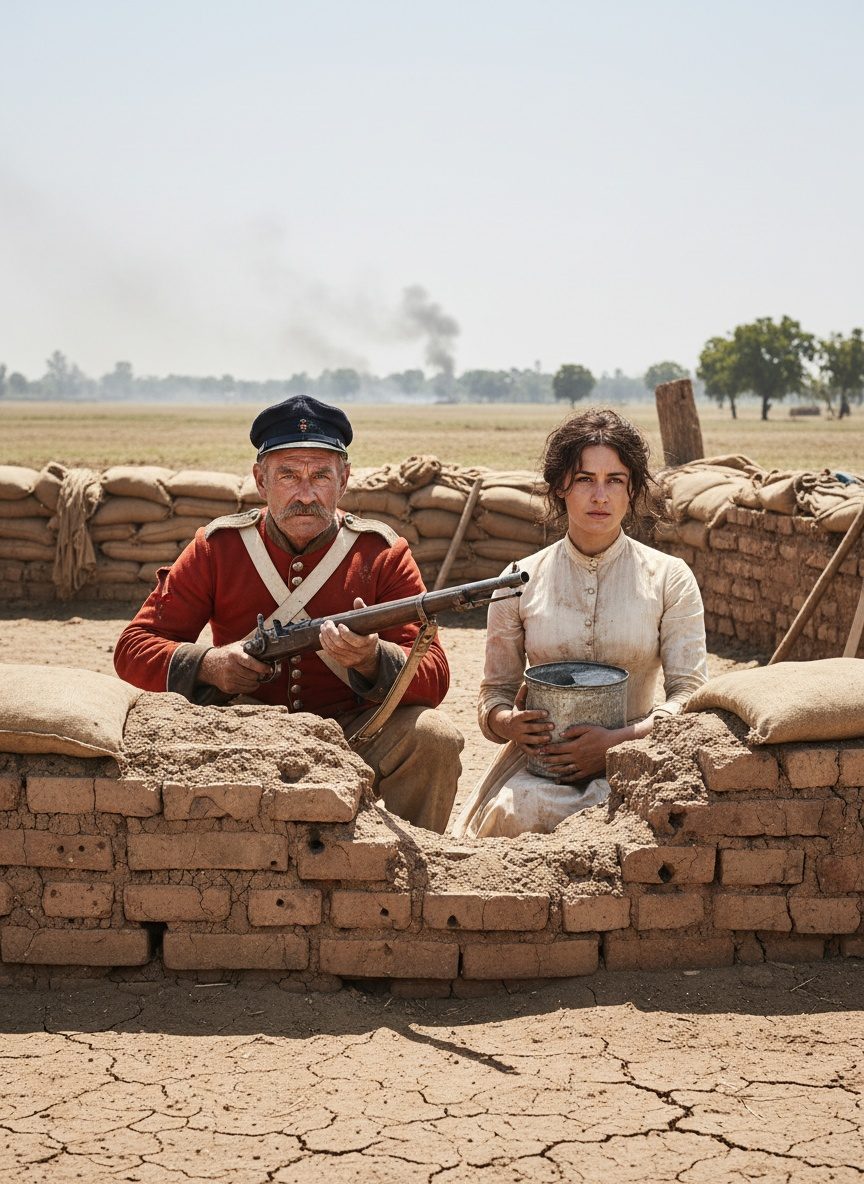
Amid the choking heat of Cawnpore, the unlikely scene of defiance unfolded against the backdrop of the Indian Mutiny. The entrenchment, a modest semicircle of dust and earthworks encasing about sixty barracks, had metamorphosed into a crucible of endurance. Its defenders, numbering fewer than three hundred, saw themselves slowly encircled by the specter of death in the shape of Nana Sahib's formidable force, whose ranks swelled to thousands. Yet it was not the overwhelming numbers that bore heavily on the British defenders but rather the merciless wrath of the sun and the pitiful scarcity of water.
Within the besieged compound, General Hugh Wheeler directed the beleaguered and often desperate resistance. The encampment's heart — a single well — beckoned perilously from the edge of survival and surrender. To reach for life-saving water was to dance beneath the enemy’s guns. The earthworks, once symbols of strategic foresight, were crumbling under incessant bombardment and the weight of human desperation. The resources were pitifully meager, little more than rudimentary defenses against an impending onslaught. Yet, amid these fraught moments, a fiercely resilient cadence beat within the breastworks. Wheeler and his compatriots recognized the grim calculation, battling not just with weapons, but with a steadfast will.
Inside the bunkers, the cries of women and children echoed alongside those of seasoned soldiers. A phalanx of mothers and wives, confronted with the specter of inevitable doom, braced themselves with a fortitude that belied the bleakness of their circumstances. They were living on borrowed time, yet defiant survival was etched into their eyes. Rags that once clothed children tore into strips to bind wounds, while hands calloused by labor shared slender rations. In the oppressive heat, spirits refused to wilt. As each day melted into the next, unity against the odds became their unspoken oath. When their bodies tired, their resolve gleaned sharper focus.
The Specter of Treachery: Nana Sahib's Gambit
Nana Sahib, a name whispered with both dread and defiance, understood not only warfare but the silent power of influence. His initial ties to the British had frayed into open antagonism. Yet, he offered a glimmer of release — surrender. A truce was mooted with terms proposed with calculated charm, tempting, like the mythical siren, those beleaguered within the fortress. Wheeler's refusal became a testament not of bravado, but of unyielding principle. The siege turned psychological, with Nana Sahib aiming to conquer not only territory but spirit. His forces cut off the garrison, offering hope only in exchange for capitulation. All the while, he counted on thirst and starvation as silent allies.
As the days drew longer, the traumas within the entrenched lines deepened. Officers plotted and planned, their strategies woven through muted conversations meant to elude the piercing shadows cast by the watchers. Essential communication traversed in silence or subtle signals. Shreds of news seeped in, riding the streaks of rifle volleys or the tremors of whispered rumors. For the British, who felt outnumbered and outmatched, every option hinged on a simple dichotomy: fight or die. Surrender was anathema, a betrayal for which they were unprepared.
Twilight was Nana Sahib's canvas, and it was here that he painted promises of mercy, threading surrender scripts through the muted corridors of desperation. The stories meant to weaken resolve were crafted with skill, but the defenders saw them for what they were — illusions fracturing under the magnifying glass of their indomitable will. The Indian Mutiny had transformed once friendly fields into hostile terrain, and in Cawnpore, the true rift within the colony of Britain's expansive empire was unveiled. Yet, the human spirit, as much a protagonist as any, remained untouched by toppled kingdoms.
A Defiant Resilience: Beyond the Heat and Dust
For three relentless weeks, Cawnpore stood on the precipice, where every sunrise promised a battle with mortality. Temperatures crept past 110 degrees, but the stifling heat was matched by the white-hot resolve that simmered within. Life and death were constant companions, dancing a macabre duet orchestrated by fate. The landscape, painted in hues of suffering, turned to gray as water diminished and hope flickered like a candle in the storm.
Outside, Nana Sahib's forces stretched their shadows long over the embattled space. And yet, even as artillery shells cleaved the air, the spirit of defiance held its ground. The defenders, civilians and soldiers alike, welded courage and futility into a new, unwavering front. Each hungry breath taken within the garrison resounded as a silent salvo. Come day or night, the stalwart people of Cawnpore composed their symphony of resistance under the blazing sun.
Heroes, despite lack of warpaint or ancestry in warrior clans, emerged from unexpected alleys of vulnerability. The faces and voices of Cawnpore’s story belonged equally to those who embraced tradition and those who created new narratives from necessity. The shadows of the siege stretched across both the heart and history, each chronicling a tale of resistance often left unspoken.
This tale, though gilded in tragedy, stands as a vivid testament to human resilience, an unyielded spirit amid smothering odds. When Nana Sahib offered surrender, those at Cawnpore chose dignity over defeat. They elected to sketch their own story, coloring it with strength and steely determination, even as the world they knew teetered towards the unknown. Theirs was a story of undeterred determination, etched not in stone but in the fleeting moments of steadfast bravery that transcended the simple veil of survival.