Germany's hold over the Atlantic seemed indomitable. Yet, beneath the waves, its champion was brought low by British resolve.
The Phantom of the Atlantic
Few men commanded the same aura of fear and respect in the frigid waters of the North Atlantic as Otto Kretschmer. Known to his peers and adversaries as "Silent Otto," Kretschmer was a living legend, the commander of U-99 and an undeniable ace in the Reich's U-boat fleet. By March 1941, his iron presence beneath the waves had shattered Allied hopes, sending 35 ships and countless seafarers to the ocean's abyss. His tactics were daring, almost theatrical—surfacing at night within convoy formations, cutting through the steel berths like a surgeon with a scalpel, and then vanishing back into the depths.
But even legends have their weaknesses. Kretschmer's audacious style, while devastatingly effective, emboldened his adversaries. The British, beaten but not broken, learned from their losses. They listened to the whispers of the sea, studied the trepidation left in his wake, and prepared to confront the looming shadow beneath their hulls.
The Hunt Begins
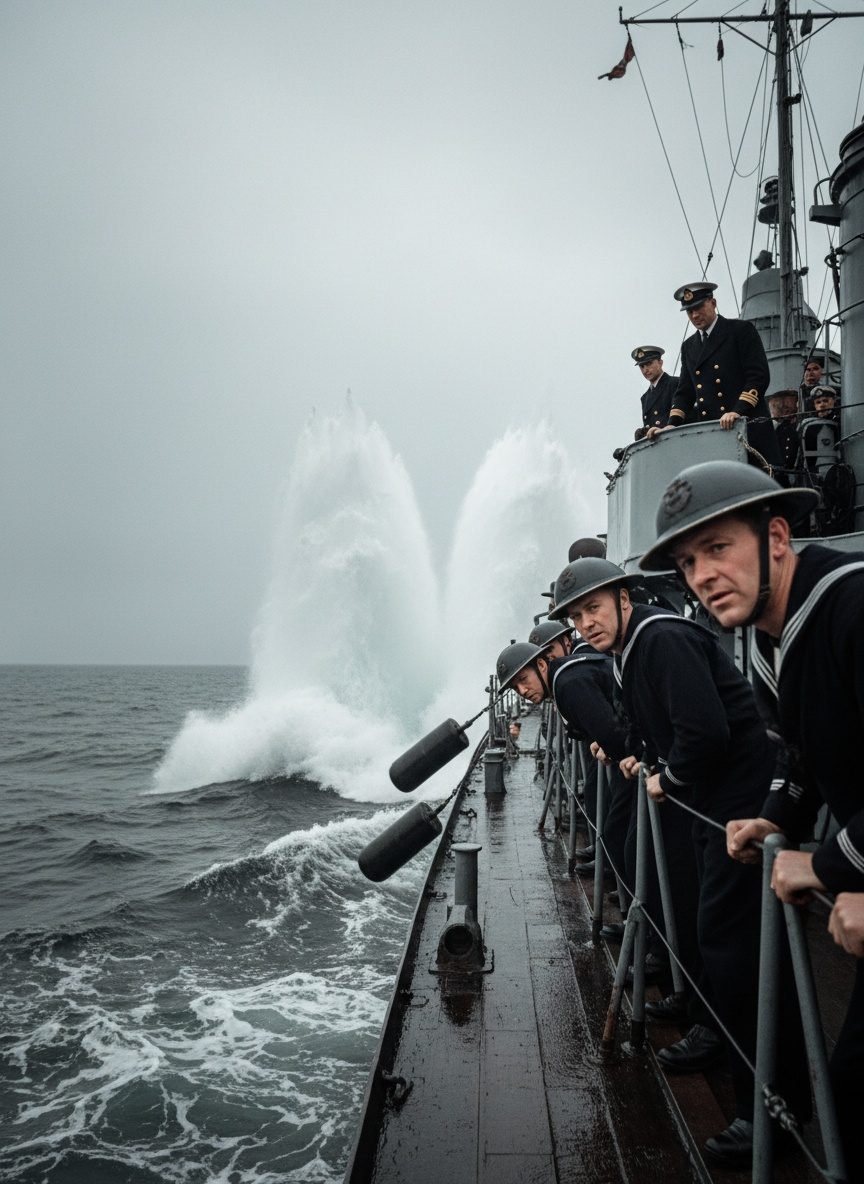
In the middle of March 1941, the Royal Navy was on a desperate mission to protect its lifeline across the Atlantic. HMS Walker, captained by Commander Donald Macintyre, was among the valiant hunters patrolling these perilous waters. The scene that unfolded beneath a moonlit sky was straight out of a wartime odyssey—with the icy wind biting at the crew's faces and the relentless heave of the ocean underfoot, Walker's men knew what's at stake. They were not just chasing a submarine; they were confronting a myth.
The night of March 17 was relentless. The radio crackled with sightings and the sea churned with the thrum of propellers. Depth charges—those explosive echoes of warfare—became Walker's weapon of choice. Each detonation disturbed a sleeping sea monster, agitating the waters with plumes that stretched to the sky. But in the chill of that evening, it was not blood or treasure that emerged from the ocean's grasp. It was Otto Kretschmer himself, conceding defeat for the first time.
The Surrender at Sea
When U-99 was finally forced to break the surface, it was not with the triumph of a predator, but rather as prey unmasked. There, under a canopy of endless night, Kretschmer ordered the surrender. The proud commander, so often the architect of destruction, now stood on his steel vessel—both his sword and shield—bound for captivity. His capture was a significant blow to the German Kriegsmarine; his legend, however, remained intact.
On board HMS Walker, the tension of a thousand sunken ships hung in the air. The seasoned sailors, who knew the sea's cruelties and capriciousness, understood the weight of the moment. In Kretschmer, they saw both a formidable foe and a fellow seaman—a man who navigated the same storms and shared their intrinsic fear and respect for the abyss below.
A Legend on Both Sides
Otto Kretschmer's capture marked a turning point in the Battle of the Atlantic. Though removed from the fight, his legendary status cast a long shadow. Even in confinement, the tactics and tales of "Silent Otto" proliferated, driving innovation and inspiring valor among both British and German ranks. This incident served not merely as a tactical victory for the Allies but as a symbolic chink in the armor of what seemed an unstoppable German war machine.
This chapter in history is a reminder of the intricate dance between hunter and hunted, and the thin line that separates glory from downfall. Kretschmer's surrender doesn't merely recount the end of an era of terror beneath the Atlantic waves—it highlights the power of strategy, perseverance, and adaptation in warfare. Such moments, distilled in the annals of history, remind us that every leader, however formidable or legendary, can be challenged and unseated by those who dare to stand in their path, armed with courage and determination.