The East African sky in early March 1941 was a broad canvas of brilliant blue, deceivingly serene to those who took a moment to admire it. But below, on the ground near Keren, Eritrea, dust rose from the arid earth as conflict raged — a microcosm of World War II playing out under the relentless African sun. The clear skies held secrets of their own, teeming with potential peril. In these vast expanses, an unlikely tale unfolded — one that would not find its way into the pristine pages of standard history textbooks but would endure in the whispers of wartime legacy.
The Mission that Wasn't Meant to Fail
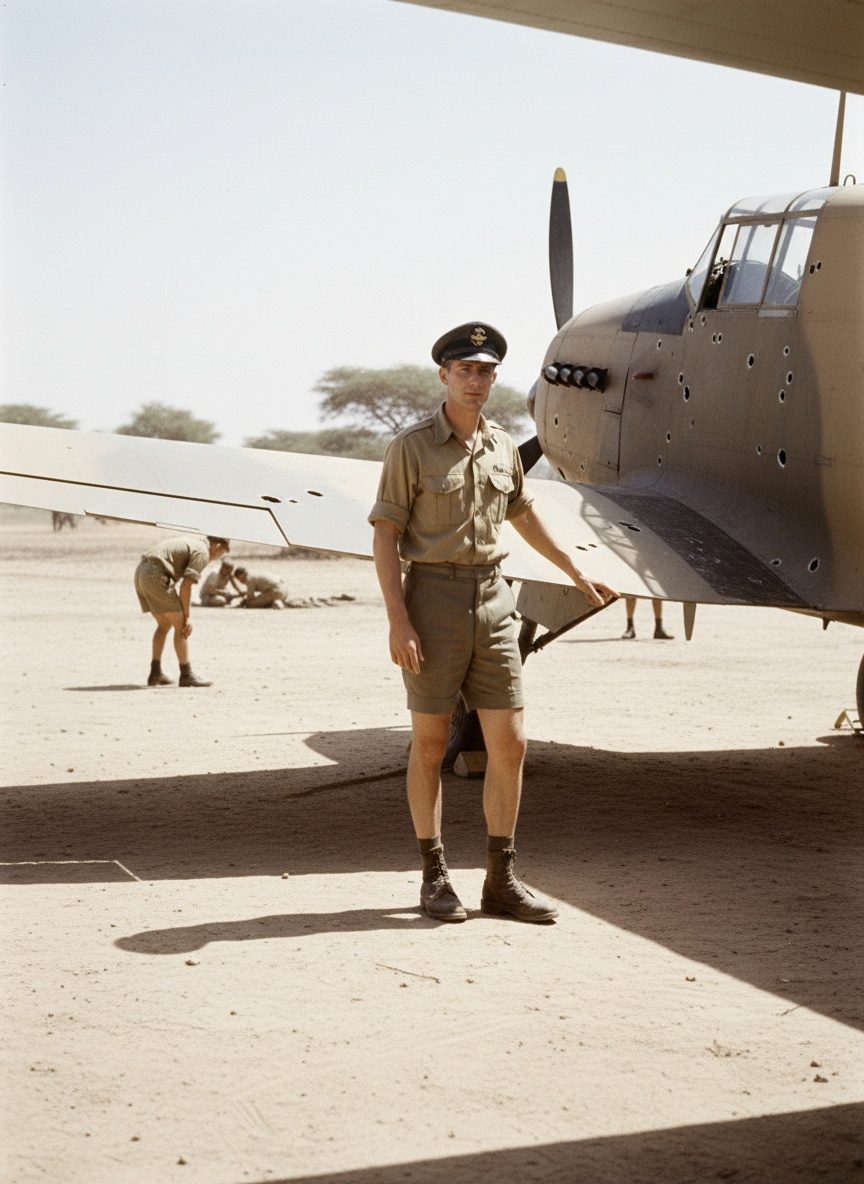
In the heart of this tumultuous setting, a daring mission was entrusted to Pilot Officer Kennedy of No. 47 Squadron. Stationed at Agordat, his objective was straightforward in statement but perilous in execution — bomb the Italian positions entrenched at Keren and return safely. Climbing into the cockpit of his Vickers Wellesley, a single-engine bomber designed in a bygone era of simplicity, Kennedy knew the odds were stacked against him. The Wellesley was not built for tenacity. Its long wings and slender body were elegant yet vulnerable, a fragile bird in the sky.
As the aircraft took to the air, the sun hung high, casting stark shadows on the patchwork landscape below. Kennedy and his crew focused intently, aware that any mission over enemy lines carried with it the gamble of life and death. The target was clear, the flight plan set, but in the theater of war, the script was often rewritten without warning. Unknown to Kennedy, two Italian Fiat CR.42 biplanes had already marked him as prey, intent on thwarting the mission.
A Dance of Survival
The approach to Keren was anything but silent. The Vickers Wellesley's engines droned a mantra of determination, echoing off the mountainsides. Below, the Italian positions sprawled like a festering wound, pulsating with activity and veiled in the dust of conflict. Just as Kennedy prepared to release his payload, the sky above wheeled with the nimble forms of the Fiat fighters.
The CR.42, a relic of earlier aviation design, masqueraded its threat well. Lithe and agile, these biplanes descended from the bright azure as if spawned from the sunlight itself. Cannon fire erupted, ripping through the atmosphere with malevolent intent. The Wellesley jolted violently as bullets thudded into its skin, each one testing the limits of its will to stay aloft.
In the harrowing dogfight that ensued, Kennedy's hands became an extension of the aircraft itself, coaxing every ounce of life from the battered bomber. With Italian pilots bearing down, the odds were staggering. Yet, through a feat of airmanship or sheer stubbornness — perhaps both — Kennedy managed the unthinkable. Against the crescendo of machine gun chatter and the staccato of impact, he turned his damaged craft away from the fray, heading for the promise of survival.
The Long Flight Home
The journey back to Agordat was one punctuated by uncertainty. Every rattle and groan of the Wellesley spoke to the punishment it had sustained. With controls that felt foreign in their unpredictability, Kennedy's task was monumental — coax a wounded beast through skies both hostile and deceptively calm.
Below, the East African expanse stretched endlessly, its beauty unmarred by the chaos above. It was a land of paradoxes, where the tranquility of nature stood stark against the harsh realities of war. As the Wellesley limped forward, fuel reserves ebbed dangerously, their whispers of limitation filling the cockpit with tension. Clouds beneath heralded an end to this odyssey, but even nature's whispers seemed too distant.
Finally, against the odds, Kennedy coaxed the beleaguered Wellesley into a descent over Agordat. The airfield appeared as a brown oasis amid the green landscape, offering sanctuary to those few who could reach its haven. With a final guttural protest from its engine, the aircraft touched earth, taxying to a halt on sheer willpower. Silent onlookers could only watch in awe as Kennedy exited a plane that by all measures should not have remained airborne.
Beyond the Horizon of the Known
This tale of resilience and determination stands as a chapter in the expansive tome of World War II's lesser-known narratives — a testament to the men who pushed the boundaries of what was possible and in doing so, broadened the horizons of human endurance. Kennedy's flight, veering perilously close to catastrophe, underscores the oft-overlooked theaters of the war, where battles were fought in skies far from the European epicenters normally chronicled.
The survival of Kennedy and his crew serves as a reminder that history is not solely written by textbook pages but by the echoes of courage resonating across time. Their story, overshadowed by larger conflicts, illuminates the myriad ways in which individuals shaped the course of events through singular acts of valor. In the azure skies above East Africa, a winged testament to human tenacity soared, proving that even when the odds appear insurmountable, the spirit of resilience can chart paths through the impossible and immerse us anew in the many legends left untold.