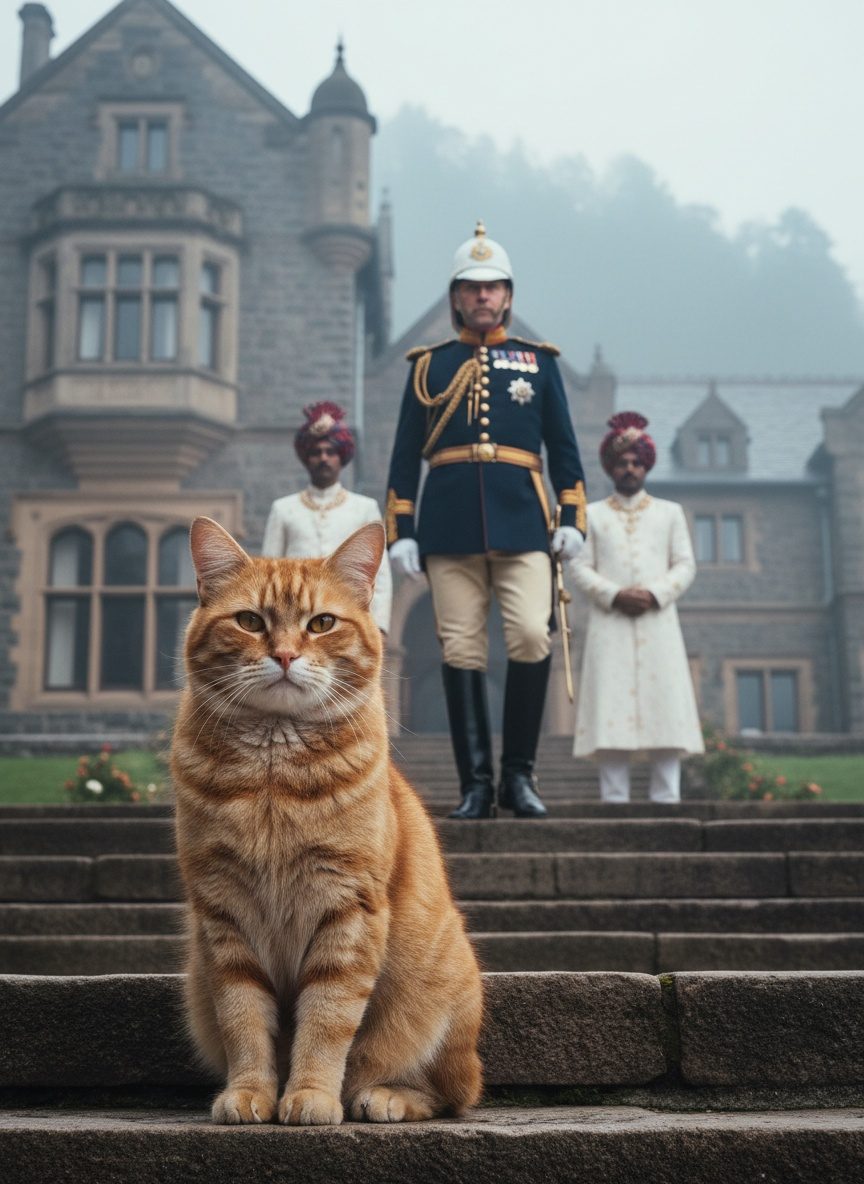
She did not arrive aboard a grand carriage, nor did she swear an oath or issue a single edict. Yet, she remained, steadfast and serene, as the faces and fates around her transformed. The cat of Viceregal Lodge in Simla outlasted seven Viceroys of India, witnessing the churn of empire from her corner in the sun.
The Silent Observer of Empire
Perched atop the cool, polished balustrades of Viceregal Lodge, the lodge cat surveyed her dominion with a composure unmatched by the humans around her. Constructed in 1888, this gothic-style masterpiece became the summer retreat for the representatives of British authority over the Indian subcontinent—a brooding stone monolith set against the backdrop of the snow-kissed Himalayas. These Viceroys, entrusted with the rule over nearly 300 million souls, came and went with their retinues and ambitions, each hoping to shape a legacy before time swept them away.
But for our feline protagonist, none of this pomp mattered. Over the years, the lodge echoed with accents from across the British Isles, plans hatched over crystal tumblers brimming with single malt, while underneath the high ceilings, ballrooms shone with the soft glow of candlelit dinners promoting imperial diplomacy. No detail escaped her keen gaze—be it the delicate rustle of silken skirts on marble floors or the staccato tap of boots that signaled another Viceroy's critical decision or a hastily drafted telegram to London.
The Viceroys themselves, burdened with the weight of empire, embroiled in the politics of famine relief, princely states, and the mounting calls for Indian self-rule, often found themselves unwittingly observed by the silent sentinel of the lodge. Hers was the presence that remained long after the last vestiges of a ruler’s ceremonious departure dissipated into the cool Simla air.
The Enduring Inhabitant
As the sun stretched into long shadows across the whispering pine trees, stories unfolded within the maze-like corridors of the lodge. It was a time of relentless change, of revolutions both industrial and ideological reshaping the world outside. Victoria’s Empire would see its immense scope and power dwindle with each passing decade, yet here at Viceregal Lodge, one presence lingered unchanged—her soft fur a silent testament to endurance through upheaval.
This particular cat, though nameless in the grand historical texts, possessed qualities that drew the occasional eye or ear from within the household. She bore witness to Lytton’s Durbars, Curzon’s grand reforms, and the heartfelt negotiations that set the stage for an independent India. Her place in the lodge was assured, not through authority or edict, but through nature’s decree.
Her longevity and the mystery of her origins piqued the curiosities of many who passed through those storied halls. Did she watch as Gandhi met Viceroy Irwin, charting the course of civil disobedience? Might she have paused at the echo of Mountbatten’s footsteps, marking an end to British rule? These specters of history, charged with the duty of governance, navigated complex alliances and escalating demands for independence, while she sat contemplative, unhurried by the tides of duty or dissent.
Reflections in Fur
Beyond the wood-panelled meeting rooms where decisions of grave importance were settled, the lodge cat roamed the verdant grounds and overlooked the shifting seasons with the same noble tranquility that defined her tenure. Loyalty seen not in service to a single master but to the place itself, her quiet persistence served as a subtle reminder of the ephemeral nature of power. As she wandered the expansive gardens, the petals of rhododendrons brushing against her sides, she exemplified the timelessness that stands in contrast to humanity’s urgent yet transient ambitions.
And then came the dawn of a new era. 1947 brought with it a struggle for definition and identity—a reclamation that shook centuries of rule to their core. While flags changed and empires dissolved, the lodge—and its cat—remained, both relics of a bygone era and witnesses to the birth of a new chapter. Perhaps it was among the whispered meetings and knowing purrs that the true resilience of the human spirit was reflected—not in documents or formal decrees, but in the ability to persist through all transformations.
The story of the lodge cat is not chronicled among the official histories of empire. Yet just as she roamed unseen, her enduring tale serves as a humble tribute to the quiet undercurrents that swirled through India during its historical metamorphosis. Unremarked and often unnoticed, she was a fixture amid the turbulent weave of change. In her eyes, we find a reflection of history’s quieter truths—that amidst the grandeur and sweep of human endeavors, life’s simplest and most enduring moments are often found where the sunlight gently warms the stone.