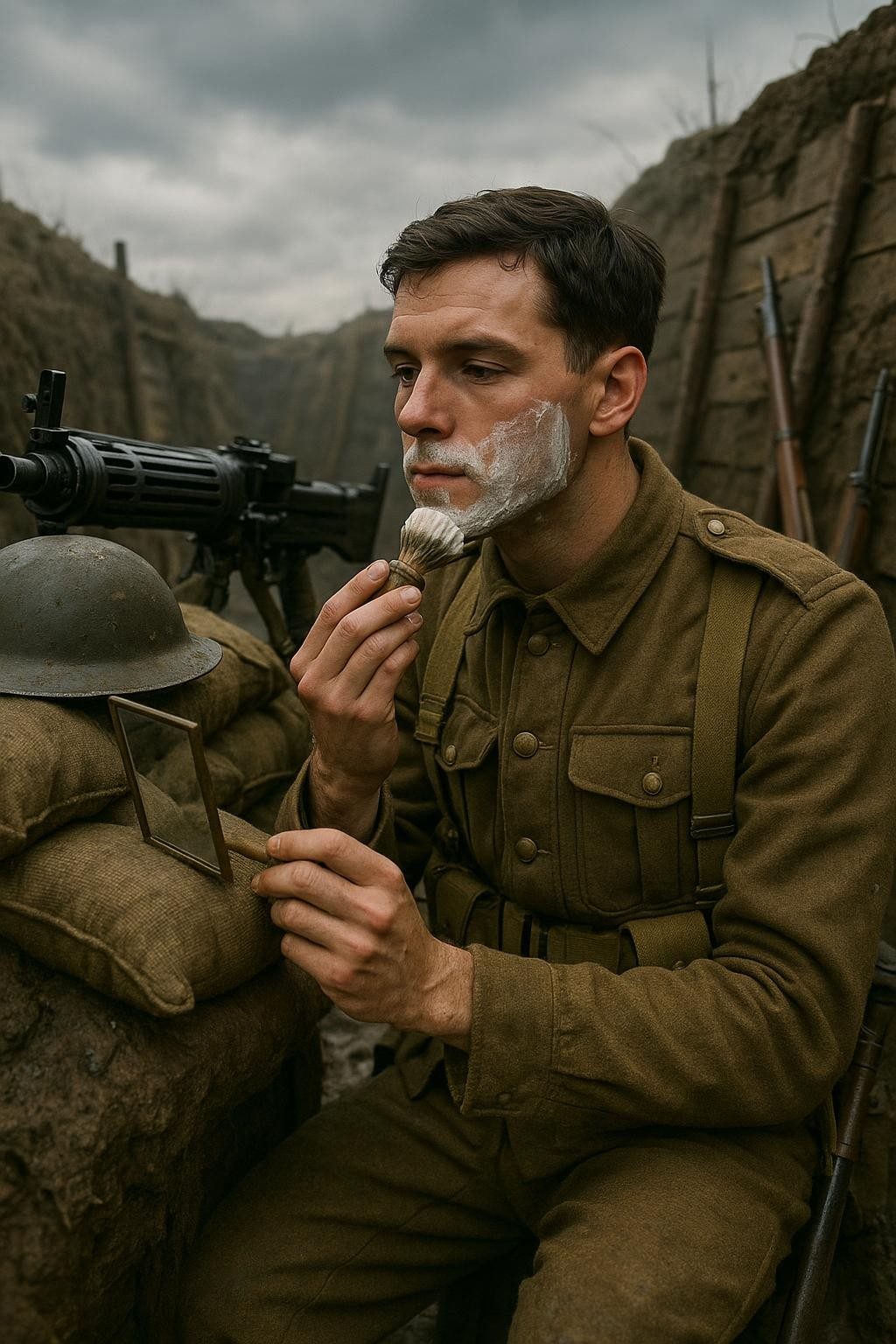
The light filtering through the low-hanging clouds was a grim, grey contrast to the explosion-filled horizon. Below the sky, the sodden earth ran parallel with an iron hue as soldiers slogged through slick mud, their boots unrelentingly heavy. Near Robecq, France in April 1918, the din of distant artillery fluctuated between a monotonous drone and shuddering crescendos. Against the backdrop of the German Spring Offensive cutting its relentless path through the Allied lines, one British soldier stood resolute, face flecked with soap and a razor gracefully scraping away his stubble. In this surreal theatre of war, normalcy became an act of defiance.
Mud and Metal: The Brutal Ballet of the Western Front
The Western Front in 1918 was a landscape unlike any other. Fields that once blossomed with crops and the gentle hum of bee colonies were obliterated by months of artillery barrages, trenches, and warfare indelibly marked on the scarred earth. In the midst of relentless conflict, the Tank Corps held their position stubbornly, commanded to manage a Lewis gun post amid ceaseless cacophony. The Lewis gun, an emblematic weapon of the war, spat its rhythmic crackle as it defended its post from German advances.
Amidst this chaos, lives were caught in cycles of critical vigilance and treasured pauses. The quiet, rare moments when gunfire duels waned, when explosions shifted into distant echoes, offered the soldiers a fleeting chance to reconnect with something resembling their old selves. The trenches were more than just battlegrounds; they were home to men whose camaraderie endured long beyond their postings. They were a place where small acts of normalcy and dignity helped sustain morale under the most trying circumstances.
The Act of Shaving: A Quiet Reclamation of Self
As gunfire momentarily lulled near Robecq, that brief easiness didn’t go unnoticed. Among the men, one Tommy—a colloquial term for the British infantry soldier—knelt purposefully at his post. His movements were unhurried as he withdrew a standard-issue military razor from a small pouch. In an era that valued discipline and order, a clean shave was part of military rigour, yet here it transformed into a poignant ritual of self-preservation.
Viewers today may struggle to fathom the impracticality of such an act amid battle, yet in 1918, the act of shaving was more than mere habit. In the mirror's reflection of a razor against cheek, a soldier found humanity amidst monstrous conflict. To shave was to defy the dehumanizing forces of war. It was reclaiming personal dignity, layer by lathered layer, cut by careful cut—a small ceremony of identity against overwhelming odds.
Between Shells: Moments of Humanity Amidst War
Within the trenches, soldiers discovered a wide range of ways to fend off the encroachment of war upon their psyche. Letters from home carried fragments of distant worlds that seemed surreal beneath the firmament of darkened clouds. Shared stories, jokes, and an occasional harmonica's tune became currency for sanity. Each man sought these moments of peace to fortify his soul—a cup of tea, a ruminative path along the trench lines, or the subtle satisfaction of skin newly shorn.
This precise commitment to everyday acts reflected the steadfastness of the Empire’s men under immense pressure. Despite the war's larger mechanisms moving with relentless force around them, it was the individual spirit that infused life into the men standing amid mud and metal. They remembered who they were, not just what they had to do.
Symbols of Defiance: Shaving as Silent Resistance
In those weather-beaten trenches, each soldier’s act of defiance became a vital cornerstone of personal and collective endurance. A clean shave, though seemingly mundane, symbolized an indefatigable spirit. It was a reminder that humanity clung stubbornly to the men—battered by war and yet unbowed.
In the hierarchy of memories forged in wartime, such humble acts were entrusted to the vaults of soldiers' hearts, untold and unswept by newsreels or major histories. Yet these acts speak volumes. In every stroke of the razor, there was contained an oath—one resisting all that sought to dismantle the larger edifice of shared human experience. Beneath an officer's bark or a sergeant's instruction, beneath the smearing shadows of war, each soldier saw in his reflection a persistent promise of civilization undimmed.
A century has passed since April 1918, yet the aching humanity that those soldiers cherished amidst devastation resonates still. As gunpowder lingered in the air, the simple act of shaving near Robecq cradled an invincible spirit at a Lewis gun post. It offers a poignant reminder of how men, in the face of dispiriting deconstruction of their world, chose to remember, redefine, and reclaim their selves—or at least recall the clarity of a clean-shaven face in the muddied theatre of human resilience.