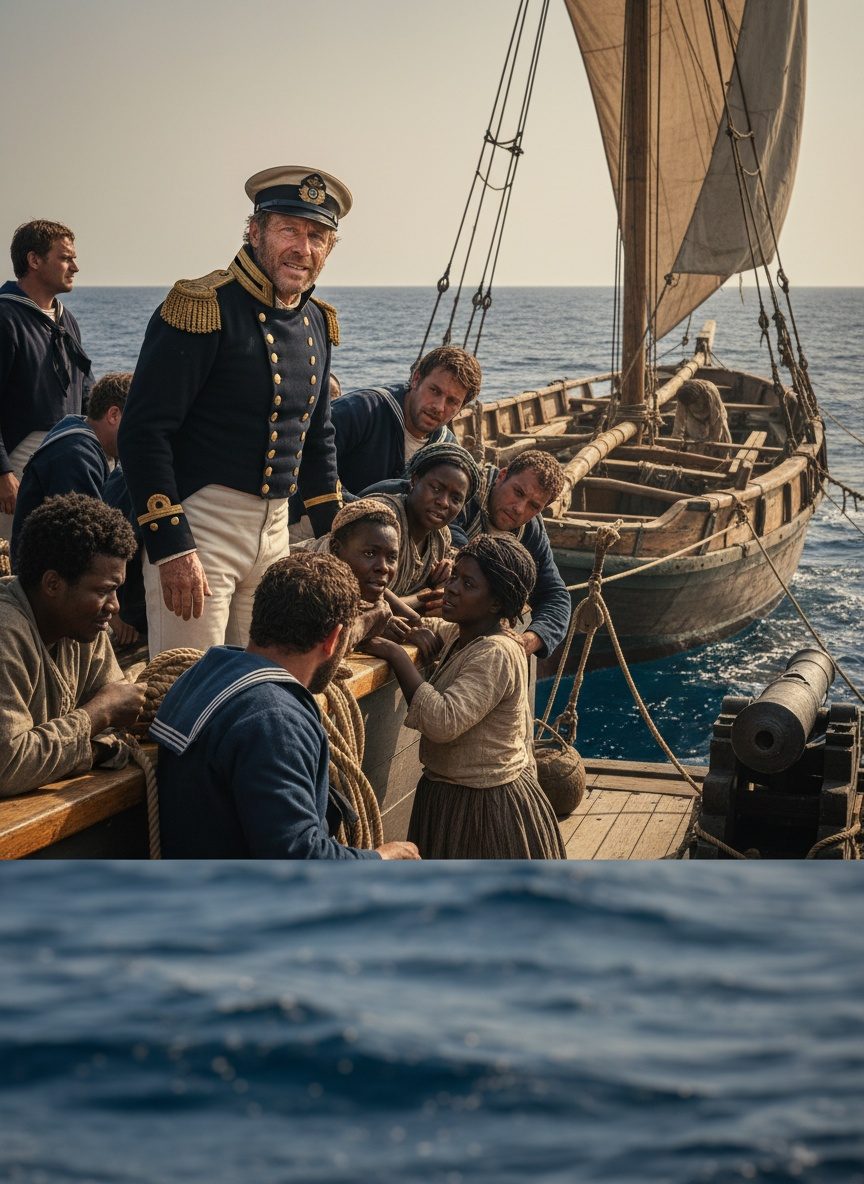
HMS Daphne's actions off the coast of Zanzibar in 1868 were part of a grand moral mission. Yet, capturing a dhow was fraught with risk and uncertainty for every soul aboard the sloop.
The Decision That Changed the Voyage
June 1868 found HMS Daphne navigating the waters of the Indian Ocean, a sleek Royal Navy sloop patrolling under clear tropical skies. Her purpose was clear yet monumental: to enforce the abolition of the slave trade, a task that had occupied the hearts and energies of the Royal Navy for decades. The slaves she sought moved silently, hidden within the deep bellies of dhows, soft whispers of desperation carried on the wind. These sailing vessels, suited perfectly to navigate the vast Indian Ocean, were the favored choice of slavers determined to evade the British blockade.
On the horizon that day, a sail appeared, rising against the sea's distant edge. Quickly, Captain —— directed the Daphne's bow towards the distant form, every soul aboard vigilant, anticipation crowding the decks. The dhow hadn't expected company, certainly not a well-armed man-of-war cutting her line of escape. The decision to pursue was as imperative as it was perilous, signaling the clash of moral obligation against the ruthless merchants of misery.
Aboard the Slaver's Dhow
The small dhow swayed gently in the water as the Daphne's launch approached. Each stroke of the oars brought the sailors closer to chaos barely restrained beneath a canvas of supposed peace and calm. But beneath that placid surface lay human cargo, shackled and fearful, their eyes wide with a blend of dread and burgeoning hope. It's hard to overstate the conditions in the dhow's fetid hold: the scorch of sun overhead, the thirst and hunger gnawing like old friends, the weight of chains as relentless as the sea breeze.
This was the reality of the Eastern African slave trade—the odious counterpart of the Atlantic triangle now disrupted yet not dismantled. Slavers had responded to the abolition by pushing further routes, and by sea to remote gulfs like that near Zanzibar, a notorious hub. The Daphne's sheer presence in these waters was a direct message; slavers would no longer conduct their grim commerce unchallenged.
The Liberation Underway
As the sailors climbed aboard the dhow, they set to their somber work. Shackles were sawed through, heavy iron tumbling overboard with metallic clatters. Each liberation from the cold embrace of iron was a reclaiming of identity, a moment of rebirth on a warm deck, and layers of grime and despair would melt away. For the newly freed individuals, most had been hauled across in slave caravans from deep in the interior, handled like goods rather than humans. Their odyssey from bondage to freedom was miraculous yet fraught with new challenges and unknowns.
What unfolded was a logistical challenge of compassion and humanity. Transference to the Daphne meant that the brief moment of exultation carried into a delicate negotiation between survival and salvation. The challenges of providing for even the basic needs of water and food amidst the confines of a warship were many, yet they bore evidence to the Daphne's true cargo: hope.
The Human Cost of Enforcement
The sight of liberated men and women crowding the decks of HMS Daphne was emblematic of a larger, grievous struggle. For over sixty years, since Britain’s abolition of the slave trade in 1807, the Royal Navy's presence across the seas had become not just an emblem of British law but of moral endeavor. Yet, history is tempered with irony; the abolition required a sustained military commitment that often drained the Empire’s coffers as well as souls.
Nobody had anticipated the immense human and financial cost of ending the trade across two oceans. For the sailors aboard the Daphne and others like her, these missions were as much about duty as they were about survival in unforgiving seas. The discomforts they endured were weathered by the belief that they stood on a righteous side of history—safeguarding the principles laid down decades earlier in British law. Ironically, maintaining this moral high ground necessitated an ongoing conflict—a warship diplomacy that remains one of history’s paradoxes.
Lessons from a Forgotten Shoreline
On that day in June 1868, when HMS Daphne opened her decks to the newly freed, the immediate threat had passed, but the broader human journey persisted. The struggle against slavery in the Indian Ocean was part of an incomplete tale, the kind history occasionally permits only a glimpse into, rendering the full picture elusive yet compelling in its complexity. To capture even once, to save even a single life, justified all dilemmas aboard the elegant yet formidable sloop.
This narrative, lost to the annals of empire, remains a testament not only to the Navy's resolve but to the cost of humanity’s darker inclinations. In the water-scoured realm of East African coastlines, HMS Daphne serves as a reminder—no legend left out of the textbooks can match the gritty reality of those who risked everything to right a fundamental wrong. For as long as there are forgotten stories of courage that challenged fate, humanity will seek solace not just in historical accounts but in actions that speak louder than the written word.