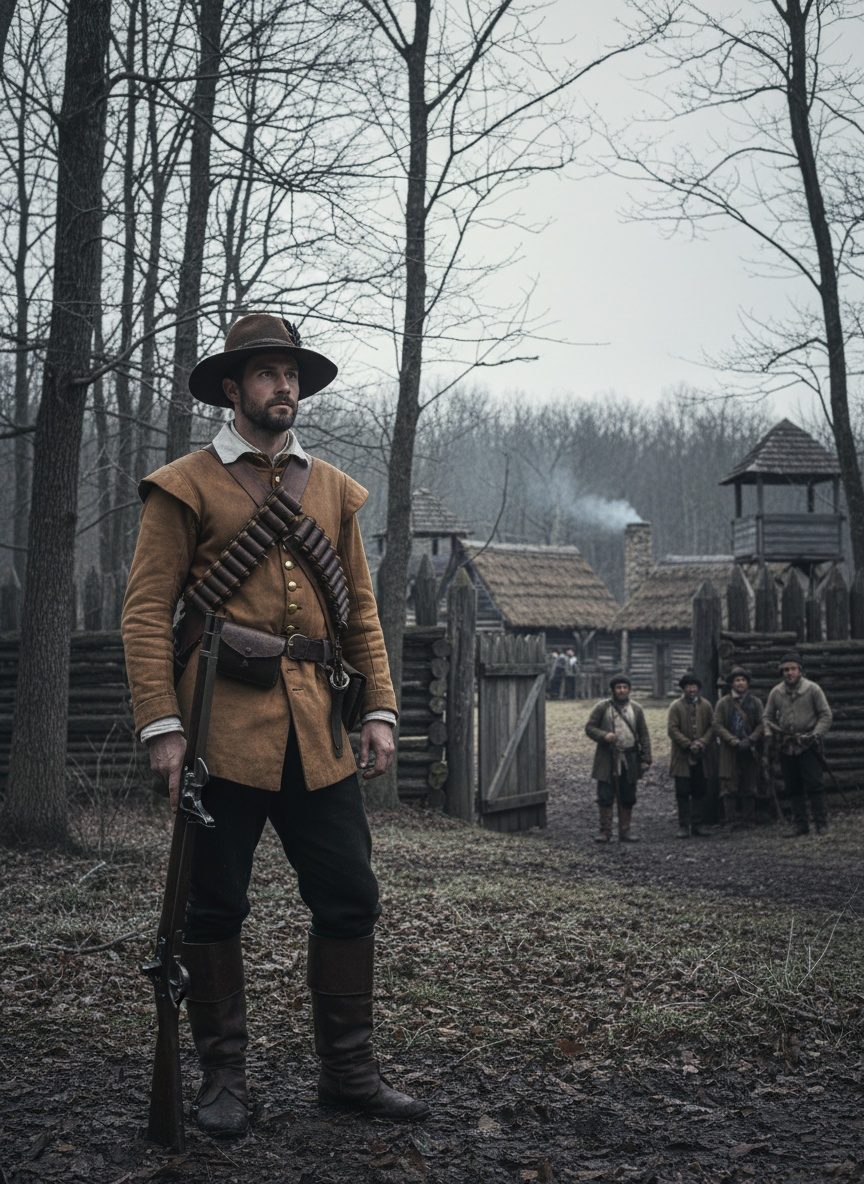
He was not an officer by training. Yet, Captain John Smith's sheer determination would become the keystone for the survival of England's first colonial endeavor. As the bleak winter of 1608 tightened its icy grip on the beleaguered outpost of Jamestown, the air was thick with despair and the scent of death. Hunger shadowed the settlers relentlessly, thinning their ranks to a dwindling forty. The wild, untamed land of Virginia that promised so much was threatening to swallow them whole.
By the time winter had arrived, the glorious vision of a thriving English colony seemed all but lost in the damp soil saturated by the tides of the James River. The rigid social structures that many of the settlers clung to offered little in practical means of survival. The very gentlemen who sought riches were torn between their ambitions and the harrowing demands of wilderness life, often left shivering in their fineries which offered scant protection against the elements. Their numbers were decimated not by the blazing muskets of the Powhatan but by the less spectacular specters of disease and famine.
In the midst of this swirling collapse stood John Smith, a man hardened by years of mercenary warfare in Europe and captivity in Turkey. His scars were more than skin deep, etching tales of resilience that armor could not shield against. Smith was a magnet for criticism and fear, yet his iron will mirrored the unyielding landscape. He understood the peculiarities of survival in a way that defied the aristocratic perspectives of his peers. When the colony's resources ebbed to mere crumbs, it was Smith who dared to prove that interaction with the indigenous tribes was not only necessary but crucial.
So it was that one fateful day, Smith ventured alone into the uncharted wilderness. This decision was both bold and desperate, the kind of gamble that follows when all other options have been stripped away. It was as though the world had conspired against him, as each step marked a perilous journey deeper into both the forest and the unknown. He sought the very thing that the New World symbolized: the possibility of renewal. Engaging with the local tribes was fraught with risks, yet Smith's keen understanding of diplomacy—or perhaps more honestly, shrewd negotiation—prevailed where weaponry could not.
Weeks passed without word or sign from him, and with each day, the weight of failure pressed down upon the remaining colonists. Then, as if out of a fable, Smith returned, a figure marred by the wild with a tangible prize: food and new ties of friendship that bound the hearts of the settlers to their indigenous neighbours. This gesture was more than sustenance; it was a reprieve from the jaws of oblivion. The hardened veterans who had come with dreams of conquest and settlements were grateful beyond measure for the simple bounty of food and fellowship.
Yet it was not merely a momentary salvation that Smith offered. He advocated for a strategy born from understanding rather than force, from respect rather than dominance. His interactions ensured a delicate balance, crafting a fragile peace that reverberated beyond the boundaries of Jamestown's clearing. Still, this was no simple task—maintaining such a peace required vigilance, foresight, and a constant dance with diplomacy. Without his efforts, the scaffold of English dreams might have collapsed into the mire from which the colony seemed barely to rise.
The Jamestown settlers learned their harsh lessons under the unwavering sky of the New World. In their ranks, camaraderie grew, fertilized by the seeds of adversity they had not expected to plant. Despite class divides, the settlers began to function in a cooperative effort that transcended their expectations. Those with knowledge of agriculture and practical trades took precedence over the charmed and the entitled. It was a new paradigm that John Smith fought to instill, a human collaboration against the whims of the wild.
As the colony persisted to survive, Smith's leadership fostered a mosaic of experiences and strategies. The early days of 1609 saw the introduction of structures beyond meager sediment; walls of protection and means of producing their own supplies slowly supplanted the fragile dependence on overseas. Jamestown was no longer just a floundering dream of gold—its very survival and growth was a testament to the tenacity emboldened in its defenders.
Perhaps few knew that this trial of endurance was likely to be one in a saga that would unfold across the vast continent. This small patch of civilization had become a crucible for the endurance of humanity's will to conquer and adapt. The knowledge and resilience forged there shaped the policies of expansion that would follow in the years to come. Amidst the tales of heroism and struggle, the story of John Smith and Jamestown was a turning point—the kernel of an empire sown in the humus of hardship.
England's infant citadel in the American wilderness owed its continued existence to the indomitable spirit of John Smith, who could perceive beyond the rigid confines that stymied many of his fellow colonists. It was his ability to wield diplomacy as surely as a sword that allowed him to secure the lifeline that fed into the veins of the struggling settlement. For Jamestown, his determination was not just the necessary binding force; it laid the foundational stone for what would become a new world. In the bramble and brush of the wild, England's vision tested its mettle and, surviving, dared to dream grander dreams.