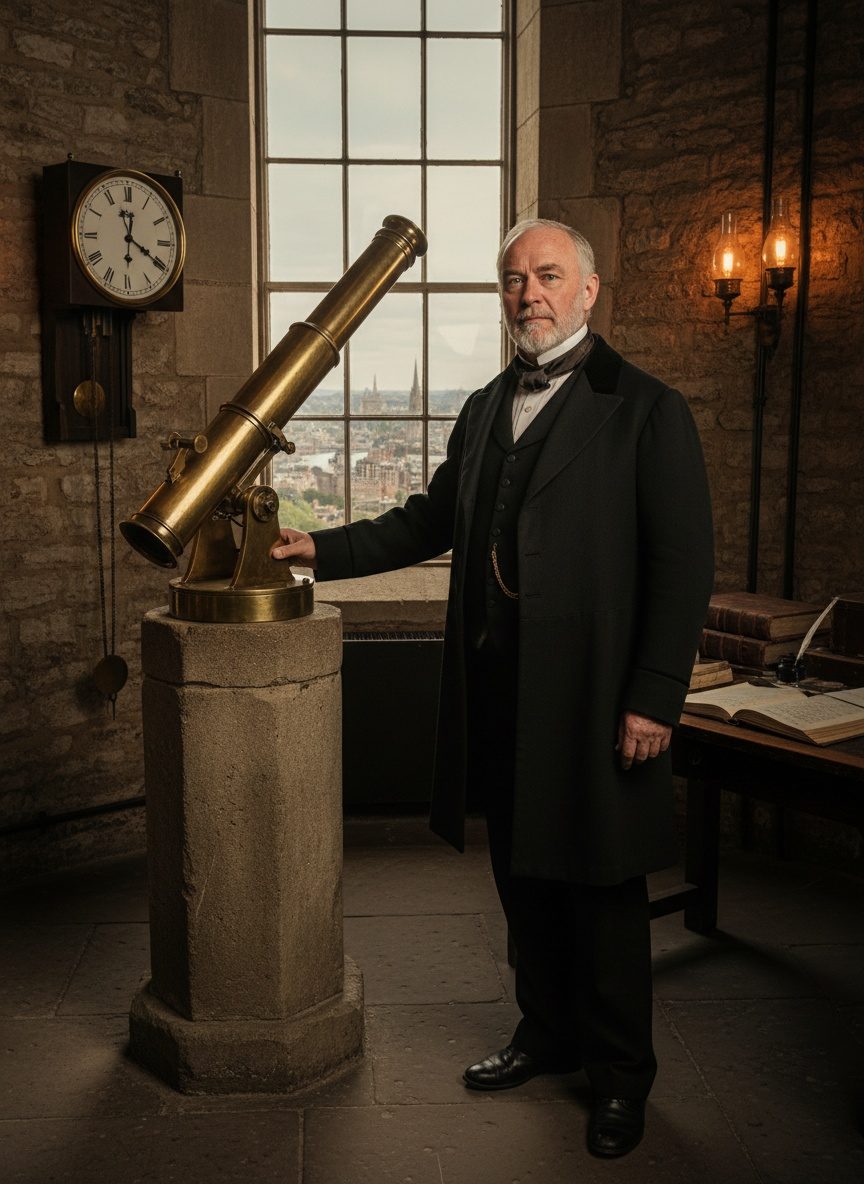
October 1884. The streets of Washington, D.C. bustled with the comings and goings of delegates from around the globe, gathered for a monumental task: to determine the starting point of time for all humanity.
The world of the late 19th century was evolving at a breathtaking pace. Railways crisscrossed countries, telegraph lines hummed with messages, and ships plied the oceans with greater efficiency than ever before. Yet, amidst this whirlwind of progress lay a nagging problem: the lack of a standardized, single meridian from which time could be universally measured. It was more than a mere inconvenience; it was a persistent hindrance that affected trade, communication, and travel on an unprecedented scale. With each country observing its own time based on local sunrises and sunsets, synchronicity was but a distant dream.
As the distinguished representatives entered the International Meridian Conference, the air was thick with anticipation. Twenty-five nations had sent their best and brightest to solve this puzzling conundrum, each hoping that their preferred meridian would become the heart of world time. Yet, amid the polite diplomacy, one whispered contender seemed to dominate the conversation: the Royal Observatory in Greenwich, London.
Greenwich's path to prominence was as practical as it was serendipitous. Its location, only a short distance from the maritime heart of London, had made it a natural choice for the British Admiralty years prior. As British naval power expanded, so did the influence of its timekeeping. Observations made from the Greenwich Observatory guided ships across the world's oceans, its charts and publications setting a standard, albeit an informal one, for navigation.
But why Greenwich? Nestled on a modest hill in southeast London, this unassuming observatory held an unmatched global reach. Its meridian not only wove through the fabric of British life but stitched itself into the tapestry of international trade and navigation. Lighthouses blinked their signal lamps in time to Greenwich Mean Time, while seafaring captains plotted courses with charts that echoed its measurements.
The significance of this small hill was due in no small part to the bustling British Empire, whose reach spanned continents and oceans. By the time the conference convened in 1884, over two-thirds of the world's shipping already relied on maps drawn in proportion to the Greenwich meridian. Thus, what had started as a British necessity had gradually gained international acceptance, almost as if by stealth.
Yet, it wasn't simply logic or imperial influence that made Greenwich the prevailing choice. The alternative propositions — of Paris or Washington, for instance — were fraught with complications. The French meridian, stubbornly entrenched in national pride, was a mere two degrees and twenty minutes from Greenwich, an inconsistency that invited confusion more than solution. Meanwhile, Washington’s claim was nascent, lacking the historical momentum Greenwich had already gathered.
When votes were cast and deliberations concluded in that October of 1884, Greenwich was chosen as the Prime Meridian by an overwhelming majority, officially zeroing the world's longitudinal measures there. A line few would ever see in person would soon delineate time itself for everyone on Earth.
The elevation of Greenwich to international prominence was more than a technical victory; it was a triumph of pragmatism over parochialism. In designating the Greenwich Meridian as the world's standard time, the International Meridian Conference paved the way for the synchronization of a rapidly advancing world. Trains ran on time, telegraph messages synced seamlessly, and trade routes became more predictable.
For the world, the choice of Greenwich was the beginning of a new epoch. It marked the advent of global standardization, a theme that would continue to shape the politics and economies of the 20th century and beyond. Time zones were established, spreading out like the spokes of a wheel from the singular, fixed point at Greenwich, neatly organizing chaos into a functional framework.
And what of the delegates who had gathered to decide this fate? They returned to their respective nations, perhaps a little weary but undoubtedly aware of their contribution to human progress. Their decision signaled not just a common temporal framework but also a collective step towards globalization. Countries, once disparate in their timekeeping, began to find a shared rhythm, a testament to what could be achieved through cooperation and consensus.
Even today, as we glance at our devices, sync our clocks, and plan across time zones, we are unwittingly linked back to that October in 1884, to a simple observatory perched on a humble hill in Greenwich. It symbolizes more than the inception of standardized time; it heralds the dawn of an interconnected world where unity and uniformity were sought for the greater good of humanity. Perhaps it is a reminder that even the most complex global conundrums have a nucleus of simplicity, waiting to be grasped and agreed upon, guided by the subtle force of collective progress.