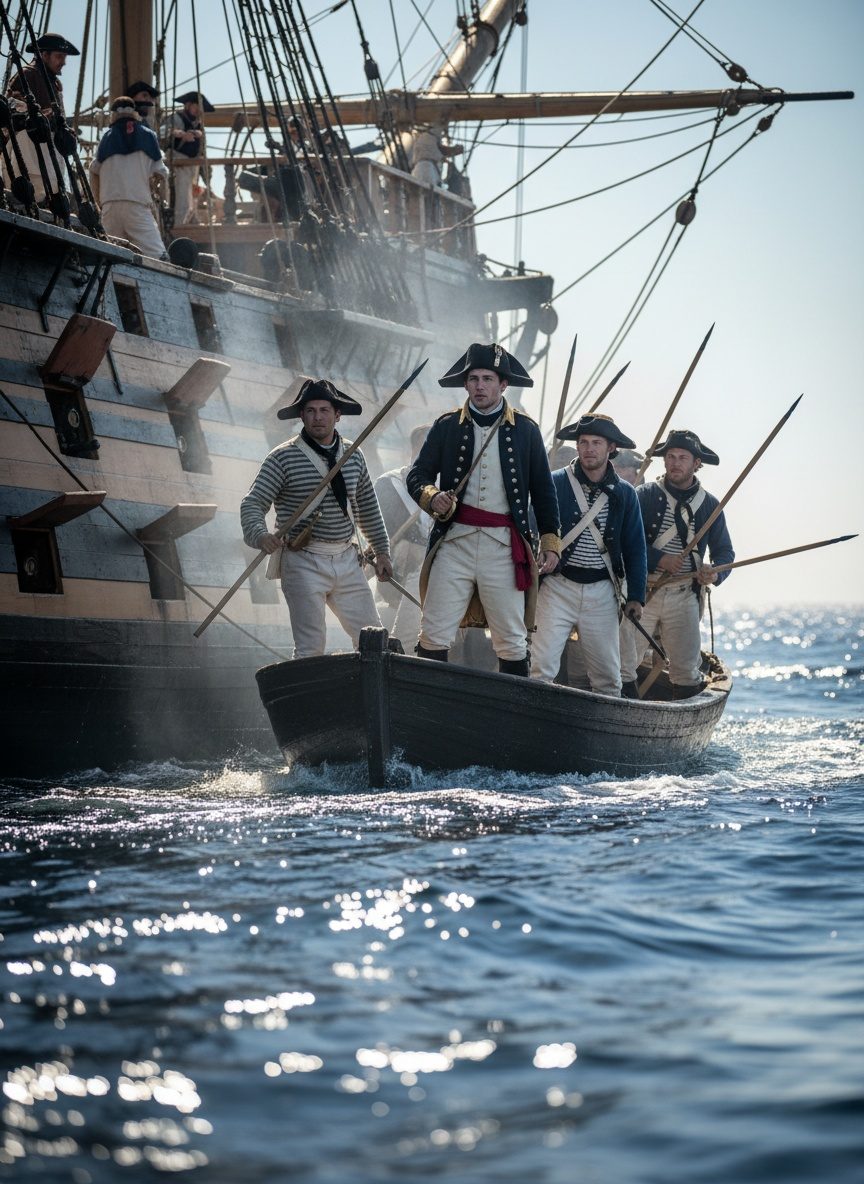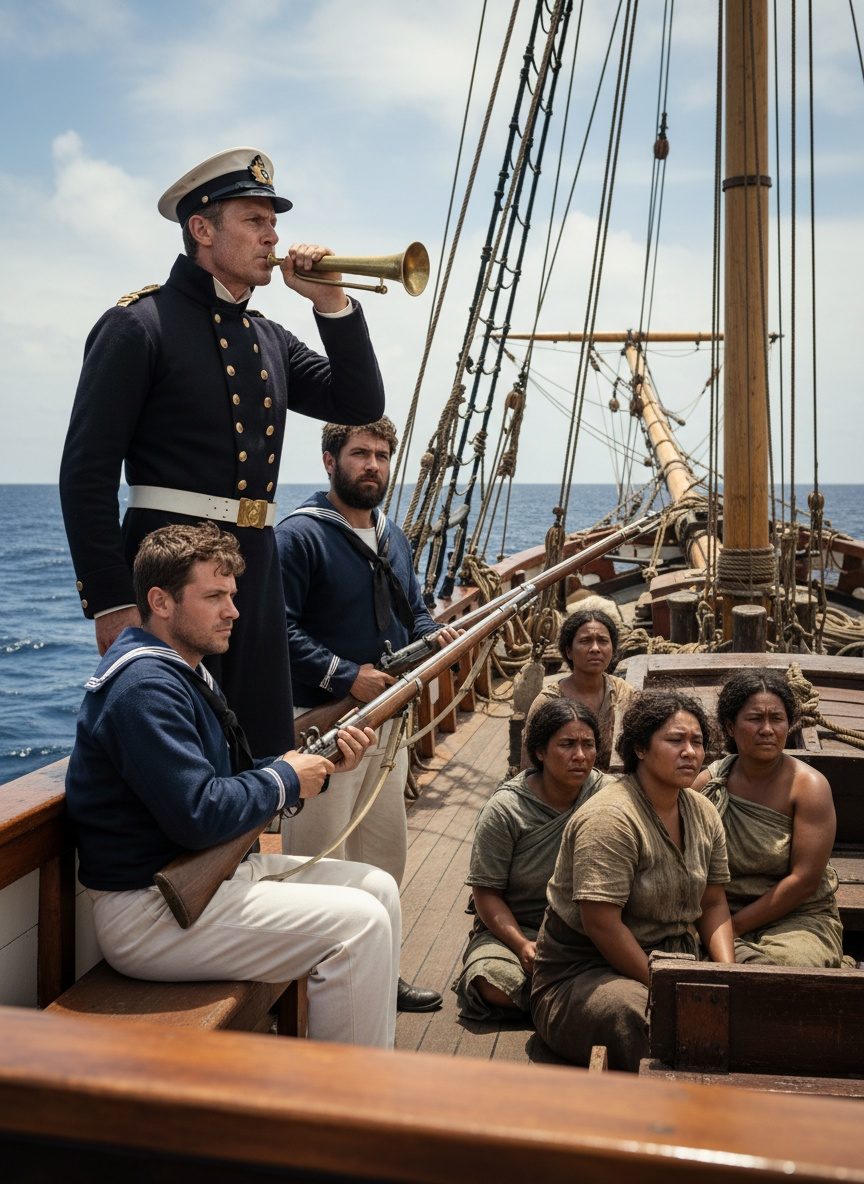
The Pacific was vast and untamed in 1869. Yet hidden within its waters, a pernicious trade flourished undetected.
The Uncharted Slave Passage
In an era where the British Empire was a relentless machine of global influence, the Royal Navy found itself navigating the fringes of imperial reach. Six thousand miles from the familiar waters of the West African coast, where the transatlantic slave trade had been battled resignedly, lay a different, insidious operation. The Pacific Ocean, with its expanse of scattered islands and tribal cultures unaware of European machinations, had become the underbelly of a vicious, abominable commerce known as "blackbirding."
Blackbirding, the unsuspecting abduction of Pacific Islanders to serve as laborers on plantations in places like Fiji and Australia, had something of a tragic dynasty in the mid-19th century. It was built on deceit and exploitation, where recruiters, often under the guise of 'rescuers,' tricked islanders into boarding European ships with promises of riches and opportunities, only to be sold into bondage. While the world focused on the dying embers of Atlantic slavery, this sinister plot burgeoned in an ocean believed to be too vast for justice to navigate.
The Fluke of Fate: HMS Rosario’s Interception
On a fortuitous day in 1869, HMS Rosario, under the command of the Royal Navy, encountered the unassuming schooner, Daphne, drifting through the Pacific with dark secrets below its deck. The Daphne was an anomaly in the blue expanse; its hold was not carrying legitimate cargo but rather a human fortune hunted by deception. Below the deck of the Daphne lay dozens of frightened and bewildered islanders, cut off from their homes and hope.
The officers of HMS Rosario, led by a resolute determination, saw through the subterfuge. They interceded with a judicial ferocity that would have made distant admirals proud. The sailors, both seasoned and novice, descended into the belly of the Daphne, unearthing a cruel tableau of desperation and bewilderment. The realities of the harrowing conditions faced by these islanders could have easily shocked a world numbed by tales of human despair.
This confrontation was not just a maritime skirmish but a symbolic thrust of imperial justice that would echo across latitudes and generations. The galvanizing event was a poignant reminder that the fight against slavery was not bound by geography but by a universal moral compass.
A Tribunal of High Stakes
The seizure of the Daphne ushered in a judicial saga that rippled through the colonial architecture of justice. This was not merely about the fate of a ship or even its ill-begotten human cargo, but a critical episode that poised empires and ethics on a precarious fulcrum. When HMS Rosario's commander brought the incident to legal light, the precedent it set became as indelible as ink on vellum.
In the courts, the case against the Daphne was mounted with a zealous intellect that could unspool tapestries of legal and moral arguments. The blackbirding operations, once shrouded in obscurity, were dissected and displayed for the world to see. The ruling pronounced that this was not merely abduction but an unconscionable breach of human decency. The fate of those aboard the Daphne became a marker, a line drawn against the ocean’s sprawling blue canvas, where freedom and subjugation were starkly demarcated. It was not just a condemnation of piracy but a universal reaffirmation of humanity's shared values.
The Pacific’s Awakening
This singular encounter in 1869 rippled outward, stirring a consciousness that lay dormant in many corners of the global stage. As word spread, island communities grew warier of strange sails on the horizon, and the invisible hands that orchestrated this trade found themselves increasingly isolated and lawful under the United Kingdom's ironclad glare.
The capture of the Daphne did not merely end with the liberation of its unfortunate passengers; it spearheaded a wider movement against indentured servitude and the exploitation of vulnerable island populations. It galvanized colonial administrations and humanitarian organizations alike to probe deeper, act swifter, and vow uniquely to safeguard these communities from further entrapment in the merciless gears of commerce.
Today, the tale of the HMS Rosario’s encounter with the Daphne reminds us that even the most vast, inscrutable oceans cannot keep secrets forever. It is a potent testament to the enduring battle against oppression in all its forms, and a reminder that vigilance and valor know no boundaries when tethered to a righteous cause. The Pacific sojourn of HMS Rosario did not simply unravel a scheme but inspired a symbiotic awakening that threads through historical memory, reminding us that justice, though sometimes adrift, is never truly lost at sea.