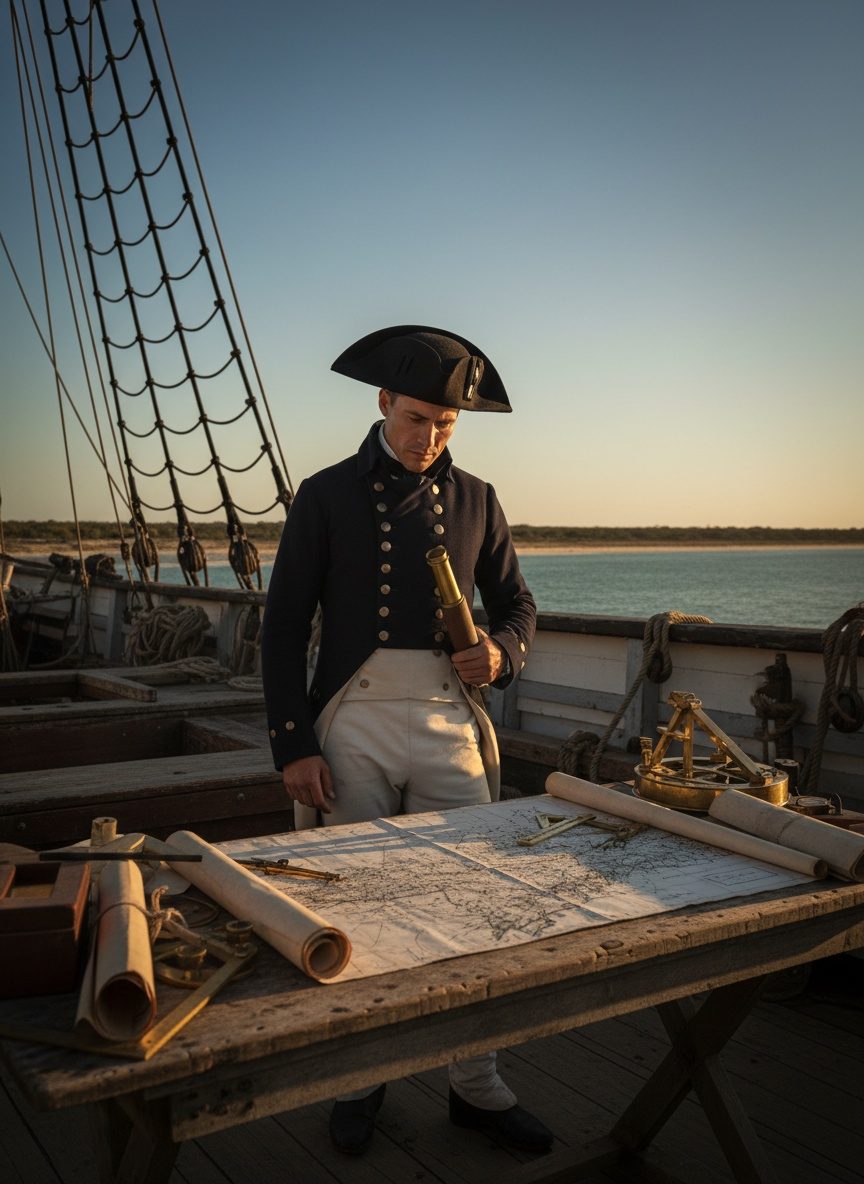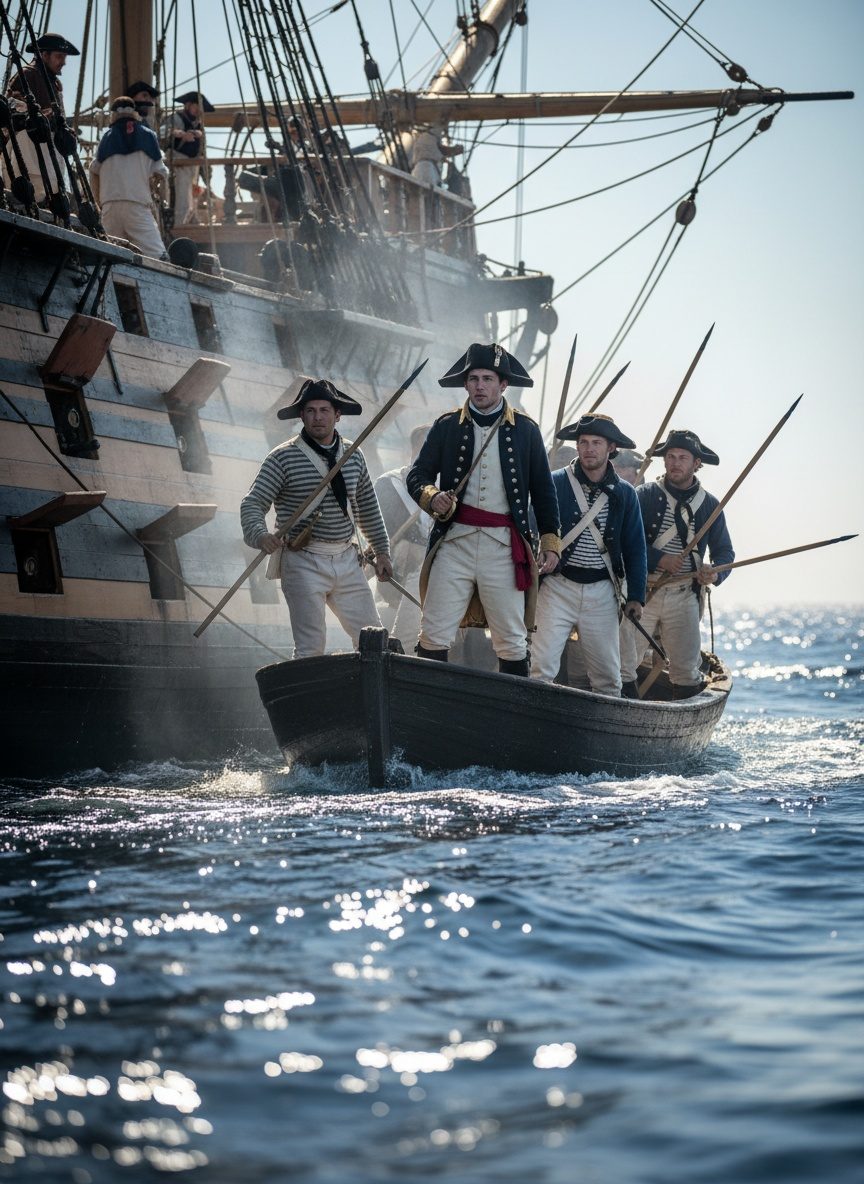
The smoky tang of gunpowder filled the air as the cannon fire ceased momentarily, the tension sizzling aboard the decks of the HMS Speedy. Captain Thomas Cochrane, his eyes sharp and calculative, stood taut against the sway of the sea, bracing against the awe-inspiring sight of the Spanish frigate Gamo looming before him. She was a behemoth bristling with 32 guns—twice the firepower of his own vessel. Yet, undaunted, Cochrane gave the order with a smirk of defiance written across his face, “Prepare to board!”
At that moment in 1801, the odds were stacked heavily against the youthful Scottish nobleman. His ship, the HMS Speedy, was an inconspicuous sloop, boasting a mere 14 guns that could be mistaken for toys against the Gamo’s imposing artillery. His crew of 54 men was outnumbered nearly six to one by the 319 Spanish soldiers. And yet, defying all logic, Cochrane closed the distance, plotting an audacious maneuver that would send shockwaves through maritime circles.
Why, one might ask, did Cochrane choose to engage with such insurmountable disparities? Known for his bold strategies and an unwavering belief in harassing enemy forces to weaken Napoleon's hold on the seas, Cochrane thrived on the edge of peril. As a member of the Royal Navy, he had a reputation that extended far beyond his physical stature, intent on dismantling the oppressive naval blockades that Napoleon had steadfastly laid. His swiftness and unyielding tactics were legendary, earning him both followers and detractors in equal measure.
The swells crashed, the sea foam splattered along the decks, and Speedy tilted to the rhythm of the chase. Determined to exploit every tactical advantage, Cochrane ordered his men to mimic a desperate tactic—camouflaging the ship’s colors by hoisting Spanish flags, creating a momentary lapse in enemy attention. The Spanish crew was taken aback, giving Cochrane the critical seconds needed to leap into action.
The ensuing chaos was orchestrated with precision and ferocity. Cochrane’s men swarmed the Gamo, a stream of steel and determination that overwhelmed the astonished Spanish sailors. Despite their numerical superiority, the Spanish crew was demoralized, confused by the unexpected assault and the aggressive tactics of Cochrane’s men. What the Speedy lacked in terms of sheer power, it made up for in swiftness and bravery, darting in and around the larger vessel, its crew a blur of activity and resolve.
As cutlasses clanged and battle cries rent the air, Cochrane showcased not just physical prowess but psychological warfare. Intimately familiar with the strategy of disruption, he drilled into the minds of his adversaries, spreading fear and confusion. Even in the din of battle, there was calculation in every act—deliberate, precise, deadly. Commands echoed across the chaotic theater, and his crew responded with unflinching loyalty, driven by their captain’s spirit.
From every angle, the odds should have favored the Gamo, yet Cochrane’s men continued to press forward, assailing the larger ship with an improbable vigor. The Spanish captain, disoriented by this unexpected ferocity, eventually surrendered, overwhelmed by the twin forces of the Speedy’s cunning and Cochrane’s audacity. Victory was not only claimed but carved into maritime lore. A vessel that should have been the hunter became the hapless quarry, handed over in surrender as if by the hand of fate itself.
As the adrenaline subsided, the Commander surveyed the now subdued Spanish ship with a rare moment of reflection, standing amidst a scene of chaotic triumph. He had not merely engaged in a naval skirmish, but enacted a piece of strategic art—a master stroke that would echo through the annals of naval history. Here, in this decisive action, was a resounding message not only to the British Admiralty but to Napoleon itself: No blockade, no matter how formidable, could quell the indomitable spirit of determined men and their leader.
It was actions like these that rattled the alliances and strategies instituted by Napoleon, proving that even the smallest of ships, commanded by the sharpest of minds, could puncture holes in the grand designs of empires. Cochrane's action in 1801 exemplified the strategic brilliance and intense daring that typified Britain's naval operations against Napoleonic forces, effectively foreshadowing the continued resilient spirit that would eventually confound French naval dominance.
As the HMS Speedy sailed from those perilous encounters under Cochrane’s zealous command, it left an undeniable legacy of audacity and tenacity. Tales of this seemingly impossible victory rippled through the naval world, inspiring a generation of seafarers and etching Cochrane’s name into the legendary chronicles of British naval history. Against every prudential counsel, Cochrane had dared to confront the ominous might of the Gamo and, in doing so, proclaimed the indomitable heart of Britannia that indeed rules the waves.
In today's world where power dynamics are often assessed through quantitative means, it is worth remembering Lord Cochrane and the HMS Speedy. Their story is a powerful reminder that the courage to challenge the impossible, the willingness to outthink rather than outgun one's foes, holds timeless relevance. It is a testament to the idea that with strategy, daring, and unyielding resolve, even the smallest force can change the course of history.