Matthew Flinders was just another naval officer. But his journey redefined the very contours of Australia's map.
The Mission Born from Curiosity and Competition
At the dawn of the 19th century, the European powers were obsessed with exploration, driven by the thirst for knowledge and territorial expansion. Among these powers, the British Empire, unyielding in its maritime supremacy, sought to unravel one of the world's last great mysteries: the full extents of Australia. It was an audacious plan, one necessitated by a competition with the French, who had already begun their own efforts along the enigmatic coastline. At the heart of the British mission stood a resolute young Scotsman named Matthew Flinders, a naval officer with an insatiable curiosity and a willingness to embrace danger.
As Britain commissioned Flinders to undertake this formidable task in 1801, they handed him not only the responsibility of mapping uncharted territories but also an aging and leaky vessel named HMS Investigator. With a feverish determination and hurried preparations, Flinders set sail into the unknown, unsure of the challenges that would confront him but unfazed, driven by an ambition to engrave his name in the annals of maritime history.
The Dreaded Cries from Below Deck
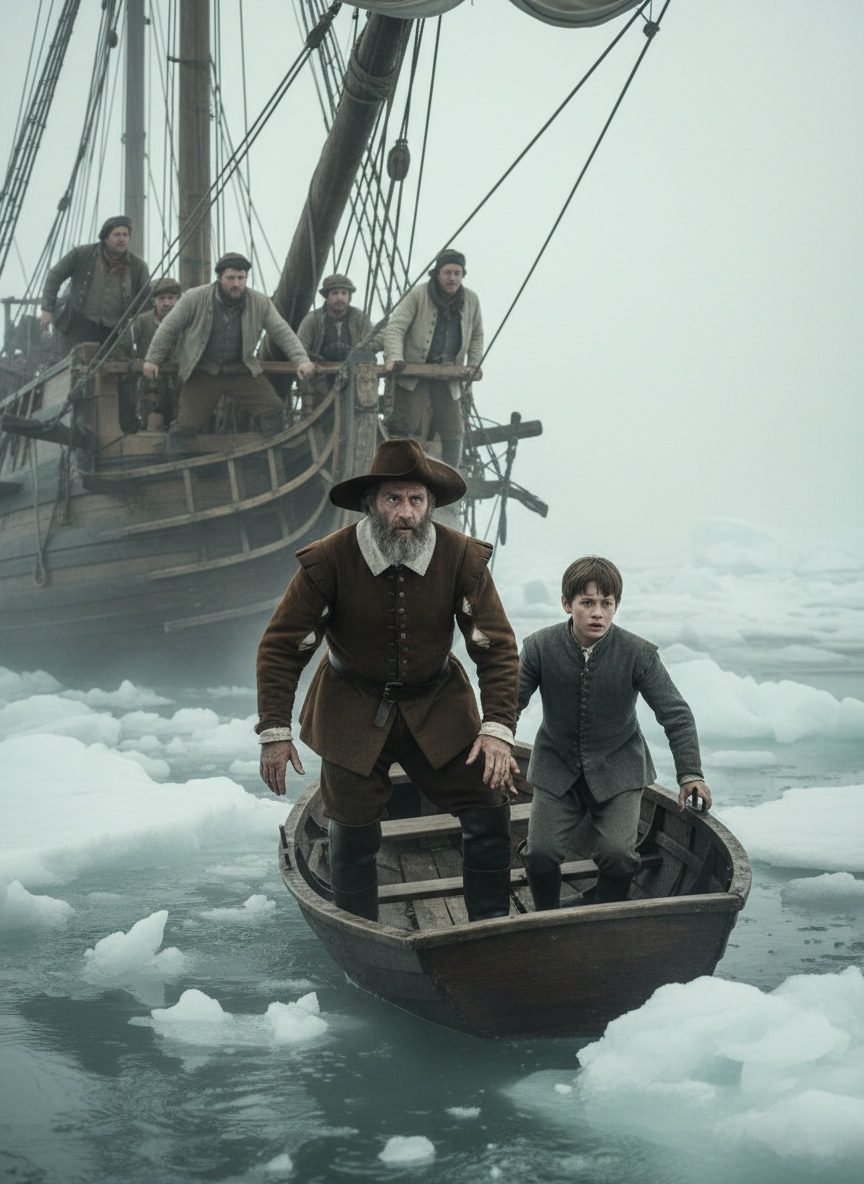
It did not take long for adversity to cast its shadow over the journey. As Flinders and his crew of 88 men charged southward from England, the harsh realities of the seas presented themselves. No journey through such uncharted waters would be without its tribulations. The creaking timbers of the Investigator constantly groaned under the pressure of the relentless sea, a constant reminder that time was the ship's adversary.
Yet, it wasn’t the ship that delivered the cruelest blow; it was scurvy, the dreaded sailor's curse. Despite Flinders's best efforts, the lack of fresh produce aboard meant his men slowly succumbed to the disease’s ghastly manifestations. Joints seized, gums bled, and spirits waned as the journey pressed forward. The cries from the infirmary below deck were an ever-present reminder of their mortality. Undaunted, Flinders insisted on proceeding, driven by an unyielding sense of duty and perhaps a desperate desire to maintain sanity amid the growing pallor of death that engulfed his crew.
Mapping the Unknown: A Charting Endeavour
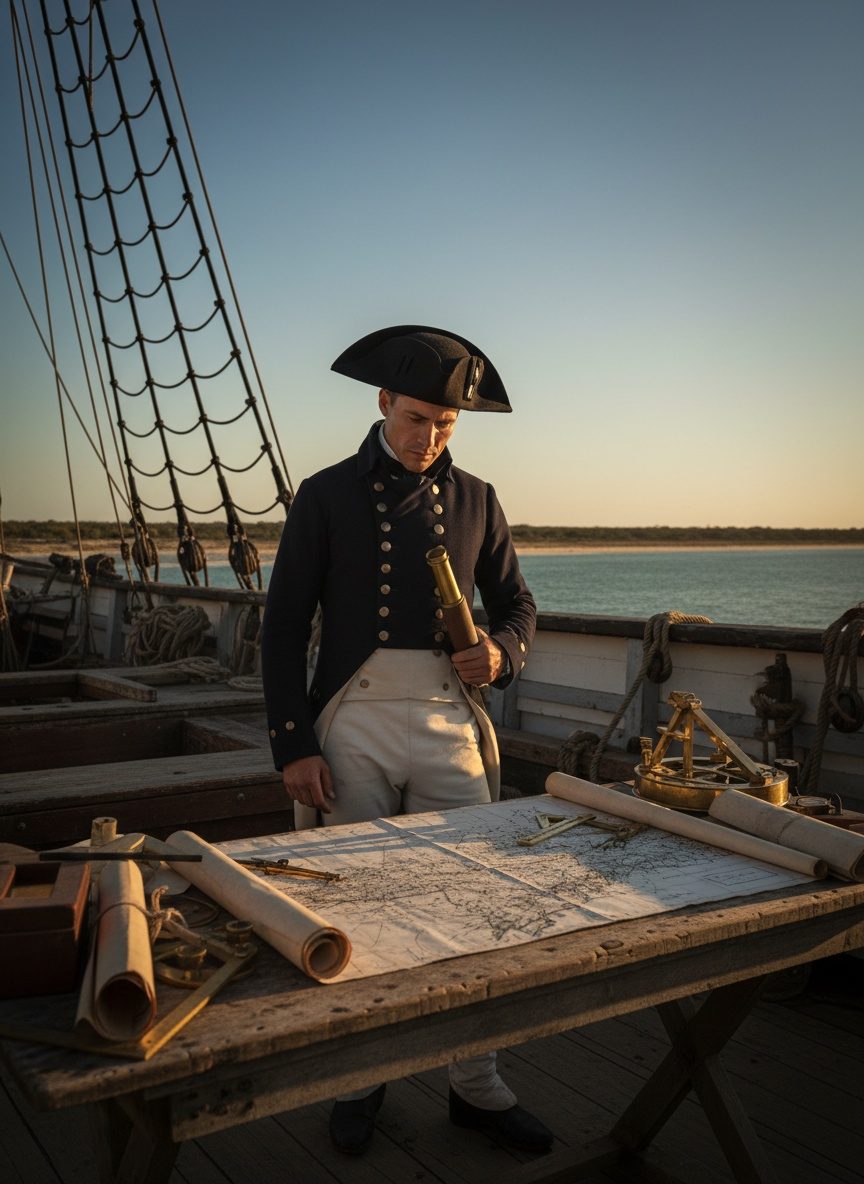
The shores of Australia, vast and menacing, lay ahead—a continent shrouded in mystery to European eyes. Flinders meticulously charted these unfamiliar coastlines, the charts themselves bearing witness to the colossal task they undertook. Day by day, mile by mile, he sketched the vast inlets, perilous reefs, and sweeping bays that would later alter the map of the world.
Flinders, a man who lived for precision, left no stone unturned. Despite the challenges that loomed on the horizon—unknown waters, deceptive currents, and the ever-looming threat of storms—his mission mandated that he continue. He steered his ship east, then west, navigating the flanks of the great landmass, consulting with Indigenous peoples when feasible, their local knowledge often invaluable. Flinders’s charts were not mere lines and symbols; they represented the landscape as it truly was—a tapestry of nature’s grandeur.
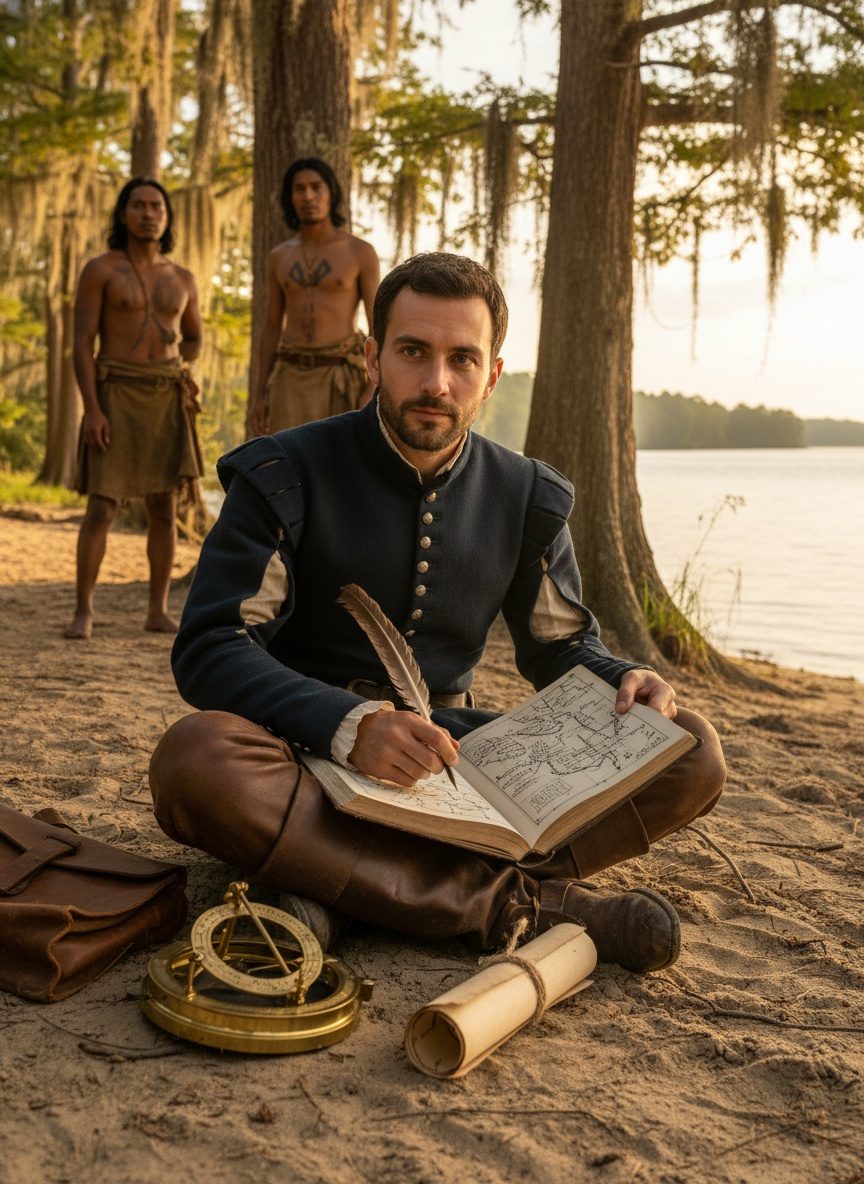
His most groundbreaking achievement, however, lay in a simple word. With a stroke of his quill, Flinders referred to the land as "Australia," embracing the spirit of a unified continent—a notion that hadn’t been officially adopted but was beginning to take shape in the minds of mapmakers, explorers, and scholars around the globe.
The Duality of Triumph and Captivity
As Flinders’s expedition neared its conclusion, the coastlines of Australia meticulously mapped, fortune dealt him the harshest of hands. Near the end of his epic circumnavigation, the Investigator laid crippled and unseaworthy. Yet, Flinders’s troubles did not end there. En route back to England with his invaluable charts, the French, wary of British intentions, detained him on the island of Mauritius. Flinders found himself a prisoner of war, held captive for more than six years. His fate, and that of his maps, left hanging mid-air as time steadily proceeded within the gloomy cell walls.
During his imprisonment, the specter of obscurity threatened to blot him from history's memory. But determination is a powerful ally. Flinders painstakingly maintained what work he could under duress, preserving his singular achievement against the backdrop of hostile geopolitics. Eventually released, he returned to England, exhausted and ailing, yet his charts in hand—a cartographic treasure that immortalized his work.
The Undying Legacy of Matthew Flinders
Matthew Flinders’s journey across oceans and battles with elements has the trappings of an epic tale, yet the true potency of his legacy lies not only in the maps he laid out for the world but also in the audacious spirit he exemplified. At a time when exploration demanded unrestrained courage, Flinders ventured forth with nothing more than a failing ship and unwavering resolve to transform the obscure geometrics of a distant continent into an enlightened reality. His charts became the figurative and literal blueprint of Australia known to the modern world.
This Scotsman’s unrivaled feat remains testament to the indomitable human spirit’s capacity for endurance and discovery. While the annals of history carry his name, perhaps deifying him in reverence, it’s not so much Flinders the legend we must remember but rather the imperfect human beneath—who weathered storms, fought scurvy, battled loneliness, and dreamed the dreams that dared to reshape the boundaries of the known world. As we look at a modern map of Australia, it is with quiet respect that we trace the contours of an accomplishment born from adversity, and an expedition forever etched in the story of the seas.