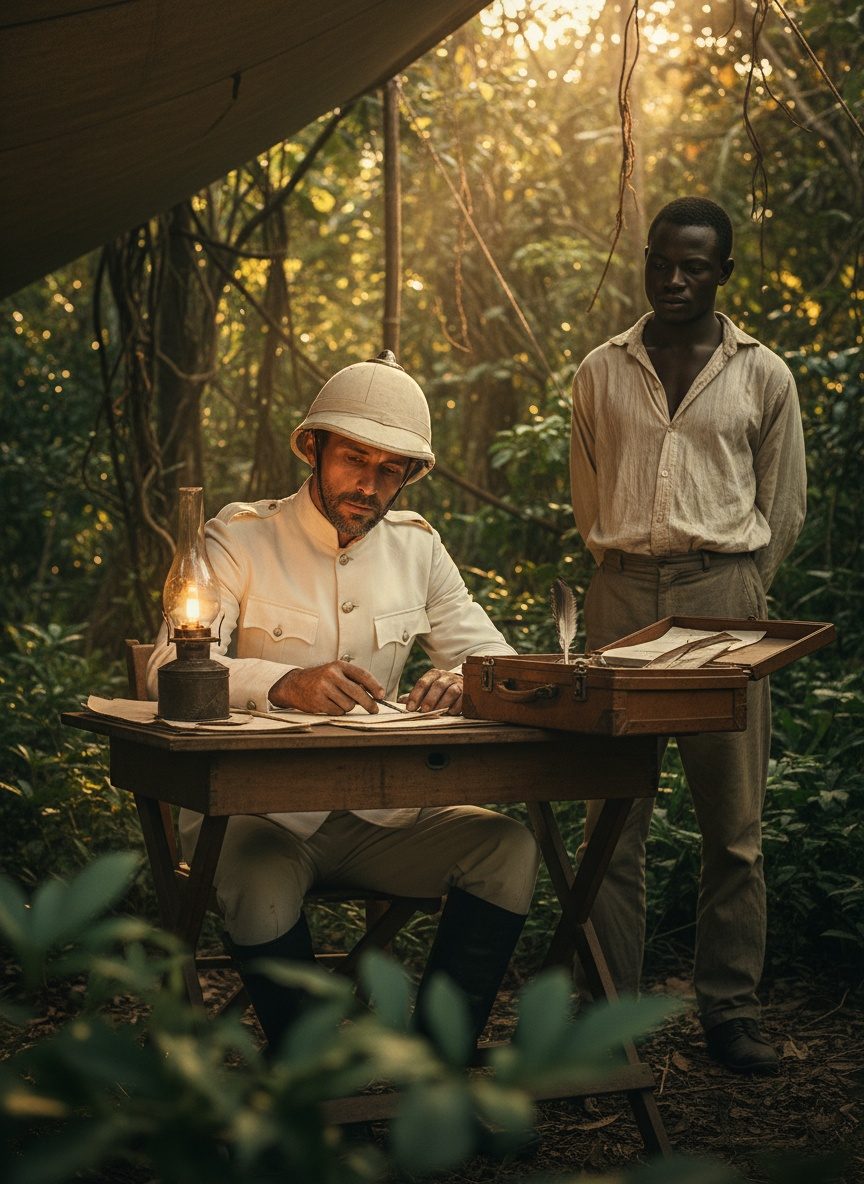
September 12, 1903. The thick canopy above filtered the harsh sunlight into scattered golden beams that danced upon the undergrowth.
The Jungle's Dark Curtain
Roger Casement stepped tentatively onto the soil of the Congo Free State, a land that promised obscene fortunes to European powers but exacted an unspeakable cost. Sent by the British government to investigate reports of commercial practices in this remote corner of Africa, Casement approached his task with the measured precision of a man who knew the tangled web of imperial politics. However, as he ventured deeper into the labyrinthine waterways and dense forests, he soon discovered that his mundane diplomatic mission would metamorphose into something far more sinister.
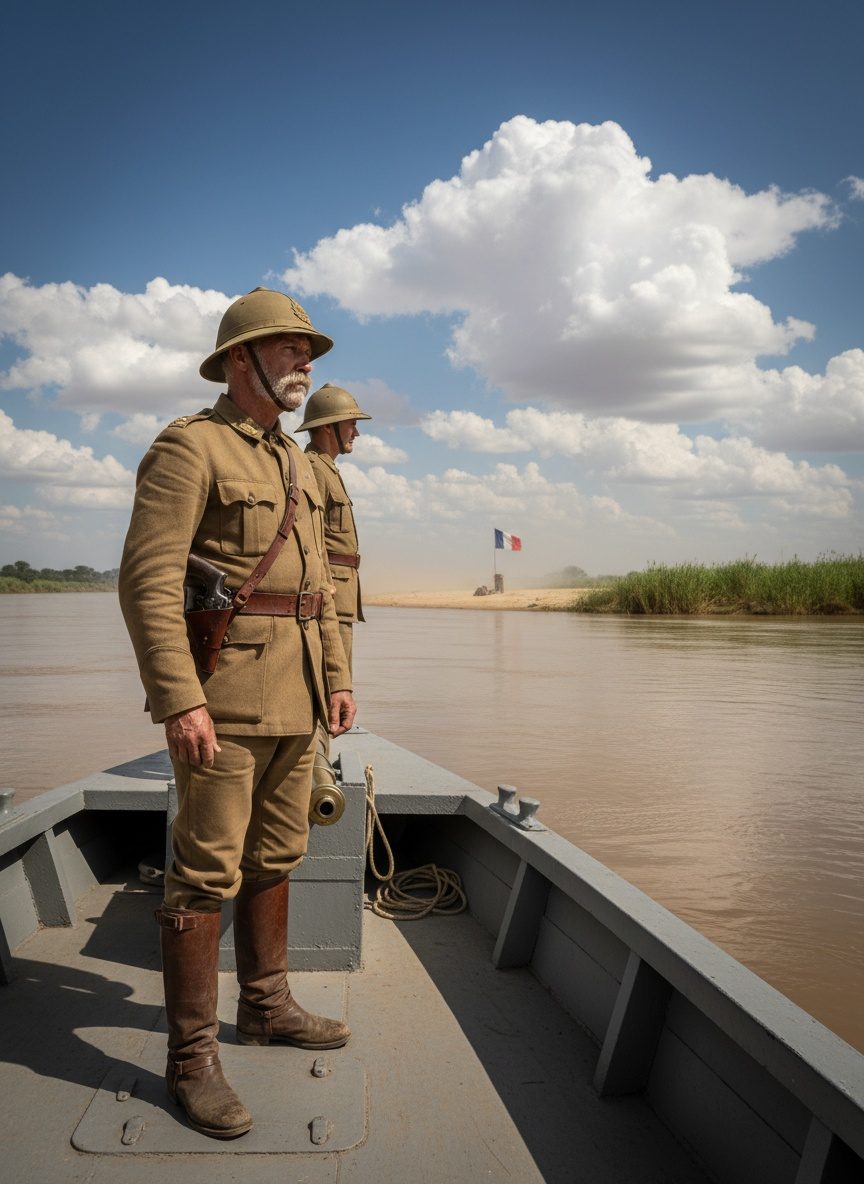
As Casement navigated the winding river routes in makeshift canoes, eerie silence often enveloped the jungle, interrupted only by the distant rustle of wildlife or the occasional whisperings of terrified locals. Villages, frequently visited at his request, revealed a pattern that defied mere misconduct; the signs spoke of something far graver. Natives with missing limbs timidly emerged, victims of a system that maimed them as punishment for unmet rubber collection quotas imposed by overseers working for King Leopold II of Belgium.
The Taskmasters of Misery
Every revelation seemed worse than the last, yet perhaps none more appalling than the fate of the children. Often taken hostage to ensure their parents' compliance, their young eyes carried a weight of suffering beyond their years. Casement was unprepared for such calculated cruelty, a methodical extraction of labor where remonstrations too easily turned into ravenous punishments.
His investigator’s instinct drove Casement to meticulously document every horror—each maimed limb, each heart-wrenching story—that he might later offer irrefutable evidence to the world. His notes described the affluence of local Belgian stations, stark contrasts to the despairing waste they left in their wake. Among them were personal accounts, whispered fears scarcely given voice, now immortalized in the hope these wounds could be brought to the light of European awareness.
Words That Wouldn't Stay Silent
Casement's return to Britain was not simply a voyage marked by physical distance but an odyssey from ignorance to enlightenment. As he organized his findings, the document that emerged became known simply as the Congo Report of 1903. It was a text heavy with sorrow and incontrovertible evidence, a powerful rebuke of the so-called "civilizing mission" that Europe espoused.
The report struck like a thunderbolt across Europe’s imperious capitals. Casement named names, even as broader imperialists sought to distance their ambitions from Leopold’s flagrant atrocities. Newspapers seized upon the report’s vivid imagery and damning statistics, igniting a public furor that would see debates rage in parliamentary halls and civic forums alike.
Yet even amid growing outrage, defenders of empire—forever skeptical of conceding ground—attempted to obscure the facts. A system so efficient in its dehumanization was not easily dismantled. Still, Casement’s revelations inflicted a significant rupture in the moral certitude of empire, galvanizing an international movement for restitution and reform.
Echoes of Accountability
As history churned inexorably forward, Roger Casement’s expose of 1903 did more than illuminate atrocities; it wove itself into the larger narrative of human rights advocacy. International scrutiny forced the Belgian crown to officially annex the Congo in an attempt to banish the worst transgressions from Leopold's private dominion to legal oversight—which, while imperfect, marked at least the beginning of accountability.
The events Casement recorded more than a century ago serve as a powerful reminder of the unseen histories often masked by silence and distance, and the rare moments when moral courage manages to rip through that veil. Today, as societies grapple with the legacies of empire and the complexities of justice, Casement's Congo Report underscores the necessity of bearing witness and the relentless pursuit of truth in the shadow of power.