Fashoda was an unknown outpost to most of the world. Yet, for weeks in 1898, it was the fulcrum upon which the future of Africa balanced. Deep in the heart of Sudan, where the White Nile flows through a barren landscape, a small British gunboat faced down the might of the French Empire, and the stakes could not have been higher.
The Watershed After Omdurman
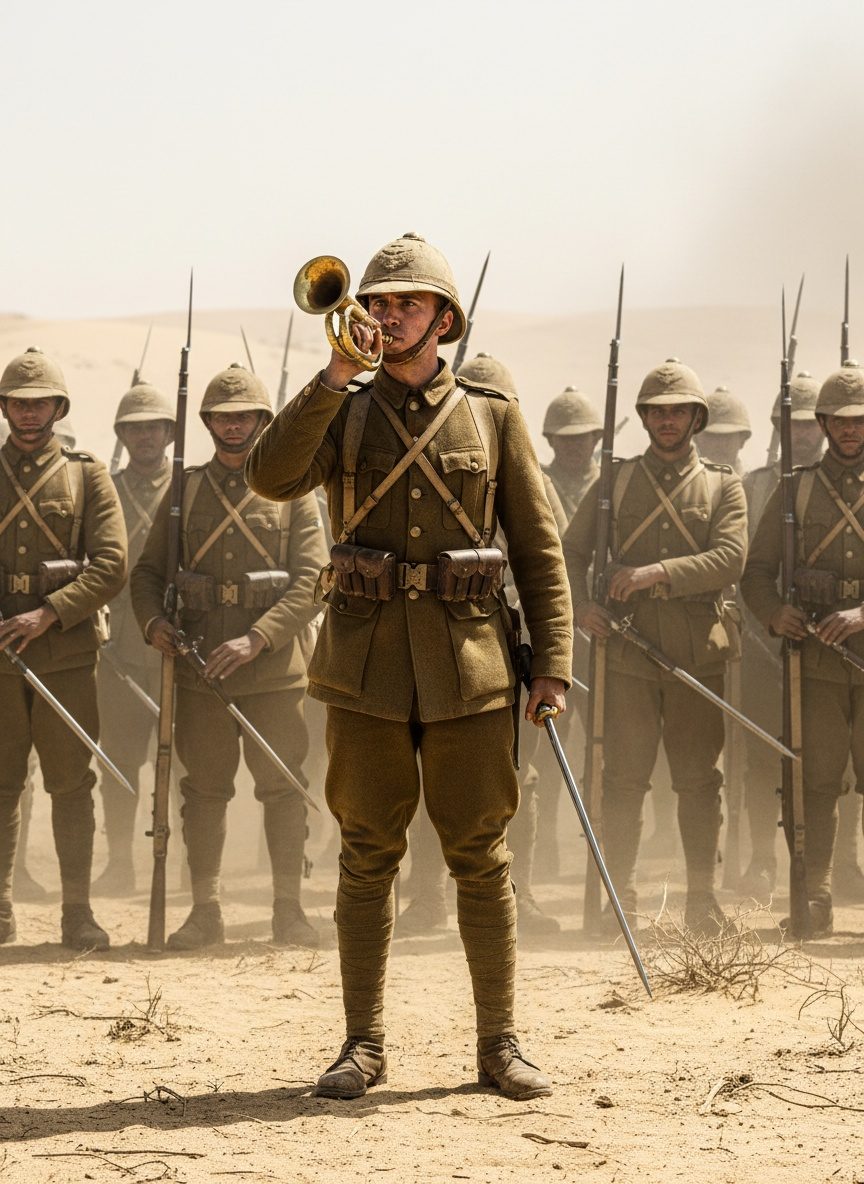
On September 2, 1898, Major-General Herbert Kitchener’s Anglo-Egyptian forces delivered a devastating blow to the Mahdist army at the Battle of Omdurman. In the landscape of dunes and dust, this crushing victory reasserted British dominance in Sudan after the Mahdists had successfully taken their stand in the previous decade. Yet, as the celebrations subsided, Kitchener received word of troubling news—news that would divert their attention from triumph to diplomatic tightrope.
A French expedition led by Captain Jean-Baptiste Marchand had made its audacious journey across the African continent, reaching Fashoda on July 10, before hoisting the French tricolour on the swampy banks of the Nile. The race for imperial acquisition was at a fever pitch during this period known historically as the "Scramble for Africa." At stake for Britain was not merely regional dominance but the strategic monopoly over the Nile—and with it, vital trade routes and influence across Northeast Africa.
Face-to-Face on the Upper Nile
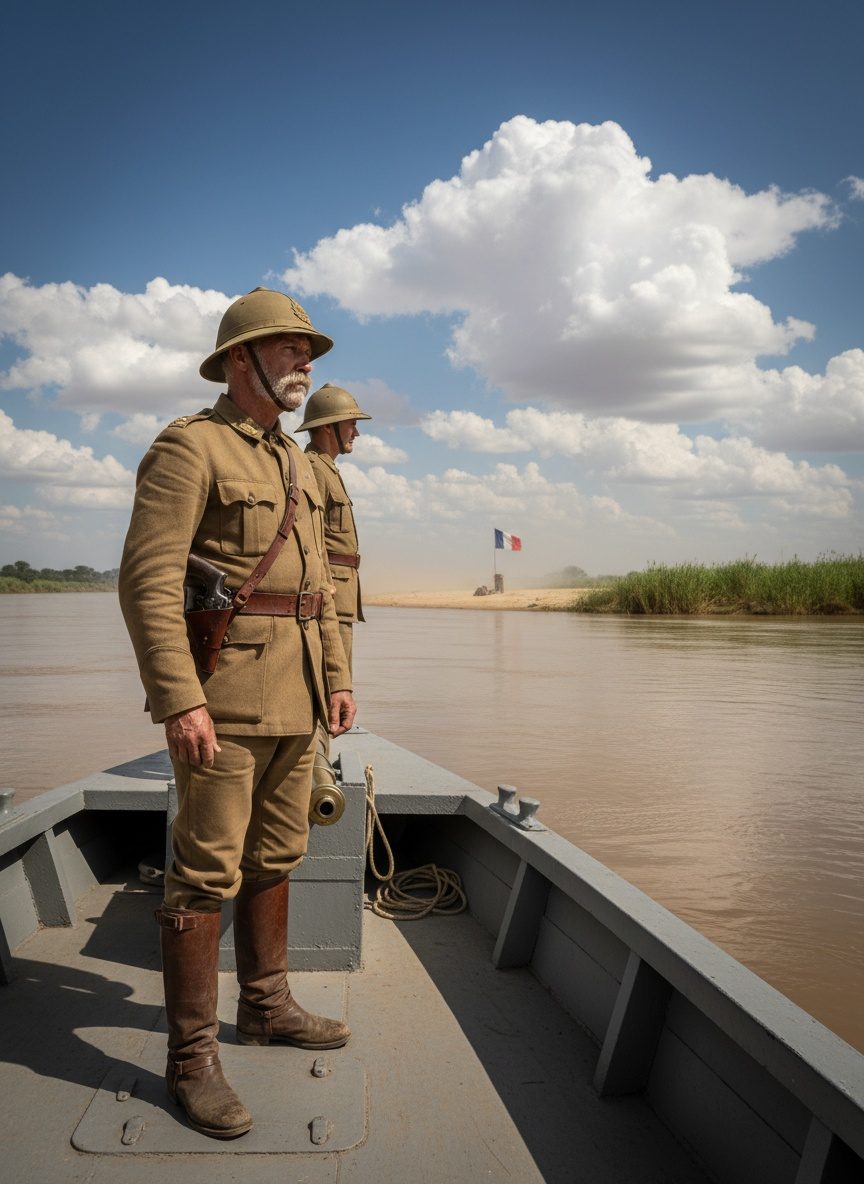
By September, the British gunboats, a formidable symbol of imperial assertion, rounded the Nile’s bend to find the French flag fluttering defiantly. Kitchener, aboard one of these vessels named *Dallah*, had arrived to confront not just another nation's symbol, but the embodiment of an imperial dream that threatened to collide with Britain's own.
The two weary armies—French in their remote outpost and British aboard gunboats on the Nile—stood precariously close. This was no simple military skirmish; it was a high-stakes standoff during a time when empire was often equated with national identity. Facing the French commander, Marchand, Kitchener delivered a measured but firm demand to lower the French colours. A diplomatic flair was entwined with his military bearing, knowing full well that a misstep could trigger a continental conflict.
The Diplomacy of Patience and Resolve
Weeks dragged on as the world watched with bated breath. Communications moved at a pace dictated by the river and telegraph, and in Paris and London, diplomats scrambled to find equilibrium before the scales tipped irrevocably toward war. Though Fashoda itself was physically isolated—an outpost far removed from civilization—its ramifications resonated in the halls of power, echoing the imperial ambitions that clouded Europe.
Kitchener's strategy was one of deliberate waiting. He understood that a show of force, tempered by restraint, was necessary to wield influence without stirring an international hornet's nest. The shadow of war loomed, but in that prolonged tension, something remarkable was forged: a diplomatic solution premised on the recognition of spheres of interest, underscored by a common desire to avoid conflict over distant lands.
The Resolution That Shaped a Continent
Finally, diplomacy prevailed. By November, cooler heads had gained the upper hand, and the French government, facing domestic issues and pressures of German alliances, ordered Marchand to withdraw his forces. The cheers that greeted this resolution in London barely masked the relief that a sly diplomatic dance had sidestepped war. It was a triumph not just of military might but of diplomatic agility—where the edge was softened by human restraint.
As Marchand and his men vacated the Fashoda post, the British bolstered their position along the Nile, eking ever forward in their imperial expansion. A crisis had been averted, but its echoes prompted a 1904 Entente Cordiale, a cornerstone that began unravelling centuries of Anglo-French rivalry in Africa.
A Quiet River, A Loud Echo
The Fashoda Incident remained etched into the annals of imperial history not for its conflict, but for its avoidance thereof. In a tumultuous era defined by conquest and colonisation, the confrontation where one British officer and a few gunboats held the line against imperial ambitions marked a restraint that carved out a new chapter for international relations.
The Fashoda standoff taught lasting lessons about the art of tightrope diplomacy and the power dynamics of empires. It elucidated the reality that victory is sometimes about knowing when not to fire the first shot. In the indomitable wilderness of Sudan, the banks of the Nile became a stage that dramatized the world's shifts, and the ripples from that silent drama echoed far beyond the waters of Africa, reshaping global understanding of empire and influence. Fashoda was a footnote to some, a pivotal chapter to others—but indisputably, it was a moment that shaped the canvas upon which the destinies of nations were painted.