He was a mild-mannered schoolteacher. When Nain Singh completed his audacious mission, he was not only still alive but had become one of the most significant explorers of his time.
In 1865, the sprawling British Empire faced its most daunting geographic puzzle. Despite having meticulously covered vast swathes of the globe with their Great Trigonometrical Survey, there was one place that remained shrouded in the mystery of the highest magnitude: Tibet. Foreigners who dared venture into its sacred confines were met with swift execution, leaving the land locked behind a wall of secrecy as daunting as its Himalayan peaks. Yet, armed with ingenious espionage methods and unmatched willpower, Nain Singh would accomplish what was deemed impossible: mapping Tibet without alerting the suspicious monks and watchful eyes of its inhabitants.
Nain Singh, hailing from the small village of Milam in the Himalayan regions of what is now Uttarakhand, India, began his life in a humble setting. Raised in a merchant family that traded wool and salt, Singh was well-acquainted with long tangles of arduous terrains. However, it was his aptitude for academia a local school nurtured, granting him the skills that would eventually seal his destiny. It wasn't Singh's physical prowess alone that distinguished him from his potential competitors, but his sharp intellect—an ability to blend in yet observe with keen vigilance.
The mission started in 1865 under the auspices of the British Survey of India. Tasked with accurately mapping the interiors of the remote Himalayas, British officials found themselves at a challenging crossroads. Unable to dispatch their own men into Tibet due to the risk of execution, they identified locals who could endure the rigors of the journey while retaining an inconspicuous guise. Singh was promptly recruited and dispatched for clandestine training. However, this was unlike any regular surveying mission; precision and secrecy were paramount.
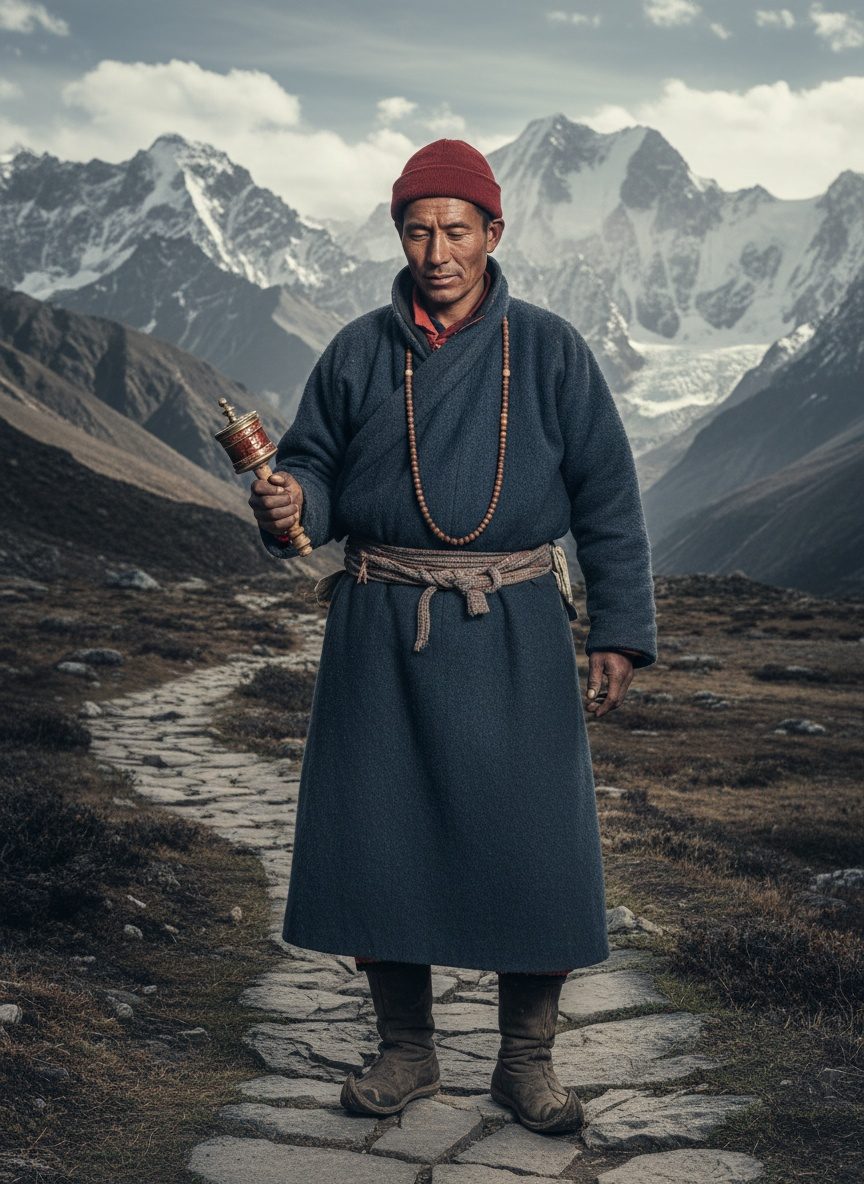
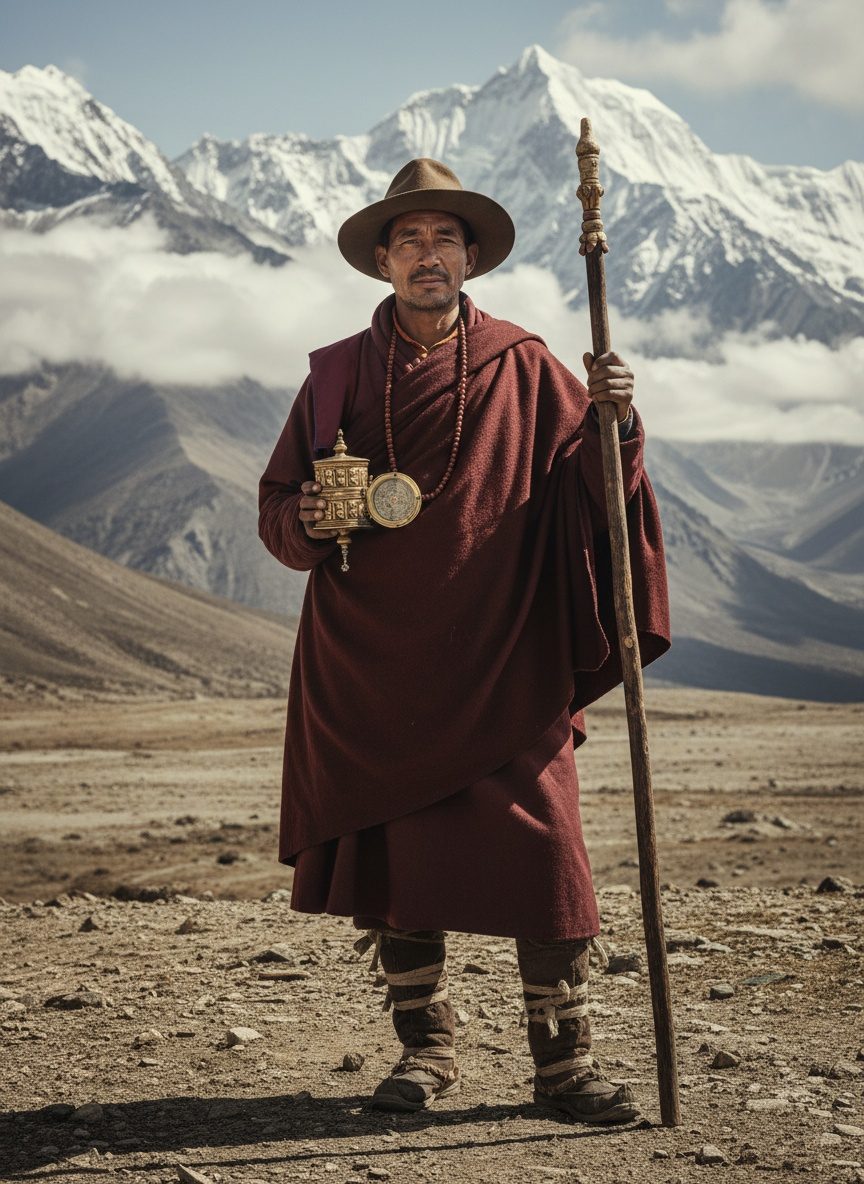
The intricate plan demanded Singh disguise himself as a Buddhist monk—a guise that offered the dual benefits of blending in and justifying perpetual wandering. His survey instruments were ingeniously hidden; a secret compass tucked within his prayer wheel, and a thermometer embedded in his walking staff. Deceptively ordinary objects became the tools of imperial strategy. Perhaps most creatively, his rosary was adapted wherein each bead represented a hundred paces. His writing tools were equally camouflaged, with survey sheets cleverly concealed within religious texts. Singh also cleverly placed mercury in small cowrie shells, enabling him to measure boiling points to determine the altitude of different locations—every piece had to fit this meticulous puzzle precisely to afford him survival.
Pretending to be devout, Nain Singh embarked on what would become a nineteen-month odyssey through treacherous mountain passes and austere landscapes. His path was fraught with obstacles varying from harsh weather conditions to suspicious locals. Despite this, Singh's painstaking attention to detail allowed him to maintain the impression of a devout monk on a pilgrimage. He walked alone, counting every single stride, ensuring accuracy as though his life depended on it—because, in truth, it did.
As he moved deeper into the heart of Tibet, Singh collected geographic data with precision that astounded even modern-day professionals. Among these were his carefully gathered observations on the capital city of Lhasa, the enigmatic seat of Tibetan Buddhism and its surrounding landscape. His infiltration of Lhasa marked a pivotal triumph, revealing the once-guarded contours of the city and its topography. Further exploration led him to the banks of the Brahmaputra River, tracing its upper reaches—a breathtaking navigational feat given the absence of advanced instruments or reliable topographic information at the time.
Throughout his expedition, Singh's commitment to his cover was extraordinary. On one occasion, upon observing his hesitance to pray publicly, a particularly inquisitive local monk questioned his authenticity. Pivoting with his typical astuteness, Singh elegantly deflected scrutiny by engaging the monk in a prolonged session of Buddhist philosophy, weaving together strands of rhetoric so convincingly that his doubters were soon swayed. Such instances highlight Singh's ability to navigate the perilous tightrope strung between earnest monastic devotion and imperial espionage.
When Singh finally reemerged from the mountains, the intelligence he returned with was unlike anything the British Empire had ever acquired. Maps painstakingly crafted from memory and diligent recording techniques became key assets, laying the groundwork for subsequent explorations while unveiling the carefully hidden heart of Asia. Back in the British offices, these findings shattered prior beliefs and dispelled inaccuracies, allowing for refined diplomatic engagements with the region.
Nain Singh's daring forcefully broadened Western understanding of Tibet, revealing realities ignored by European cartographers who had formerly relied on hearsay and conjecture. His story may have once been underplayed in the expansive annals of Victorian exploration, yet Singh's heroics set a superb standard for both scholarship and daring bravery, imprinting indelibly upon the imperial march of knowledge.
Why does his story matter? It's a reminder that history—often told from the vantage point of its victors—is as rich with unsung heroes as it is with monumental achievements, filled with figures like Singh who, against overwhelming odds, defy the constraints imposed upon them by their circumstances. To recount Singh's endeavors is not merely to celebrate outdated imperialist ambitions, but to acknowledge the fabric of human curiosity and courage threading unnoticed beneath the seams of colonial velour—a tale truly befitting the expansive mosaic of global history.