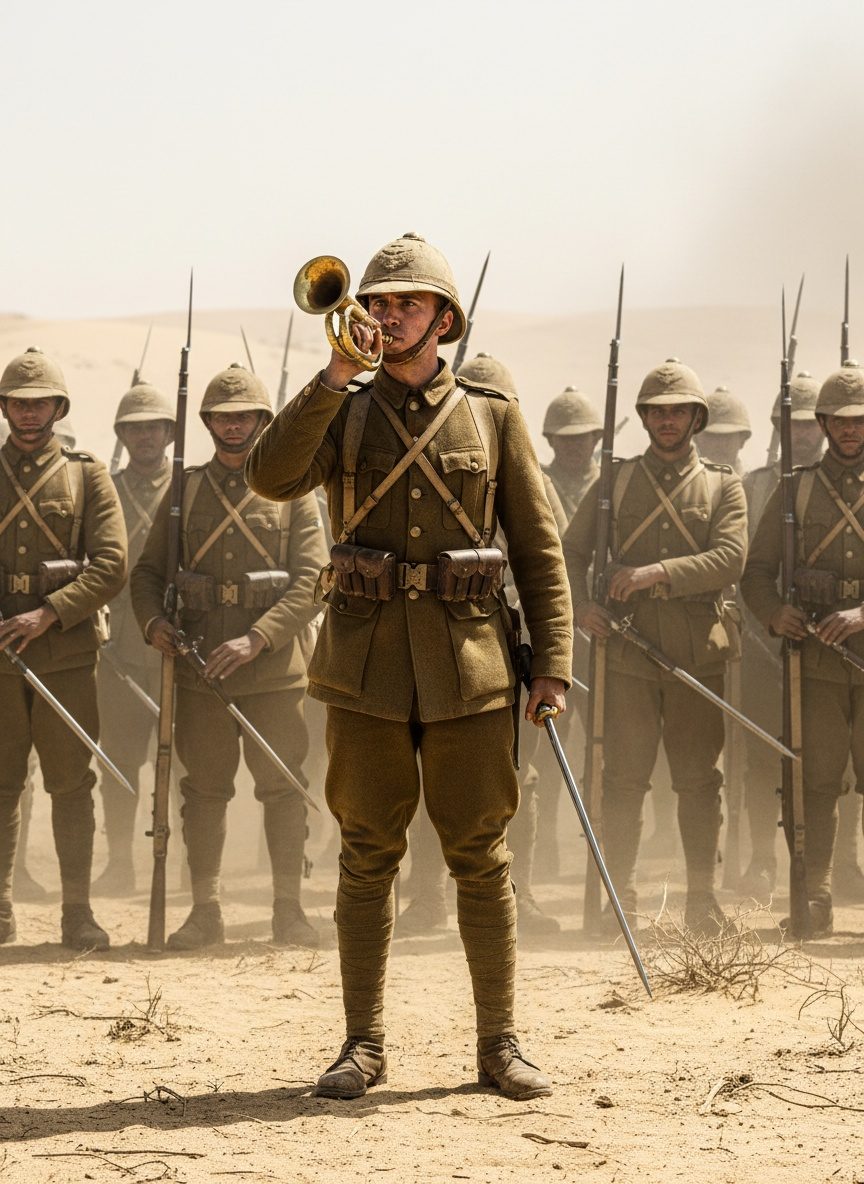
The blazing sun hung high over the Sudanese desert, casting harsh shadows on the sands around the small oasis of Abu Klea. It was January 17, 1885, and tension crackled in the dry air. The British troops, weary and parched, stood in tight formation, a square of red against the endless yellow of the desert. Around them, the formidable Mahdist warriors advanced in a swirling storm of dust and death. Suddenly, the unthinkable happened – the square broke. As chaos threatened to engulf the British expedition, a single bugler's call pierced the clamor and the chaos, turning the tide of battle in those desperate moments.
The Brewing Storm
The British expedition to relieve General Gordon in Khartoum had become a grueling advancement across inhospitable terrain. Led by Major-General Sir Herbert Stewart, the force of around 1,400 men was tasked with traversing the harsh desert to confront the Mahdist forces commanded by the zealously determined Muhammad Ahmad, the self-proclaimed Mahdi. By the time they reached Abu Klea, many of the men were on the brink of exhaustion, their spirits sapped by the relentless sun and dwindling water supplies.
The Mahdists, knowing the vulnerabilities of their enemies, launched a fierce assault. They were an overwhelming force of approximately 13,000, their numbers seeming limitless against the small, beleaguered British contingent. As the desert dust melded with the war cries of thousands of warriors, the situation grew increasingly dire for the British troops at Abu Klea.
A Desperate Stand
The British formation, a dense square developed from centuries of military wisdom, was designed to repel all sides and hold firm against cavalry charges. Yet, the Mahdist forces were no ordinary charging cavalry – they were fighting with a fiery zeal that propelled them fearlessly into the fray. The sheer weight of their attack threatened to break through British defenses as they fought fiercely, breaking into the square to engage in brutal, close-quarters combat.
In these critical moments, confusion reigned. Dust-filled air obscured vision; gunpowder smoke mingled with the cries of the wounded. The square was breached, and Mahdist warriors spilled into the gap, their blades flashing in the sun. The line wavered dangerously on the verge of collapse.
A Call to Courage
Enter Bugler William Joy, a young musician serving with the Royal Engineers. Amidst the chaos, his keen eyes and steady hands became the focal point of hope. Recognizing the impending disaster, Joy seized his bugle and sounded the rally. That single, resonant note rose above the din of battle, a clarion call that reached the ears — and hearts — of every soldier fighting desperately for survival.
Bugler Joy's rallying cry rekindled a spark of discipline and resolve within the endangered troop. His call not only stopped the retreat but galvanized action. In what seemed an eternity but was mere moments, the British square began to reform. Discipline reasserted itself, arms were raised, and trained volleys of rifle fire began to stem the Mahdist tide.
The power of that bugle's call, capturing the spirit and sacrifices of an entire company of soldiers, was instrumental in re-sealing the nearly sundered formation. British bayonets and bullets, once again organized and effective, triumphed in repelling the Mahdist warriors and eventually secured a hard-won victory at Abu Klea.
The Aftermath and Legend
The battle of Abu Klea left both sides battered. British forces had suffered over 160 casualties, a testament to the ferocity of the Mahdist charge. Yet, despite being greatly outnumbered, the soldiers of the Victorian Empire succeeded due to their training, technology, and the steadfast courage of individuals like Bugler Joy. His actions resonated far beyond the immediate battlefield; they immortalized an instance of striking bravery and the efficacy of discipline under duress.
In the aftermath, the field of combat bore silent witness to the struggle — spent cartridges glinting in the sun and the acrid smoke slowly dissipating into the endless sky. The Victorian press celebrated Bugler William Joy, and his iconic bugle call became an emblem of British resilience in the Sudan campaign. The tale felt tailored for the booming salons and reading rooms of London, captivating those safe at home far from the theatre's brutality.
Echoes in Time
Bugler William Joy's story is a timeless reminder of how a single act, under the right circumstances, can change the course of history. In our modern world, the principles exhibited at Abu Klea—courage under fire, resolve amidst chaos, and the power of leadership—remain as relevant as ever. This legend, though lesser-known, stands as testament to the resilience of the human spirit when faced with overwhelming odds.
In revisiting the dusty plains of Abu Klea, we glean insights vital both to military historians and to anyone seeking courage in their battles, whether on a corporate battlefield, in personal struggles, or within the complex theater of global relations. Bugler Joy's call isn't just a story left out of textbooks; it's a clarion call to the resilience within us all.