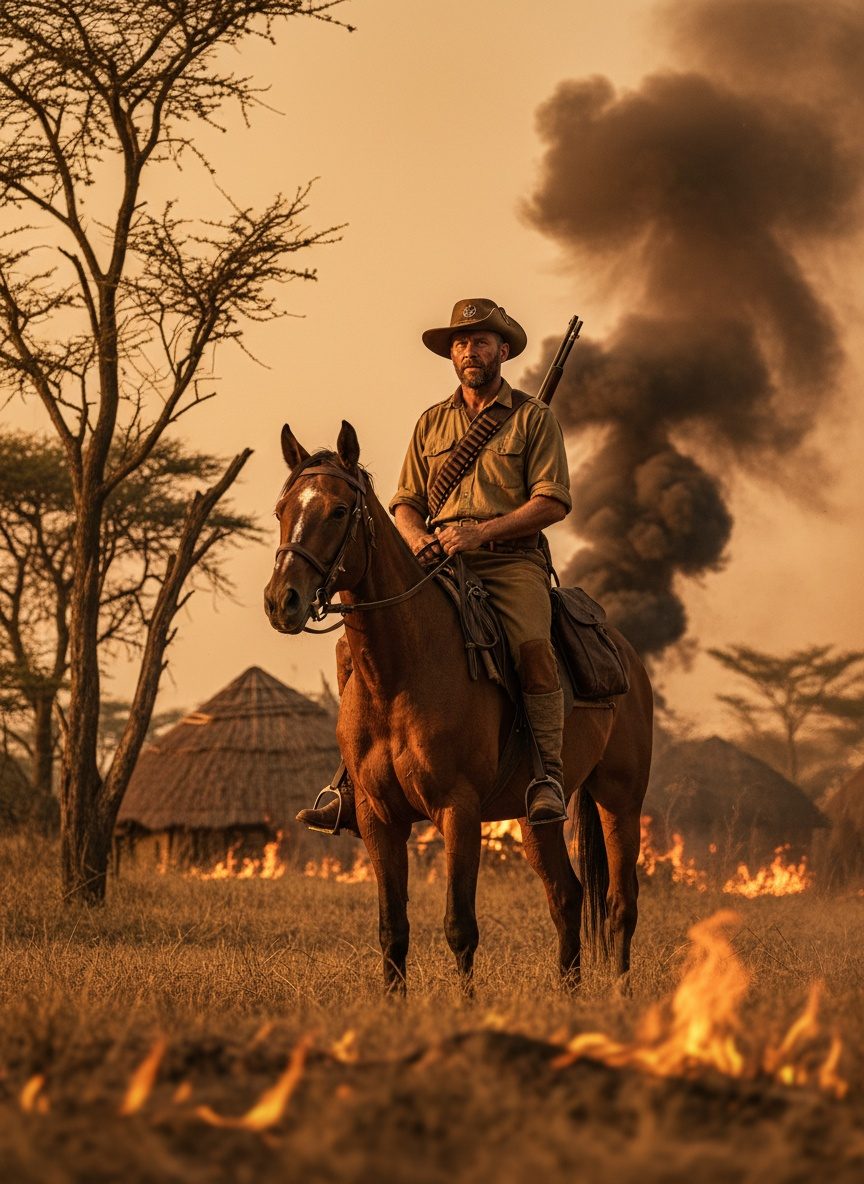
The midday sun blazed unforgivingly over the vast plains of sub-Saharan Africa. Dry, dusty winds whispered through parched grasses, carrying with them the scent of despair. Silence reigned over the landscape, where once the low bellowing of cattle was a sign of life and prosperity. In 1896, a devastating plague swept across the continent, extinguishing the heartbeat of communities that relied on their herds. This devastating silence was the work of rinderpest, a deadly virus leaving barren stretches in its wake and threatening to obliterate entire cultures. In the face of this catastrophe, a lone figure stood determined—a Scottish veterinary surgeon named Arnold Theiler.
The Catastrophe Crawls
From Egypt to the Cape, rinderpest swept with an inexorable hunger. This cattle plague, brought inadvertently by imported livestock, found no natural barriers to its spread. The disease was more than just an affliction; it was an unrelenting scourge, claiming the lives of nine out of every ten animals it infected. Without cattle, the backbone of their economies, societies fragmented under the crushing weight of famine as livelihoods vanished overnight. The ravaging of these herds meant the dissolution of wealth and nutrition, the lifeblood of communities across Africa's plains.
Prior to the calamity, pastoral cultures such as the Maasai of East Africa, famed for their deep relationship with cattle, witnessed their world teetering on extinction. The once vibrant pastoral landscape turned into a sepulchre for livestock carcasses, which fouled water sources and became breeding grounds for further illness. Anxiety morphed into desperation as the intricacies of human dependence on cattle revealed themselves in tragic clarity. Meanwhile, European powers continued their scramble for African dominion, ostensibly oblivious to the human devastation unfurling beneath their agendas.
The Man of Science in the Wilderness
Arnold Theiler was not an ordinary figure to navigate these troubled waters. Born in the serene landscapes of the Swiss Alps and trained in Edinburgh, Theiler was a man of science—a veterinary surgeon by trade but, in spirit, a relentless seeker of knowledge. The beauty of his work lay in its application; he was determined to harness science to solve real-world problems. This ethos led him to the heart of a continent in peril. Against the backdrop of the African wilderness, Theiler saw beyond the political intrigues and power plays. He saw people on the brink of collapse.
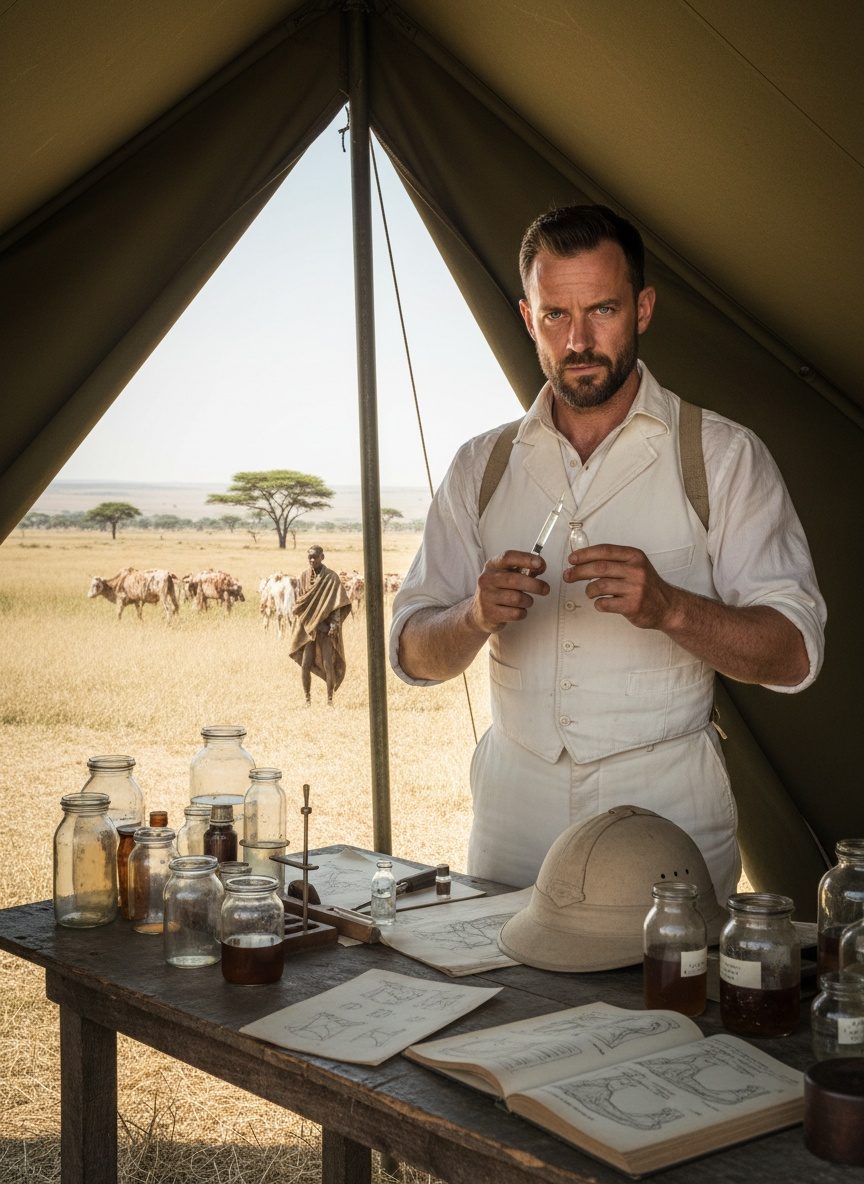
Setting up a makeshift laboratory in the African hinterland, Theiler devoted himself to the gritty reality of rinderpest. Uncompromisingly, he conducted his research, testing and retesting vaccines and treatments absorbed in the pursuit of an answer to the plague consuming African herds. With limited supplies and under harsh conditions, Theiler's laboratory was a crucible of perseverance. His contribution was emblematic of a profound intersection of science and empathy, one that sought to give back life where it was ebbing away.
The Discovery: A Glimmer of Hope
In the midst of this inferno of disease, Theiler's research began yielding results. Through painstaking trial and error, he formulated a vaccine capable of immunizing cattle against rinderpest. His vaccine employed a meticulous process of attenuation, whereby the disease virus was weakened and rendered non-lethal. When this attenuated virus was introduced into healthy animals, it provided them with the necessary immunity without the accompanying sickness.
The vaccination strategy illuminated a path out of darkness: by inoculating cattle before exposure to the plague, communities stood a chance at reestablishing their herds and, consequently, their way of life. However, disseminating this remedy was no small feat. The continent’s vastness, diverse cultures, and limited infrastructure posed significant hurdles to widespread implementation. Yet, with governmental support and the tenacity of local leaders, Theiler's pioneering work began to turn the tide.
The New Dawn
As the vaccination efforts took root, their transformative impact gradually unfurled. Herds that were once thought doomed began to repopulate the arid landscapes, resurrecting the pastoral way of life intrinsic to African identity. With each vaccinated calf, hope swelled; fertile grounds once again echoed with the symphony of livestock, a melody of survival and resilience. Theiler's work cascaded beyond cattle, influencing zoonotic disease research and laying foundations for veterinary science in Africa.
The Scotsman's achievements were more than a technological breakthrough; they were a profound restoration of balance. Cultures facing annihilation saw resurgence, and the continent witnessed a crucial iteration of empowerment through science. At a time when colonial deforestation threatened to overshadow the human narratives of the land, Theiler's intervention was a convergence of humanist science, serving both to remedy disease and foster vitality.
Reflecting on a Legacy Unwritten
The tale of Arnold Theiler serves as a profound reminder of the interplay between science and society. At a crossroads where conquest favored power over humanity, Theiler's dedication restored momentum to a continent forced into stasis. His story is a testament to the indelible impact that a solitary scientist can have in shaping history beyond the confines of textbooks. In a world where global crises continue to test our collective ingenuity, Theiler's resilience and innovation serve as a beacon—a call to navigate the challenges of our own time with compassion and intelligence, ensuring that no community faces devastation alone.