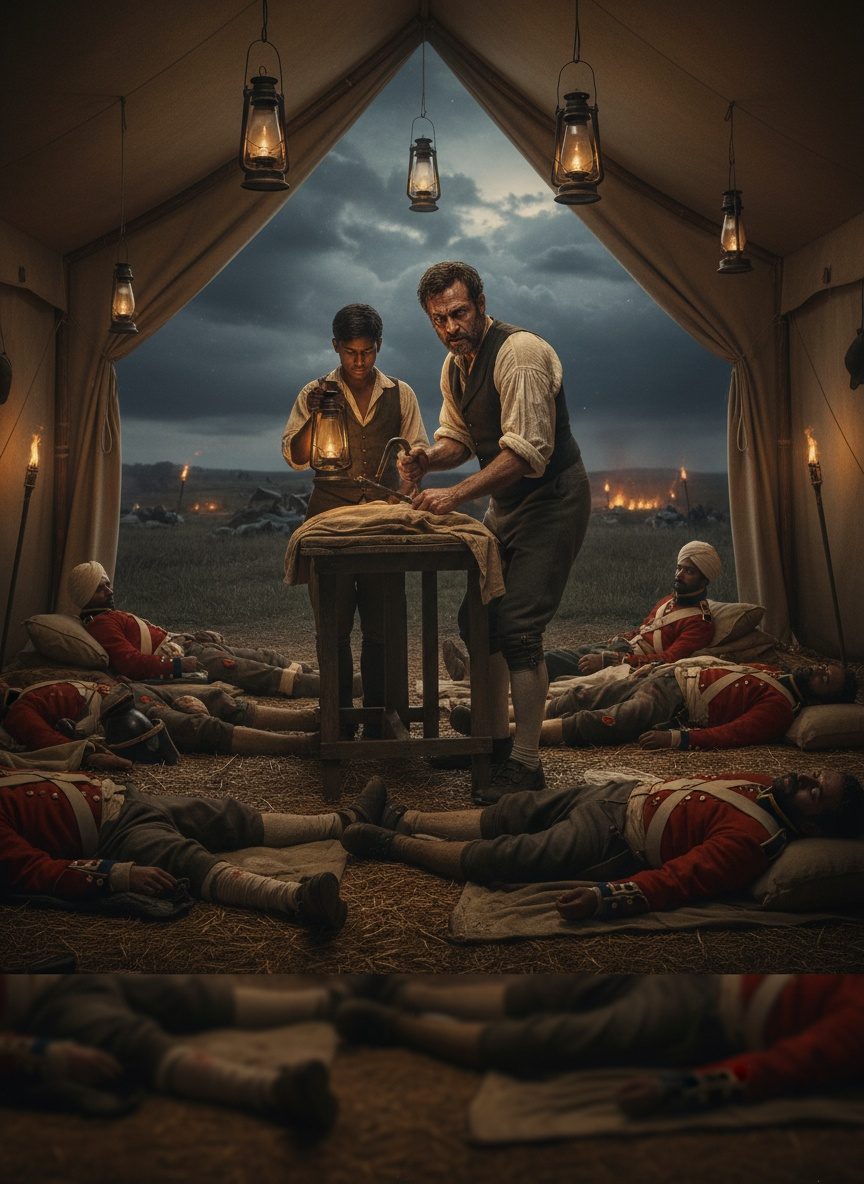
The knife glinted ominously under the flickering candlelight, its blade coated in blood. Surgeon Captain James Graham, chest heaving with exhaustion, drove it through the tough sinews of yet another soldier's leg. Outside, the night was unnaturally silent save for the sporadic cries of the wounded. The Siege of Assaye had ended, but Graham’s war against time raged through the dimly lit canvas of his field hospital.
Beneath the Searing Sun: The Battle of Assaye
The date was September 23, 1803. Arthur Wellesley, a man destined to carve his name into history as the Duke of Wellington, led his beleaguered force of 7,000 British and allied troops against a massive Maratha army numbering in excess of 40,000. It was a desperate gamble, one that would etch the Battle of Assaye into the annals of military history not only for its audacity but also for the staggering human costs that followed. Positioned strategically near the village of Assaye, the roiling clash of metal on metal and the thunderous retort of artillery filled the scorched air.
The Maratha infantry, elephants, and cavalry formed an imposing force, yet Wellesley's strategic genius and relentless assaults scattered their defenses. When the smoke cleared, the battlefield was strewn with the remnants of valor and sacrifice. It was a decisive victory for the British, a critical step in establishing their dominance over the Indian subcontinent — but it was a triumph that came at a terrible human cost. The wounded littered the ground as far as the eye could see, severed limbs and bodies bearing silent testimony to the ferocity of the conflict.
The Night’s Struggle: One Man’s Herculean Task
As dusk descended, the monumental task of attending to the wounded fell on the solitary shoulders of James Graham. A surgeon’s life in the early nineteenth century was one of grim reality, where antiseptics were largely unknown, and amputation was often the only lifeline for the battered and broken. With no time to count casualties or consider the impossible scale of his duty, Graham worked feverishly.
Patients screamed in agony as the surgeon severed limbs with unflinching precision. His hands moved like clockwork, a relentless rhythm of clamp, cut, and cauterize. Supplies were scarce, and sanitation was rudimentary at best, but Graham’s resilience and skill meant the difference between life and death for hundreds. The blood pooled around his feet, a macabre testament to the human cost of the battle's brutal calculus.
His assistants, young lads barely beyond boyhood, did what they could to hold the victims still, but it was Graham's hands that bore the weight of their fragile hopes. He drew on reserves of strength he didn't know he possessed, driven by duty and a desperate desire to silence the endless cries around him. With makeshift tourniquets and cotton bedding soaked in blood, every motion was a fight against time and infection.
The Dawn’s Light: An Unseen Hero
As the eastern horizon began its slow surrender to dawn's first light, Graham paused only long enough to wipe the sweat from his brow. His hands, trembling but determined, had amputated more than 200 limbs throughout that one harrowing night. Each life saved became an unmarked monument to his skill and endurance amid overwhelming odds.
Despite the ferocity of the battle and the dire conditions, Graham’s efforts meant that many soldiers lived to see another sunrise. His actions went largely untrumpeted, buried beneath headlines lauding martial glory, yet for those men who emerged from the nightmare sheared but alive, he was nothing short of a miracle worker. Graham's story, like those of many who do their duty in the shadows, remains a legend untold in the grand narrative of empires and militaries.
Redefining Heroism: Lessons Beyond the Battlefield
The Battle of Assaye is remembered as a pivotal point in the expansion of British control in India — a moment where Wellesley’s brilliance overshadowed the intimidating numbers of a formidable foe. But the night's quieter, more intimate tales offer a profound glimpse into another dimension of heroism. For Graham, the battle was not merely for victory, but for life — each limb taken not an end, but a grim beginning for survival against infection and further injury.
His actions cast light on the often overlooked contributions of those who tend to the wounded, who see human tragedy unfold and weave threads of hope and healing amid the chaos. It serves as a poignant reminder of the many facets of valor, oftentimes less visible, yet equally significant. In the grand tapestry of history, as empires erect and crumble, the unsung sacrifices of individuals like James Graham illuminate the quiet, relentless war fought not for conquest, but for compassion.