September 1945. The salty breeze carried the whispers of liberation across the island of Penang.
The Grey Dawn of Surrender
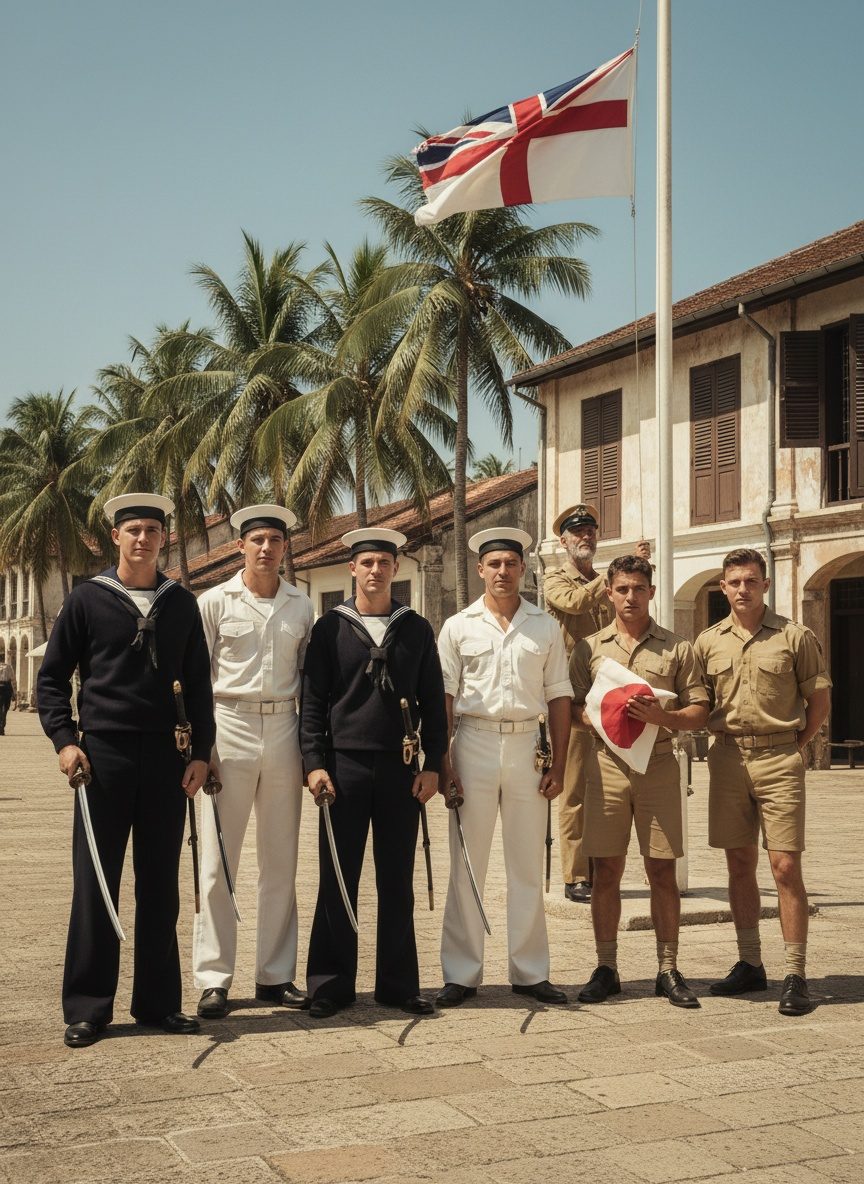
The island of Penang awoke with an air of uneasy anticipation on that pivotal September morning in 1945. For three long years, its streets had echoed with the heavy footfall of Japanese soldiers, and its walls bore the scars of wartime occupation. Yet, on this day, British uniforms and the resplendent white of their naval ensign stood poised to return these streets to a semblance of what they had been before the storm of war swept the globe.
The HMS Vengeance, a formidable aircraft carrier helming this operation, cut a stark figure against the morning mist as it anchored off the island's coast. Its very presence was a testament to the shifting tides of power—an embodiment of British naval might reclaiming its overstretched empire. Leading the charge ashore, Royal Navy sailors with firm grips on their rifles and grim determination etched into their features, symbolized a promise of restored order and peace.
The occupation’s end came not with a ferocious battle but through the quieter, yet no less dramatic, act of surrender. Japanese soldiers, the erstwhile lords over Penang's people, filed dutifully forward, laying down their arms. In poignant contrast to their erstwhile authority, they now handed over the very symbols of their power—elaborately crafted swords with hilts worn smooth by years of service. These relics of war became prized trophies for the sailors, tangible testaments to a victory hard won.
Penang: Life Under Occupation
For Penang's inhabitants, the shift from Japanese rule to British reclamation was a bittersweet turn of fate. During the occupation, the island bore witness to a myriad of hardships as the Japanese sought to integrate it into their vast empire. Food shortages, forced labor, and strict curfews painted daily life in harsh tones. As such, the returning British forces were not merely liberators but heralds of potential reprieves.
The psychological toll of the occupation had been significant; yet, Penang's resilient culture persisted. Underground networks had flourished in defiance of the oppressive regime, focusing on preserving local heritage and identity. Now, as the British resumed control, there was a cautious optimism that these efforts would continue to flourish in the burgeoning peace. The white ensign that climbed the flagpole symbolized not just a return to familiar rule but the promise of healing from years of darkness.
The Empire's Last Hoorah
For the British Empire, raising the white ensign over Penang held deep symbolic resonance. World War II had reshaped the geopolitical landscape, and the far-flung reaches of the British Empire were under scrutiny like never before. Amidst rising calls for decolonization and self-determination globally, the reclamation of Penang marked one of the last instances where British naval forces would unfurl their flag in territories occupied by foreign powers.
This moment in Penang showcased the nuances of empire restoration in the waning days of colonialism. It was a tactical success, one completed with the precision and expertise the Royal Navy had always prided itself upon, yet tinged with the awareness of impermanence. As the ink dried on documents restoring British rule, one could feel the currents of historical change already eddying at the empire's edges, promising revolutionary transformations ahead.
A Coda of Courage and Resilience
The story of the HMS Vengeance and its crew striking ashore in Penang at the close of World War II is more than a chronicle of military maneuver; it is a narrative woven from the strands of individual courage, resilience, and the indomitable human spirit. The sailors’ journey from tangible threat to victorious triumph was paralleled by the islanders’ own unwavering endurance through hardship and their hopeful embrace of liberation’s ambiguous promise.
In the broader theater of history, the drama that unfolded in Penang stands as a poignant microcosm of the shifting tides that defined the mid-20th century. While the sailors returned home to a changing Britain and the Japanese soldiers shuffled into the annals of history, the newly hoisted ensign fluttered over both remembrance and hope. Today, this little-known incident reminds us of the endless dance between empire and independence—past and future—and the human narratives carved between them.