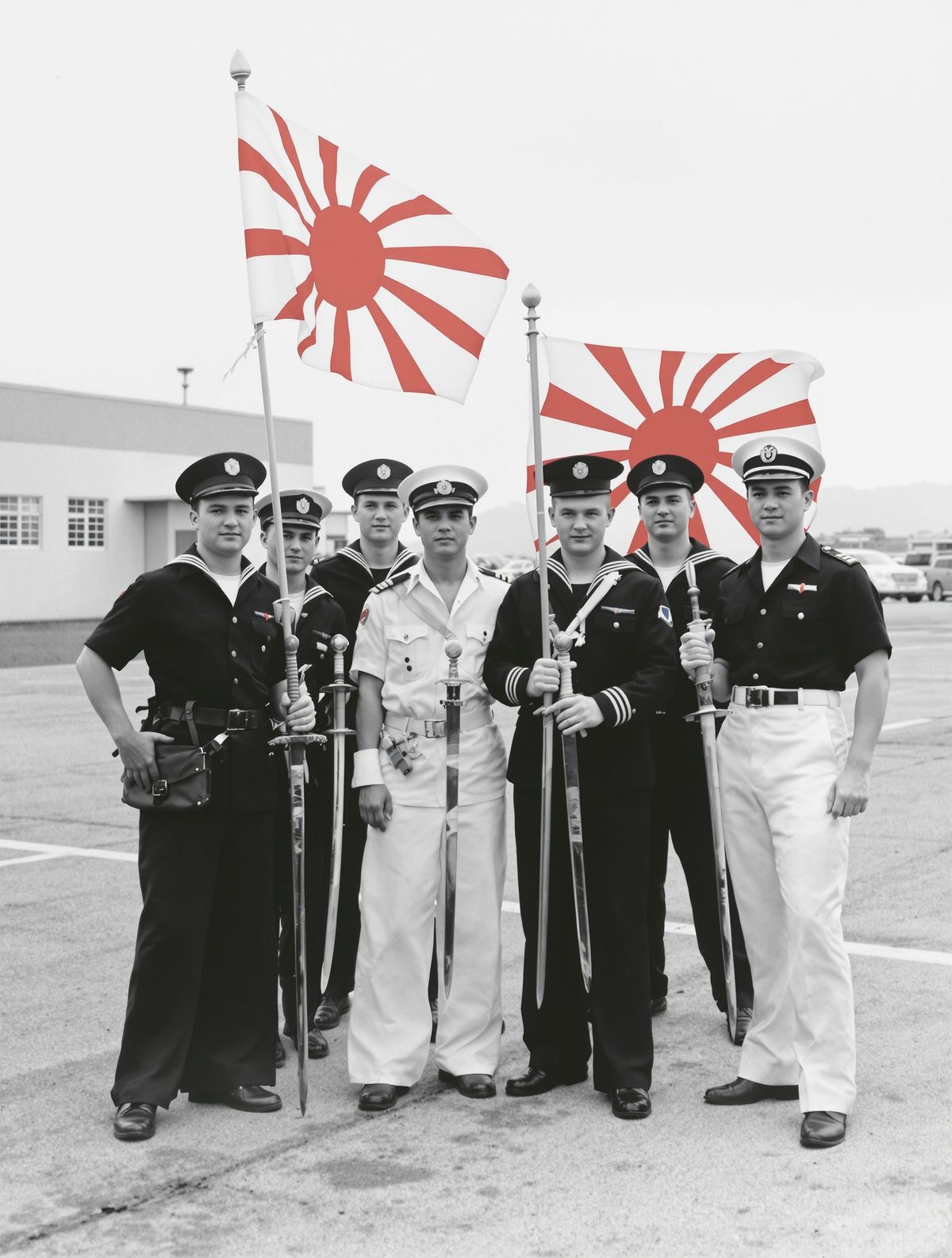
In the humid grip of a Hong Kong September afternoon in 1945, the men of HMS Indomitable felt a different kind of air — that of victory, mingled with the hopeful dawn of post-war peace. As these sailors set foot on the tarmac of the Kai Tak airfield, it wasn’t entirely foreign terrain; it was ground reclaimed, a testament to resilience and the end of an era. Around them was the physical detritus of a vanquished regime: Japanese swords, imperial battle flags, souvenirs of a conflict concluded. Their grins told a story not found in textbooks — the tale of how a mighty empire crumbled, recounted by those who lived to see its fall.
The Empire Retreats: A Brief Occupation Unraveled
On September 16, 1945, the HMS Indomitable docked in the Hong Kong Harbor, part of Operation Tiderace, the planned reoccupation following the Japanese surrender. Three years earlier, Hong Kong had fallen under Japanese control, following a brief but fierce 18-day battle in December 1941. The British Pacific Fleet's return signaled not just a military shift but the restoration of hope and order for the city’s beleaguered residents. On that September day, the presence of the Indomitable marked a potent symbol of imperial reciprocation, a naval power once again asserting its influence in a region where it had been far from guaranteed.
Despite the cheerful photographs of sailors posing with trophies, the tale of the HMS Indomitable and her crew was far from glamorized. These men had endured the Pacific's chaotic swirl, from ferocious skies over Truk to Kamikaze-laden seas at Okinawa. Their arrival in Hong Kong wasn't merely a finale; it was a crescendo to a narrative of endurance and, ultimately, deliverance.
Kai Tak: An Airstrip's Storied Past
Before it was a host to the thrust and roar of jet engines that would come in later decades, Kai Tak had a different lineage. Originally started in 1925, it had served as both a symbol of modernity and strategic military foothold. Throughout the Japanese occupation, it had been expanded using forced labor, a stark contrast against the jubilant scene witnessed by Indomitable’s crew. Here, history hovered in layers, with echoes of wartime labor lingering against the triumphant cheers of British sailors reclaiming the vast stretch of tarmac. The very airfield that once serviced coveted Zero fighters now saw the emblem of the Union Jack flutter once more.
In their hands, the sailors held more than just martial symbols; they grasped the impermanence of power itself, the transient grip of emperors judged by the capricious hand of history. These tangible trophies — swords, flags — were more than remnants; they were trophies not of conquest, but of survival."
A Photogenic Triumph? The Other Stories of Occupied Hong Kong
The smiling photo depicts victory, but beneath Kai Tak’s surface ran a deeper story. For the city’s inhabitants, the occupation years had etched scars — of starvation, brutal enforceables, and a daily litany of indignities. For many Hong Kongers, life had shrunk to survival during the harsh Japanese regime, which had ushered in martial law, curfews, and forced labor.
Remarkably, the sheer resilience of Hong Kong’s populace during this time cannot be overstated. A city that had seen its population halve virtually overnight persisted. The Japanese surrender was as much their triumph as it was that of any military power. Within this multifaceted tapestry, the HMS Indomitable's presence was a signal of reprieve and a chance to rebuild a shattered existence.
The Japanese Surrender — An Eventful Afternoon
September 1945 wasn't merely a month of transitions but of tangible peace deployments. Japan had formally surrendered on September 2 aboard the USS Missouri. However, it took until mid-September for the formalities to cascade through the Empire’s distant outskirts. British forces arrived in Hong Kong three days later. More than 23,000 Japanese troops, long entrenched, laid down their arms.
This disarmament wasn’t just symbolic; it unfolded a precise choreography of restituted sovereignty. The troops who spilled onto the Kai Tak tarmac were tentative microspecs within this broad theatre, a chromatic piece reknitting the global stage. The swords, flags, armaments — all were vestiges of a once-great empire returned to its denouement.
Why This Moment Resonates Today
The photographs of HMS Indomitable's crew at Kai Tak remain an indelible snapshot: a poignant semblance of victory’s aftermath, the emblematic face of peace. As we reflect on the echoes of war and memory, the scene challenges us to confront the essence of empires — their architecture transient and, often, their foundations built on the sands of time.
In our modern world, the story poses pertinent questions about the scars of power, the cyclical rise and fall of empires, and the human cost entwined with these chronicles. For those sailors, hugging symbols of triumph was not hubristic but emblematic of a hope reaffirmed, a world re-stitched from the vestiges of post-war rubble.
Their laughter on Kai Tak's tarmac, though historic, continues to resonate, urging us to remember not just the empires built but the resilience of those who persevered beneath them.