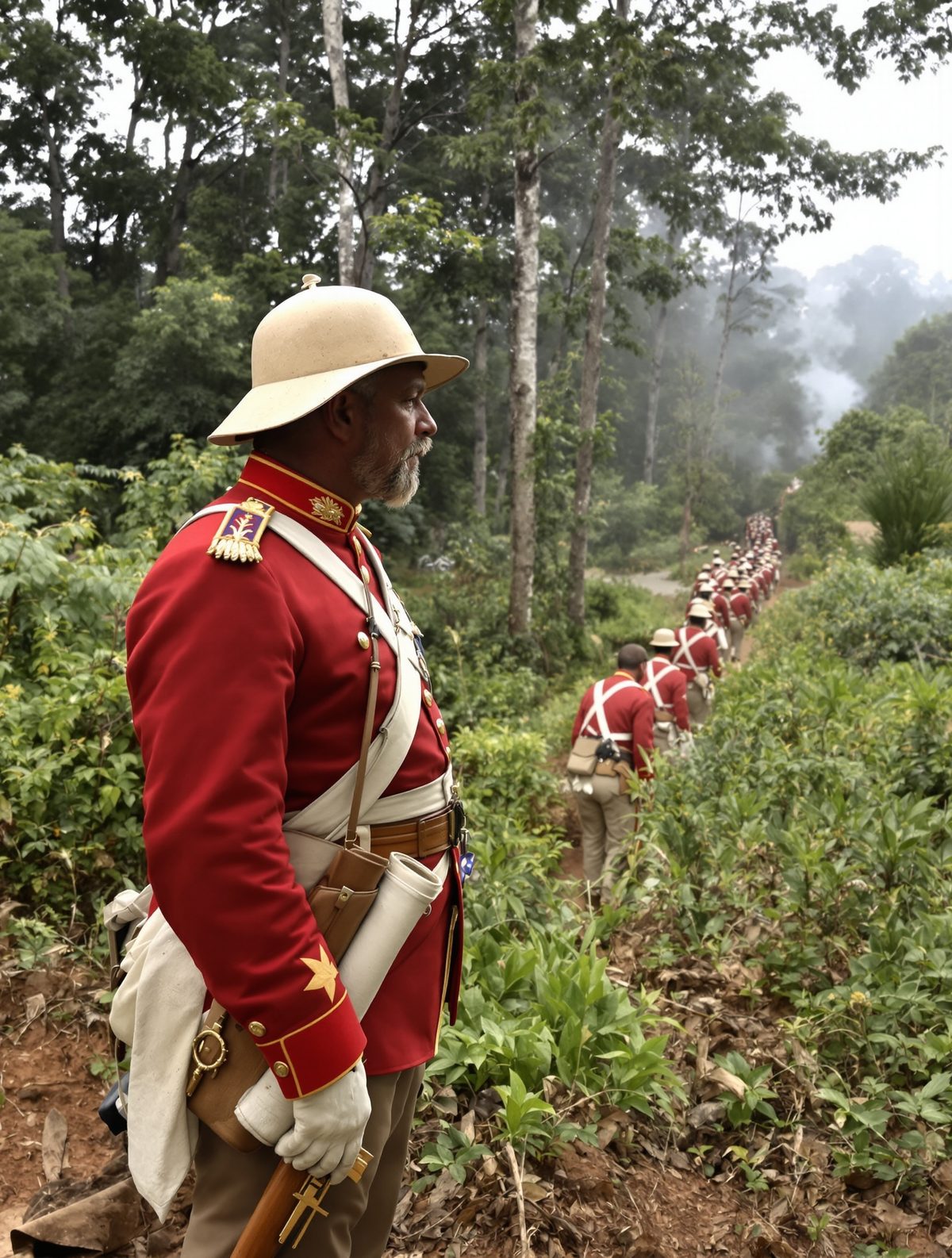
At the dawn of a new continent’s promise, entwined in lush pasturelands and pigment-rich sunsets, one audacious officer bet the future of a nation on the soft, unassuming fleece of a foreign sheep. John Macarthur, a man no stranger to controversy and combat, turned the unforgiving expanse of Australia into the lush canvas for a wool empire that would outfit half of Britain within a generation. Welcome to the fascinating tale of how one man’s improbable gamble wove the fabric of Australia’s destiny.
The Officer and the Outcast: John Macarthur's Unlikely Journey
In 1789, not long after Captain Arthur Phillip hoisted the Union Jack at Port Jackson, young John Macarthur set sail for Australia, not in glory, but in disgrace. An officer in her Majesty's army, Macarthur was already notorious for his itchy temper and sharp duelling skills—qualities that won him enemies faster than friends. But beneath his contentious exterior lay an astute mind that was perpetually hungry for opportunity, a mind that perceived the potential in adversity like few others could.
Beneath the clear skies of Sydney Cove, surrounded by the harsh discipline of a penal colony, Macarthur saw the fertile potential in the sun-drenched grasslands. Yet, his contemporaries dismissed these lands, seeing only their penal purpose and barren promise. John Macarthur, however, gazed upon these fields with a vision: sheep - but not just any sheep. He dreamed of the prized merino, famed across Europe for its unparalleled wool, a commodity as coveted as gold in Georgian Britain.
The Great Sheep Heist: Smuggling Merinos from the Cape Colony
Driven by his visions, Macarthur embarked on a daring mission that would test his mettle and cunning. By 1796, Macarthur had set his sights on the Cape Colony, known today as South Africa, a hub where the finest merinos grazed, watched over by hawkish Dutch officials and rival English traders. Through a mixture of persuasiveness and subterfuge, he managed to smuggle nine prized merinos aboard the Reliance, covertly defying colonial regulations that strictly controlled the export of these invaluable creatures.
Nine sheep—seemingly a slender herd—would change the fate of a would-be wasteland. Their journey across the sweeping waves was fraught with peril and uncertainty; the seas were no friend, and neither was the stiff imperial protocol. But his gamble would soon prove an audacious masterstroke of foresight.
Camden's Canvas: Crafting a Wool Empire
Once back in Australia, Macarthur established Camden Park, a stunning estate nestled along the fertile banks of the Nepean River. There, he cocooned his merinos in an environment where the sun-bleached grass and crisp air seemed tailored by nature itself to nurture wool of remarkable quality.
While Macarthur battled bureaucrats and influential adversaries, tussling for land grants and favor, those nine merinos flourished. Their descendants multiplied, their fleecy bounty growing as captivating and valuable as any mineral vein. By the early 1800s, through meticulous breeding and care, Camden’s merinos set a new benchmark for wool production.
The ripple effects of this success were felt across seas—the fine merino wool from Camden graced the looms of Yorkshire and powered the textile mills of Manchester, clothing half of Britain by the mid-19th century. And from those nine sheep, Macarthur laid the cornerstone of an industry that would shape the economic and cultural landscape of an entire continent.
An Empire of Wool: The Legacy Unfurled
Macarthur’s vision transcended mere agriculture; it forged a national identity. The thriving sheep stations and the burgeoning wool trade invigorated Australia. By 1850, Australia's wool exports dominated global markets—a testament to a country’s transformation from a penal outpost to a keystone of the world’s economic tapestry. The golden fleece had wreathed Australia's economy, rendering it inseparable from the island nation's burgeoning story.
Moreover, Macarthur’s industrious spirit kindled a culture of innovation and adaptation. He was a symbol of an unyielding belief in the potential of the land and people—traits that would come to define the Australian ethos.
The Threads of Today: Why Macarthur's Gamble Matters
Today, the story of John Macarthur serves as a poignant reminder of the power of visionary thinking. His gamble with merinos was not just an economic venture; it redefined destinies, challenging preconceived colonial roles and turning what many deemed a lifeless penal settlement into a land of opportunity and prosperity.
Macarthur's legacy is more than wool and wealth. It’s a testament to the transformative power of audacious vision and the belief that something as unassuming as a sheep can indeed shape the destiny of a nation. As today’s world faces its own challenges of resource management and sustainable development, Macarthur's story resonates uniquely, reminding us that sometimes the boldest transformations come from the most unlikely sources.