He had never landed a ship on Tristan da Cunha before. Yet, with the weight of islands' only hope on his shoulders, Commander Moore had to succeed.
The Isolated Archipelago's Dilemma
In June of 1847, the inhabitants of Tristan da Cunha, the most remote inhabited archipelago on Earth, found themselves in dire straits. Nestled in the vast South Atlantic Ocean, some 2,400 kilometers from the nearest mainland, the island had long been isolated yet self-sufficient. However, a mysterious illness swept through the small population, threatening to wipe out the community. With no qualified medical personnel and no means to evacuate the sick, the islanders’ cries for help could only travel as fast as the unpredictable winds and currents allowed. The arrival of the disease set in motion a chain of events involving the Royal Navy, the mighty Atlantic, and one sloop's perilous mission.
Charting the Course for Assistance
The plea for help eventually reached Britain, and the Admiralty quickly dispatched HMS Plover, a Royal Navy sloop under the command of Commander Richard Moore. His orders were simple on paper yet complex in execution: deliver medical assistance and essential supplies to Tristan da Cunha, ensuring the survival of the isolated community. However, there was a significant wildcard — the rough, often relentless ocean swells. These challenged even the most seasoned navigators and added a layer of peril to an already daunting task.
Moore, a man of methodical determination, understood the gravity of the mission. The Plover had not been designed for such operations, and the island’s lack of a harbor meant landing without proper facilities — an endeavor perilous under the best circumstances and suicidal in adverse conditions. Despite this, Moore knew a delay could spell disaster for the inhabitants.
The Perilous Approach
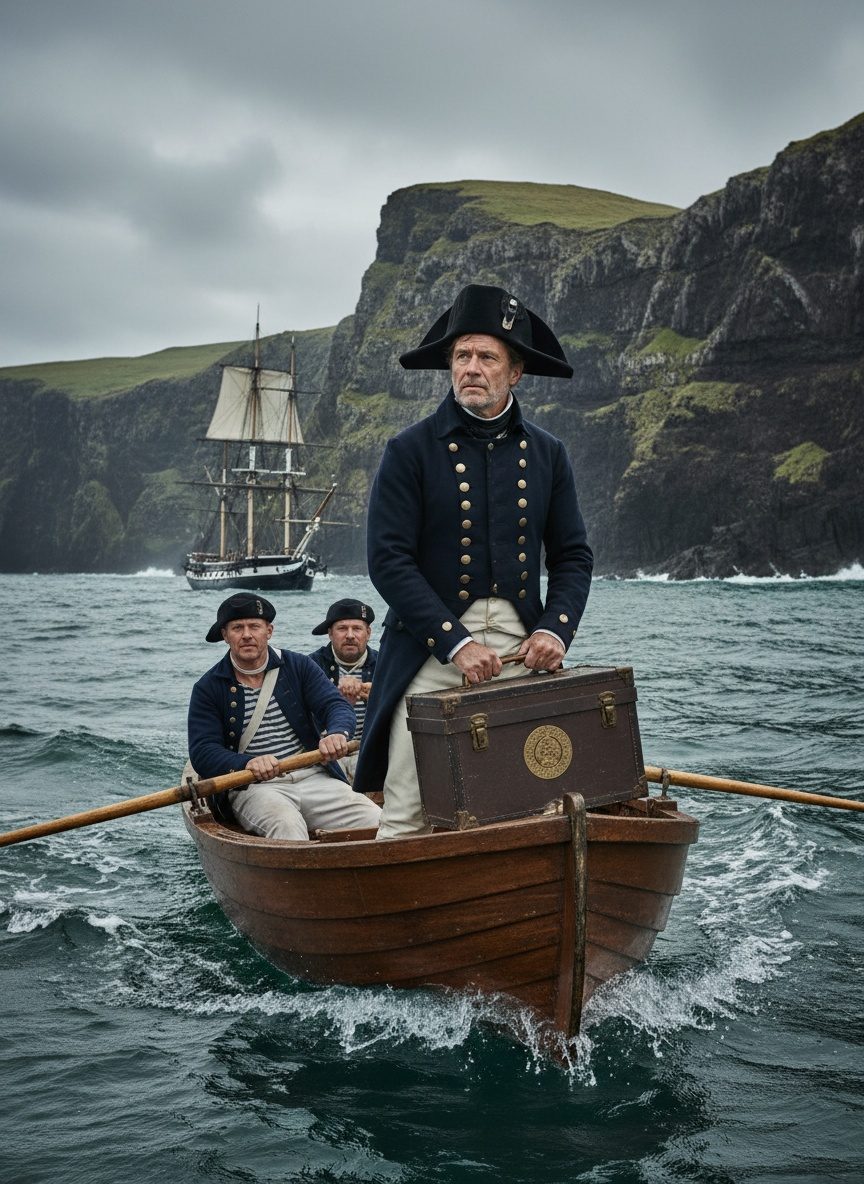
As HMS Plover neared Tristan da Cunha, the crew was met with intimidating scenes that would dishearten even the stoutest sailor. Towering waves slammed against rocky cliffs, and a lack of visible landing sites posed immediate problems. Recognizing the impossibility of using a boat, Moore and his men devised a daring plan: supplies and medical personnel would be ferried ashore using small craft at the briefest lull in the waves.
The operation required precision. Timing was everything, as ocean swells obscured the rocky shores, disappearing only for fleeting moments. The crew, guided by some of Moore’s boldest officers, navigated the makeshift landing. Onboard was a skilled surgeon, crucially needed by the afflicted islanders, along with crates of medicine and other essential supplies like food and clothing. It was a nerve-wracking day as the crew played a relentless game with the tide and currents, sprinting against nature's clock.
Ashore at Last
By nightfall, the sloop's mission was accomplished — against the odds, the supplies were handed over, and the surgeon began his work in earnest. Islanders, who had watched with bated breath, were overwhelmed with gratitude for the arrival of help. With scant resources to combat the illness, the expert medical assistance proved indispensable. It was not just a supply run; it was a lifeline, intricately woven with the hope of a community on the brink of annihilation. Despite the ordeal, Commander Moore and his crew had reinforced their duty to the distant reaches of the Empire, affirming a bond that extended on invisible, salty threads across vast oceans.
The Impact and Implications
The intervention of HMS Plover and its resilient crew not only saved a struggling population from the grasp of disease but also emphasized the interconnectivity and responsibility inherent to a 19th-century world expanding through maritime prowess. Tristan da Cunha's predicament highlighted the vulnerabilities faced by the island's inhabitants, epitomizing the struggles of remote living where external assistance could be a matter of life and death. Through the courage and ingenuity of those who served aboard the Plover, the world was reminded of the vital role humanity plays in extending aid, crossing boundaries and confronting natural adversities.
This forgotten episode of maritime history beckons us to ponder not only the technological and logistical advancements since then but also the unyielding will of those faced with monumental challenges. In today’s interconnected age, the story echoes a resounding truth: no landmass, however isolated, truly stands alone in the face of struggle, provided there exists the courage to reach across vast distances.