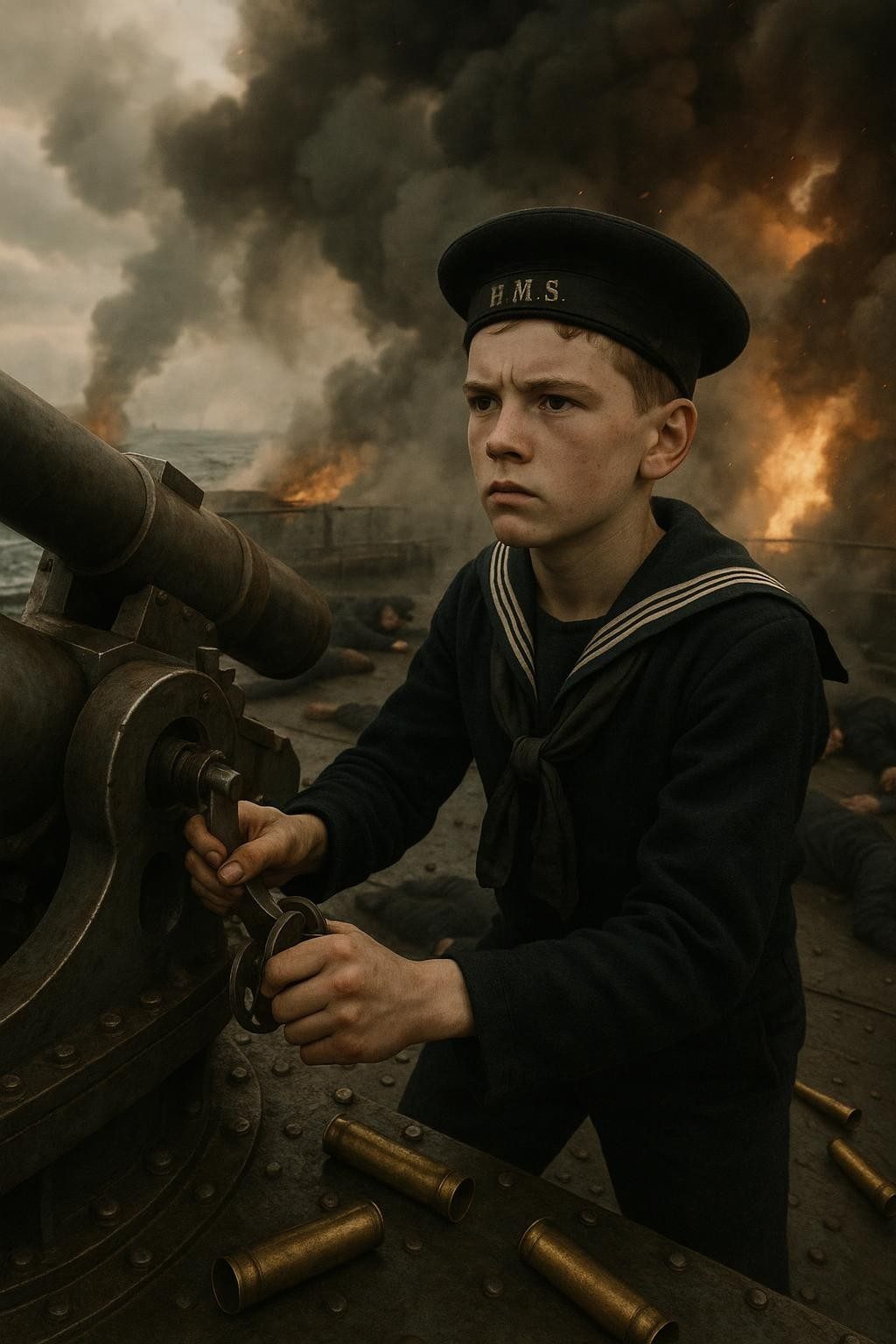
The blast echoed across the steel expanse of the gun deck, where acrid smoke curled into every crevice, stinging eyes and choking lungs. Shrapnel whistled through the air as HMS Chester lurched violently under the relentless onslaught of enemy fire. Amidst the chaos, young Jack Cornwell stood alone at his gun, the last living soul in a post meant for many. Immune to the pandemonium, he clutched his station with a resolve forged in the fires of youth and duty.
The Grim Test of Duty
On that fateful day in May 1916, the Battle of Jutland had reached a crescendo of fury. This was no ordinary skirmish but the grand stage where the fate of empires played out its dark drama. For Jack Cornwell, the youngest amidst seasoned sailors, the day had begun with the same focus and routine typical of a seafaring life. Yet, as HMS Chester plunged into the heart of the battle, every boyish notion of adventure dissolved into the grim reality of war.
Suddenly, Jack's world narrowed to the cacophony around his gun—a machine thrumming with the rhythm of life and death. One by one, his fellow crew members fell, swallowed by the smoke and chaos. Despite the carnage, Jack remained steadfast, his training overriding terror. He had been taught to await further orders, and so he stood, a lone sentinel against the grim tide.
A Moment Seared in Time
Every second stretched into an eternity as the ship listed and weaved through the fray, the enemy relentless in their barrage. Jack's hands, though trembling, found purpose in the machinery of his gun. As shells tore through the deck, his heart pounded a furious counterpoint to the guns of war. In his mind, the words of his officers rang clear: "Hold your position. Await orders."
And so Jack held. Unbeknownst to him, his valor would soon become legend—a quiet testament written in the silent refusal to leave his post. Even as a shell ravaged his own body, sending searing pain coursing through his being, he remained unyielding. Those who later stumbled upon him found Jack still upright, eyes unwavering, hands poised to fire upon command that would never come.
The Relentless Tide of Battle
The Battle of Jutland was not merely a confrontation of navies but a crucible of human endurance. Creeping dread accompanied every wave that crashed over the bow, mingling with the cries of the wounded and the clangor of metal upon metal. For Jack Cornwell, the realities of naval warfare quickly stripped away any romantic facade. It was a baptism by fire, with the stakes escalating to existential heights.
In the distance, ships vanished in clouds of smoke, while towering plumes of water marked near misses that sprayed salt rain across the deck. It was within this violent theatre that Jack Cornwell became something far larger than a simple boy from Leyton—a symbol of untapped courage amidst overwhelming adversity. Oblivious to the accolades he would posthumously receive, Jack clung to the one truth that he knew: duty.
A Hero's Legacy
As the wounded vessel limped back from battle, Jack Cornwell was discovered, still clinging to life amidst the debris. His injuries were beyond the skill of medics to heal, and he succumbed within just a few days. Yet, his legacy was already unfurling across the waves. In an age where heroism was lauded from the pulpits of culture, his story captured the imagination and heart of a nation searching for beacons in the storm.
A posthumous recognition came in the form of the Victoria Cross—a testament to Jack's unfaltering resolve and selflessness. While many hailed him as a hero, his life and death stood for something far more intangible. In his unwavering duty, Cornwell reflected the fortitude of an entire generation; a collective stoicism etched into the annals of history beneath the tumultuous tides of war.
The Undying Echo
In recounting the final stand of Jack Cornwell, we delve into more than just a singular narrative of bravery. His story resonates through time not simply as a testament to youthful courage, but as an enduring reminder of the human spirit's capacity to confront inexplicable horrors with resolve and dignity. Jack Cornwell's decision to remain at his gun, to maintain his vigil amidst hopelessness, speaks to the silent strength that thrives beneath the surface of hardship.
In our rush to chronicle victors and victories, we often overlook the quiet defiance of those like Jack Cornwell—the boy who stood, alone and gravely wounded, awaiting orders that would never arrive. In his innocence and resolve, he revealed to the world a profound, if unintended, truth. The legends they left out of the textbooks continue to whisper through history, invoking reflections on courage, duty, and the enduring spirit of humanity itself. Jack Cornwell, standing steadfast in the chaos of HMS Chester, remains an everlasting question to us all: what legacy shall we choose to leave in the face of our own battles?