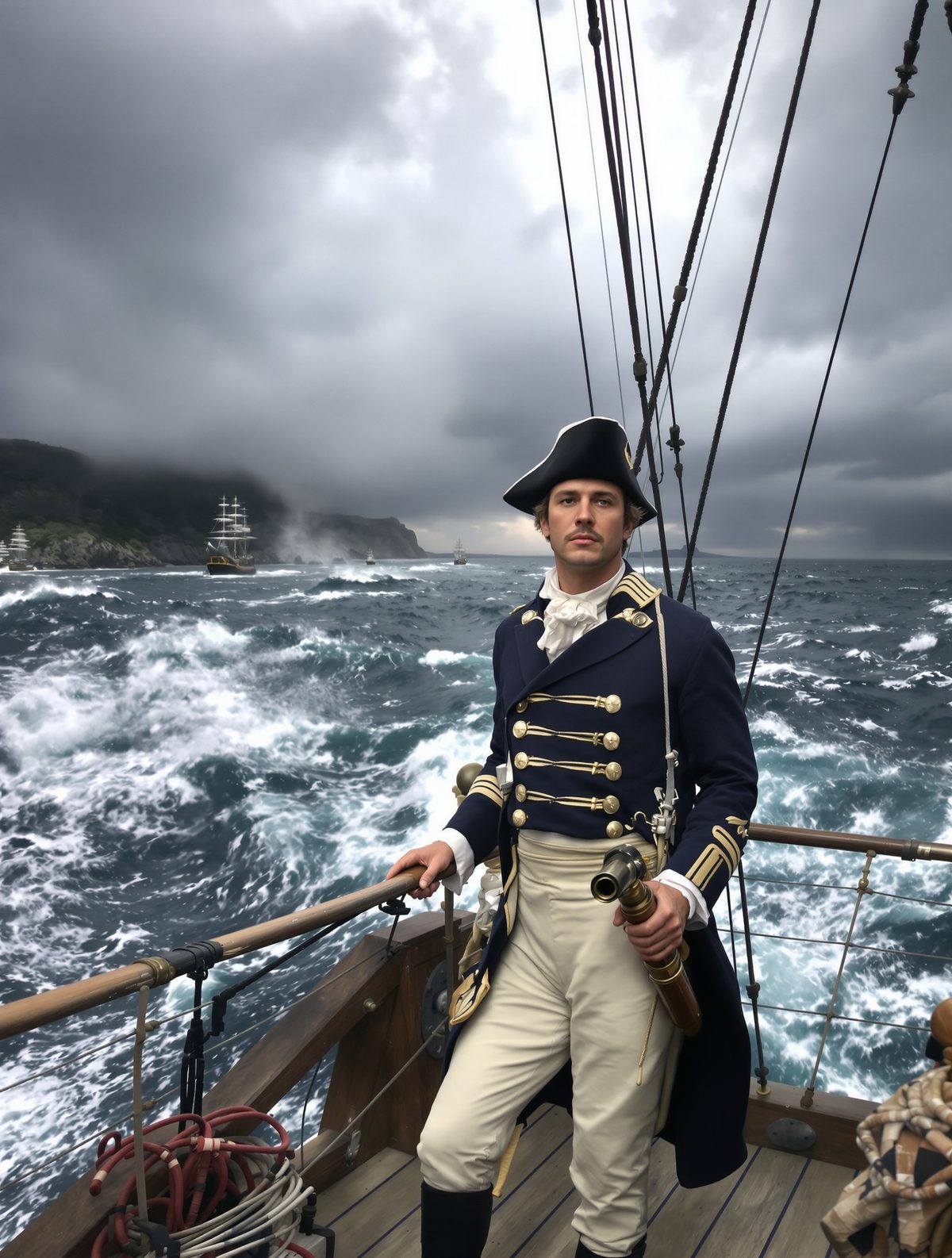
The acrid smoke rising from Canton harbor on June 3, 1839, carried more than the stench of burning opium—it carried the death of Chinese sovereignty. For twenty-three days, Commissioner Lin Zexu had overseen the systematic destruction of 2.6 million pounds of British opium, worth more than the annual budget of some European nations. Captain Charles Elliot, Queen Victoria's trade superintendent, stood watching two decades of Company profits literally go up in smoke. Neither man realized they were lighting the fuse for what would become known as China's "Century of Humiliation."
What started as a moral crusade against drug addiction would end with British gunboats forcing open China's ports, foreign powers carving up Chinese cities, and the Qing Dynasty's 268-year reign beginning its slow, agonizing collapse. The irony was bitter: an empire that had invented gunpowder, the compass, and paper money would be brought to its knees by a handful of steam-powered warships and a trade dispute over poison.
The Devil's Bargain: How Tea Created an Opium Empire
Britain's opium problem began, oddly enough, with its tea obsession. By the 1830s, the British Empire was consuming 30 million pounds of Chinese tea annually—enough to brew 2.4 billion cups. But China wanted only one thing in return: silver. Lots of it. The Middle Kingdom had no interest in British woolens, manufactured goods, or trinkets. This created a massive trade deficit that was draining Britain's silver reserves at an alarming rate.
The East India Company found their solution growing in the poppy fields of Bengal. Opium had been trickling into China for centuries, but the Company transformed it into an industrial-scale operation. By 1838, British merchants were smuggling 40,000 chests of opium annually into China—each chest containing 140 pounds of the processed drug. That's roughly 2,800 tons of opium per year, enough to supply an estimated 4 million Chinese addicts.
The economics were breathtaking in their cynicism. The Company bought raw opium from Indian farmers for about $25 per chest, then sold it to Chinese smugglers for $500-700 per chest—a markup of nearly 3,000%. This "Country Trade" (technically conducted by "private" merchants to give the Company plausible deniability) had reversed the silver flow entirely. By 1838, China was hemorrhaging 6 million silver taels annually to feed its growing addiction.
The Mandarin Who Said No: Lin Zexu's Impossible Mission
Emperor Daoguang had watched his empire's silver drain away while his people succumbed to what he called "foreign mud." In December 1838, he appointed Lin Zexu, the Governor-General of Hunan and Hubei provinces, as Imperial Commissioner with extraordinary powers to end the opium trade once and for all. Lin was an inspired choice—a brilliant administrator, poet, and scholar who had successfully eliminated opium in his own provinces.
Lin arrived in Canton on March 10, 1839, with the confidence of a man who had never failed an imperial mission. What he found shocked him. The Pearl River was clogged with opium ships flying British, American, and Portuguese flags. Chinese smuggling boats operated in broad daylight. Corrupt officials who should have been enforcing imperial edicts were instead taking bribes from foreign dealers.
But Lin's first move revealed how little he understood about the forces arrayed against him. On March 18, he sent a letter directly to Queen Victoria, appealing to her moral conscience: "Your country lies 20,000 li away; but for all that the Way of Heaven holds good for you as for us, and your instincts are not different from ours; for nowhere are there men so blind as not to distinguish between what brings profit and what does harm." The letter would take six months to reach London—by which time the war would already be over.
The Great Destruction: When £2 Million Went Up in Smoke
Lin's patience ended on March 24, 1839. He ordered the foreign factories in Canton surrounded by Chinese troops and declared that no foreigner would be allowed to leave until every chest of opium in the Pearl River was surrendered. Captain Charles Elliot, Queen Victoria's Superintendent of Trade, found himself trapped with nearly 300 British subjects in what amounted to a luxurious prison.
For six tense weeks, the standoff continued. Lin had cut off food supplies and withdrawn all Chinese servants from the foreign quarter. Elliot realized that Lin was deadly serious—and that the Imperial Commissioner had the military force to back up his demands. On May 27, Elliot made a decision that would change history: he ordered all British merchants to surrender their opium stocks, promising compensation from the British government.
The numbers were staggering. British merchants handed over 20,283 chests of opium—roughly 1,400 tons of processed drugs worth £2 million (equivalent to about £200 million today). American traders contributed another 1,540 chests. Lin had captured the largest drug seizure in human history.
What happened next became the stuff of legend. On June 3, 1839, at Humen beach near Canton, Lin began the systematic destruction of the opium. Chinese workers dug three massive trenches, each 150 feet long, 75 feet wide, and 7 feet deep. They lined the trenches with bamboo and stones, then filled them with seawater. The opium was mixed with salt and lime to ensure complete destruction, then flushed into the Pearl River. For twenty-three days, the beaches reeked of burning drugs while Lin performed daily ceremonies to apologize to the Sea Dragon King for polluting his waters.
When Diplomacy Died: The Merchant Who Started a War
Lin believed he had won a great victory. The foreign merchants seemed cowed, the opium trade had stopped, and Chinese sovereignty had been asserted. But 7,000 miles away in London, Lord Palmerston was reading Elliot's reports with mounting fury. The Foreign Secretary didn't particularly care about opium—what infuriated him was that a Chinese official had dared to detain British subjects and destroy British property.
The spark that ignited the war came from an unexpected source: a drunken British sailor named Lin Weixi (ironically sharing the Commissioner's surname). On July 7, 1839, British sailors from HMS Carnatic got into a brawl with Chinese villagers in Kowloon. Lin Weixi was beaten to death. Commissioner Lin demanded that the British hand over his killer for trial under Chinese law—a demand that Elliot refused, knowing that Chinese justice meant certain execution.
This seemingly minor incident became the casus belli for the First Opium War. Elliot's refusal to surrender British subjects to Chinese justice gave Palmerston exactly the pretext he needed. On February 20, 1840, the British House of Commons voted 271 to 262 to authorize military action against China—one of the closest war votes in British parliamentary history.
Gunboat Diplomacy: When Steam Met Silk
The British expeditionary force that arrived in Chinese waters in June 1840 was small but revolutionary. Sixteen warships, four steam-powered gunboats, and 4,000 troops would prove sufficient to humble an empire of 400 million people. The secret weapon wasn't numbers—it was technology that the Chinese had never encountered.
HMS Nemesis, the first iron-hulled steamship ever used in warfare, could navigate China's shallow rivers where traditional sailing ships feared to venture. Its 32-pound guns could punch through Chinese war junks like paper. At the Battle of Chuenpee on January 7, 1841, Nemesis destroyed eleven Chinese war junks without suffering a single casualty.
The war's most symbolic moment came at Zhenjiang in July 1842, when British forces captured the ancient city that controlled the Grand Canal—China's economic lifeline. Commissioner Lin, demoted and exiled to Xinjiang for his "failure," could only watch from the western frontier as everything he had fought to preserve crumbled.
The Treaty of Nanking, signed on August 29, 1842, aboard HMS Cornwallis, began China's Century of Humiliation. Britain gained Hong Kong "in perpetuity," forced open five treaty ports, extracted £21 million in reparations, and established the principle of extraterritoriality—Chinese law would no longer apply to foreigners on Chinese soil.
The Bitter Harvest: Why This Still Matters
Commissioner Lin's bonfire at Humen Beach burned for just twenty-three days, but its consequences smoldered for over a century. The Opium Wars shattered China's isolation, triggered the Taiping Rebellion (which killed 20 million people), and established the template for Western imperialism across Asia. The phrase "Century of Humiliation" still appears in Chinese textbooks today, teaching schoolchildren that foreign powers once carved up their homeland like a melon.
Perhaps most tellingly, when Chinese President Xi Jinping speaks of national rejuvenation and the "China Dream," he explicitly references the need to overcome the humiliation that began in Canton harbor in 1839. The opium that Lin Zexu destroyed represented more than a drug trade—it symbolized China's helplessness in the face of Western industrial power. Today, as China projects naval force in the South China Sea and challenges American hegemony, it's worth remembering that this great power competition began with tea, opium, and the smoke rising from a Mandarin's righteous bonfire.
The irony is profound: Lin Zexu, who tried to save Chinese sovereignty by burning British opium, inadvertently triggered the chain of events that destroyed it. Sometimes the right moral choice leads to catastrophic unintended consequences—a lesson as relevant in our interconnected world as it was in the age of gunboat diplomacy.