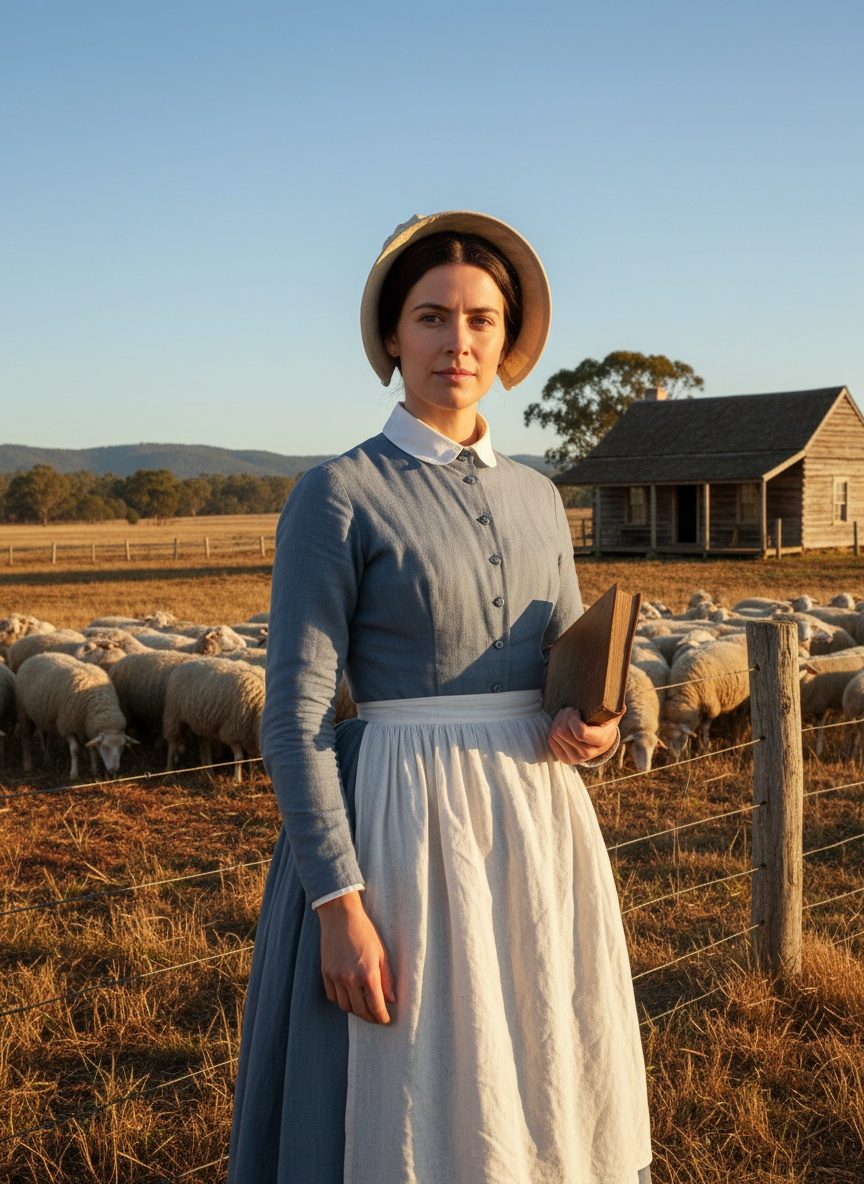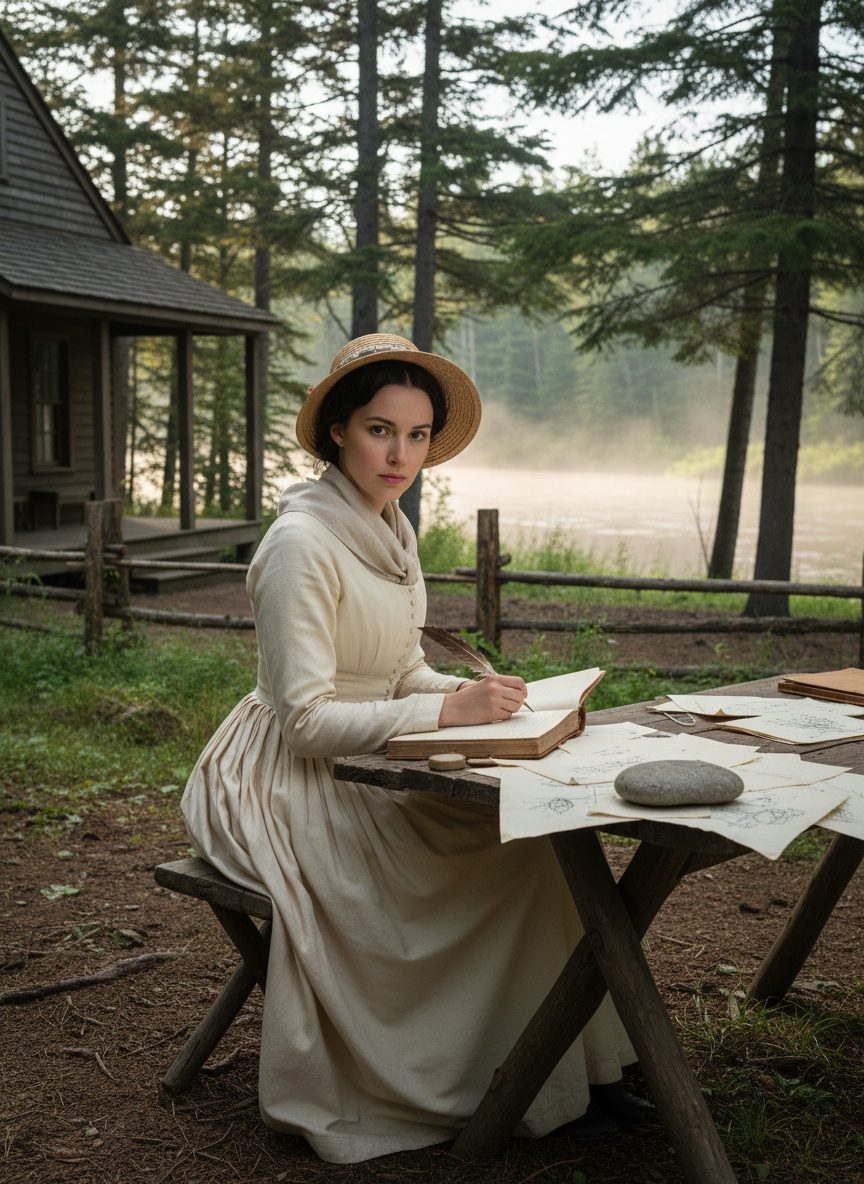
The call of the loon echoed across the mirrored surface of Lake Ontario, cutting through the morning fog with its haunting cry. Elizabeth Simcoe paused, breathless, the weight of the sketchbook heavy in her tired hands. The wilderness, grand and unyielding, surrounded her like a vast, untamed tapestry unfolding in every direction. Here, under the canopy of the Canadian frontier, she was alone. But this solitude was not without purpose. Each stroke of her pencil captured the spirit of an emerging colony, forming a visual legacy that would echo through the annals of Upper Canada's history.
Pioneering the Unknown
When Governor John Graves Simcoe succumbed to a fever in 1796, he left behind more than a nascent province; he left his wife, Elizabeth, as its steadfast chronicler. Upper Canada was still a fragile establishment carved from the sheer wilderness, teetering on the brink of uncertainty. The colony was raw—tents dotting the banks of the Thames River, wooden posts marking the emergence of a new world. Without hesitation, Elizabeth rose to the challenge of recording this land's infancy, driven by an unyielding spirit that her contemporaries could hardly fathom.
Elizabeth's canvas was the wilderness itself, her sketches providing a detailed map for future settlers. Her depictions captured more than geography; they offered a glimpse into the life of early colonists and the rich tapestry of a land poised on the edge of history. With pen and brush, she immortalized the soaring pines and placid waters, along with the brief flashes of humanity—a market bustling in the shadow of Fort York, children splashing in streams, traders bartering with indigenous people at the forest's edge.
Her artistic pursuits were not mere hobbies; they were acts of survival. Elizabeth’s journals reveal a woman with the tenacity to transform rugged terrains into welcoming vistas, full of promise. Writing by candlelight amid the calls of nocturnal creatures, she documented practical maps and vivid descriptions that pioneers would later rely on. The diary entries brimming with botanical observations and geographic marvels were more than logs of a settler's routine; they were the chronicles of a land rediscovering itself through the eyes of a determined woman alone.
Drawn from Nature
Navigating the ebbs and flows of Upper Canadian life required ingenuity and adaptability. Elizabeth Simcoe embraced both with a grace that belied the hardship around her. Her mastery of light and shadow in drawings offered a counter-narrative to the harsh realities of colonial life: floods, droughts, and the often-overlooked skirmishes between settlers and the land. Nestled in these sketches was the key to unlocking the intricate relationship between European newcomers and the indigenous peoples who called this land home.
The intimate connection she forged with nature extended beyond her sketches. Elizabeth’s writings reveal her deep respect for indigenous culture and knowledge—a perspective rare among her peers. Her meetings with local tribes, guided by genuine curiosity, provided insights that were as strategic as they were compassionate. These interactions played a pivotal role in her understanding of the natural world and its profound influence on the success of the fledgling colony.
But Elizabeth’s contributions went further. They served as an unofficial blueprint for future governance, her observations employed by subsequent leaders who would follow in her husband’s path. Her works bridged the old world with the unexplored, weaving connections that informed diplomatic and economic approaches which were essential to Upper Canada’s survival and growth. The impressions she made upon the landscape and its diverse inhabitants were indelible, offering future generations a heritage both visual and visceral in its depth.
The Unseen Hand
Isolated but undeterred, Elizabeth Simcoe crafted a narrative beyond the conventional tale of the colonial wife. While history might have painted her role as secondary, her contributions were in many ways foundational. She forged a path for women in a society that would not acknowledge their intellectual or artistic influence, even as her husband lay ill, far across the Atlantic. Her perseverance rendered her more than a silent partner; she was an architect of Canadian identity, quietly but profoundly shaping the world around her with every leaf-peeked page and meticulously penned map.
Though many textbooks ignored her impact, Elizabeth’s art and words have persisted. They have endured not as mere relics of a bygone era but as vibrant documentation of a land that was, and will always remain, both familiar and alien. Her recollections continue to challenge the simple narrative of a land conquered, highlighting instead the indelible beauty of a place discovered anew. In one woman’s journey to define and portray the frontier, we find the essence of what we now understand as Canada—a nation built not just on the broad shoulders of powerful men, but also upon the quiet resilience of women like Elizabeth Simcoe.
The wilderness colony she captured in sketches and letters is long gone, developed into the buzzing metropolises we know today. Yet her legacy, etched in graphite and ink, beckons us to linger and look closer. It reminds us that history is not just the tale of the victors, nor is it solely documented in grand deeds or loud proclamations. Ergently hidden in the understudies, in the softer strokes and salt-stained pages, lies the richest vein of our human past—a tribute as significant as any monument, hewn in silence and strength.