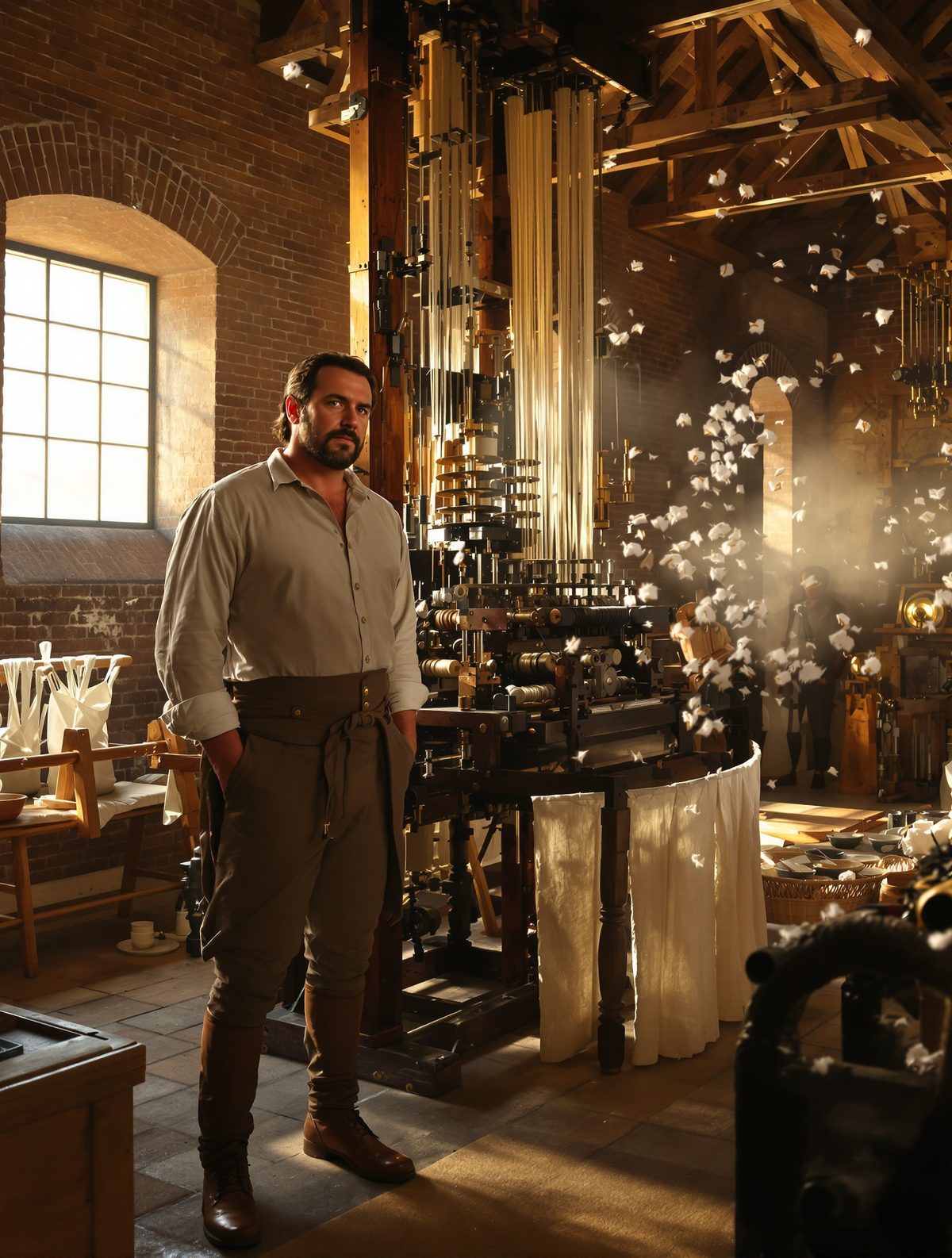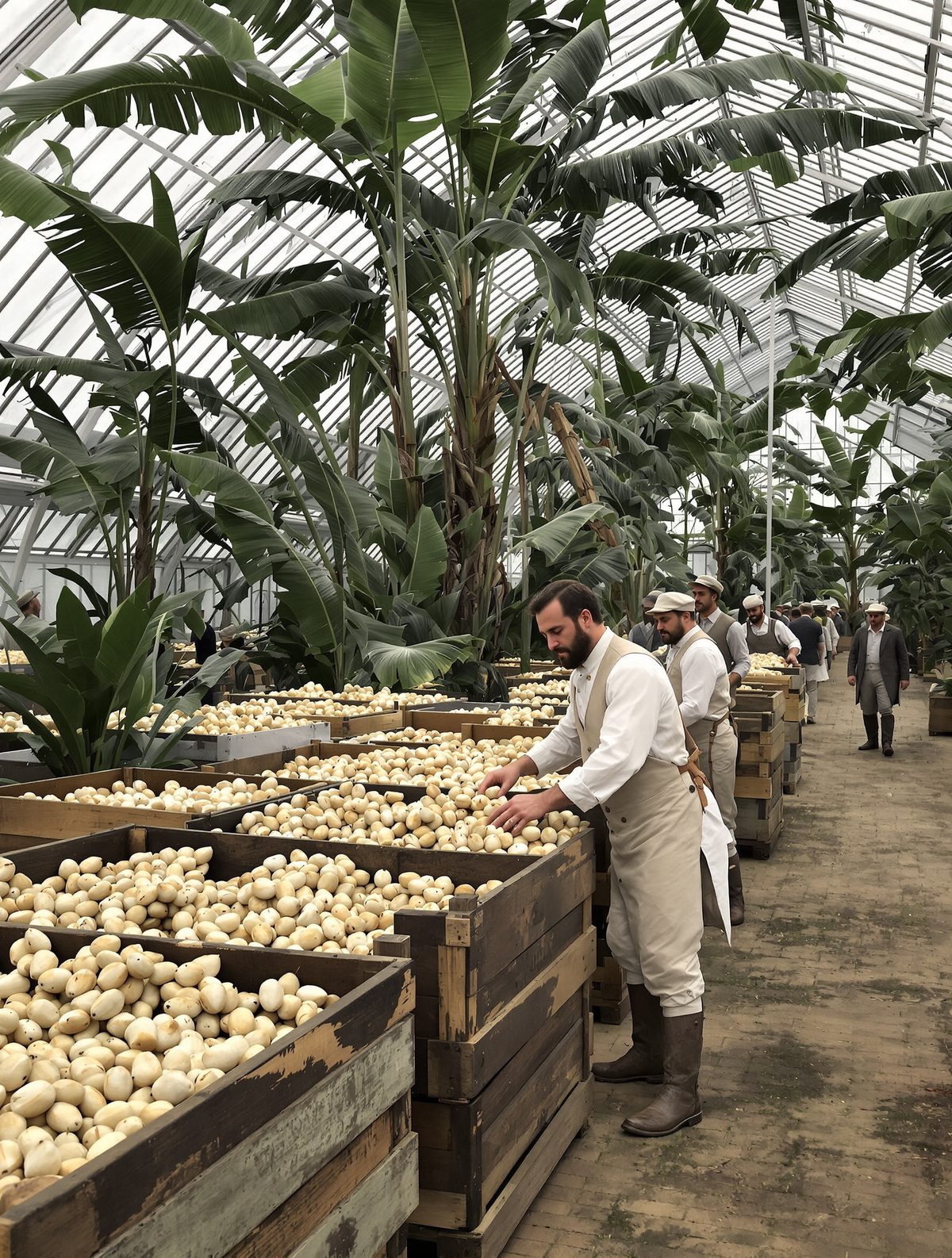
Imagine a bustling Georgian-era village, alive with the rhythmic heartbeat of craftsmanship and innovation. It's the dawn of the Industrial Revolution in England, a time of great change and opportunity. Against this backdrop, we meet Josiah Wedgwood, a man who, despite physical adversity, would craft not just pottery, but a revolution. This is the tale of how a one-legged potter became a titan of industry and a pioneer of modern marketing.
The Unlikely Potter
The story begins in Burslem, Staffordshire, in 1730. Born into a family of potters, Josiah Wedgwood seemed destined to tread the same path. Fate, however, had a different plan. At nine years old, smallpox struck, leaving Josiah with a disabled leg, ill-suited for the foot-pedaled potter's wheel. Yet, this setback was a catalyst rather than a curse. Denied the wheel, Wedgwood's inventive mind turned elsewhere, setting in motion events that would alter the course of ceramics forever.
While his peers crafted pots, Wedgwood's mind spun with ideas brighter than Burslem's kilns. He embraced experimentation, seeking new glazes and techniques. His resilient spirit led him to partner with Thomas Whieldon, a notable potter. Here, Wedgwood honed his artistry, learning the intricacies of the trade while quietly crafting a vision that was entirely his own.
The Birth of Queensware
By 1765, Wedgwood's name resonated beyond the confines of Staffordshire. It was a time when European elites craved porcelain, the translucent treasure of China and France. Yet, Wedgwood had different ambitions. He sought to create something distinct—a ceramic that was affordable, elegant, and robust. Enter Queensware, a cream-coloured earthenware as enduring as it was beautiful.
It was Queen Charlotte herself who gave this innovation its royal blessing. In an era before "influencers," obtaining a royal endorsement was marketing gold. When the queen commissioned a tea set in 1765, Wedgwood aptly named his creation "Queensware." Instantly, it became the vogue, gracing tables from Great Britain to the far reaches of Europe. "If it pleases Her Majesty," society reasoned, "it must certainly suit our tastes."
Revolution in Rims and Glazes
Wedgwood's impact stretched far beyond elegant tea sets. He was a pioneer in industrial manufacturing, a daring alchemist who transformed mud into gold. In 1769, he established the Etruria Works, a factory town rising from the pastoral lands of Staffordshire. Unlike any pottery enterprise before it, Etruria was an integrated production complex, combining efficiency with artistry, mechanization with craft.
Workers moved with military precision along the canals Wedgwood engineered, ensuring his wares reached ports and markets swiftly. In fact, he was instrumental in the construction of the Trent and Mersey Canal, understanding that waterways were the veins of commerce. This infrastructure not only boosted his business but enriched the regional economy, making Staffordshire the heart of English pottery.
An Empire of Influence
Wedgwood didn't merely innovate in pottery; he invented modern marketing. He was the first to employ direct mail, send samples, and issue illustrated catalogs. He staged spectacular showrooms, turning his wares into events of grandeur. Legend has it that Wedgwood even smashed one of his vases in front of potential buyers to demonstrate its value—a gambit that underscored his showmanship.
His influence touched America as well, where, in 1790, he produced a jasperware medallion for those supporting the abolitionist movement, emblazoned with the image of a kneeling slave and the question, "Am I Not a Man and a Brother?" Though he never crossed the Atlantic, his artistry won the hearts of a fledgling nation that would soon emerge on the world stage.
Legacy of the Potter Prince
As the wheel of time turned, Josiah Wedgwood left more than pottery in his wake; he left a legacy of possibility. He showed that innovation need not come from the privileged or the perfect but can spring from any corner where imagination meets tenacity. His methods laid the groundwork for industries far beyond Burslem, inspiring generations of entrepreneurs.
Today, the world reveres the name Wedgwood not solely for its beauty but as a symbol of how craftsmanship, when coupled with creativity and marketing genius, can transcend boundaries—both geographic and economic. In our fast-paced digital age, Josiah Wedgwood's story resonates as a testament to the power of branding, innovation, and vision. Essentially, how a single artisan, through dogged perseverance, molded not just clay, but the contours of modern commerce.
As we drink from our mass-produced mugs, or admire the elegance of a porcelain vase, let us remember the legacy of a man who once stood in a Staffordshire workshop and saw a world in a lump of clay. His quest turned pottery into a metaphor for potential, shaping not just items, but ideas that travel beyond borders and time. In Josiah Wedgwood's masterful hands, the revolution truly was in full spin.